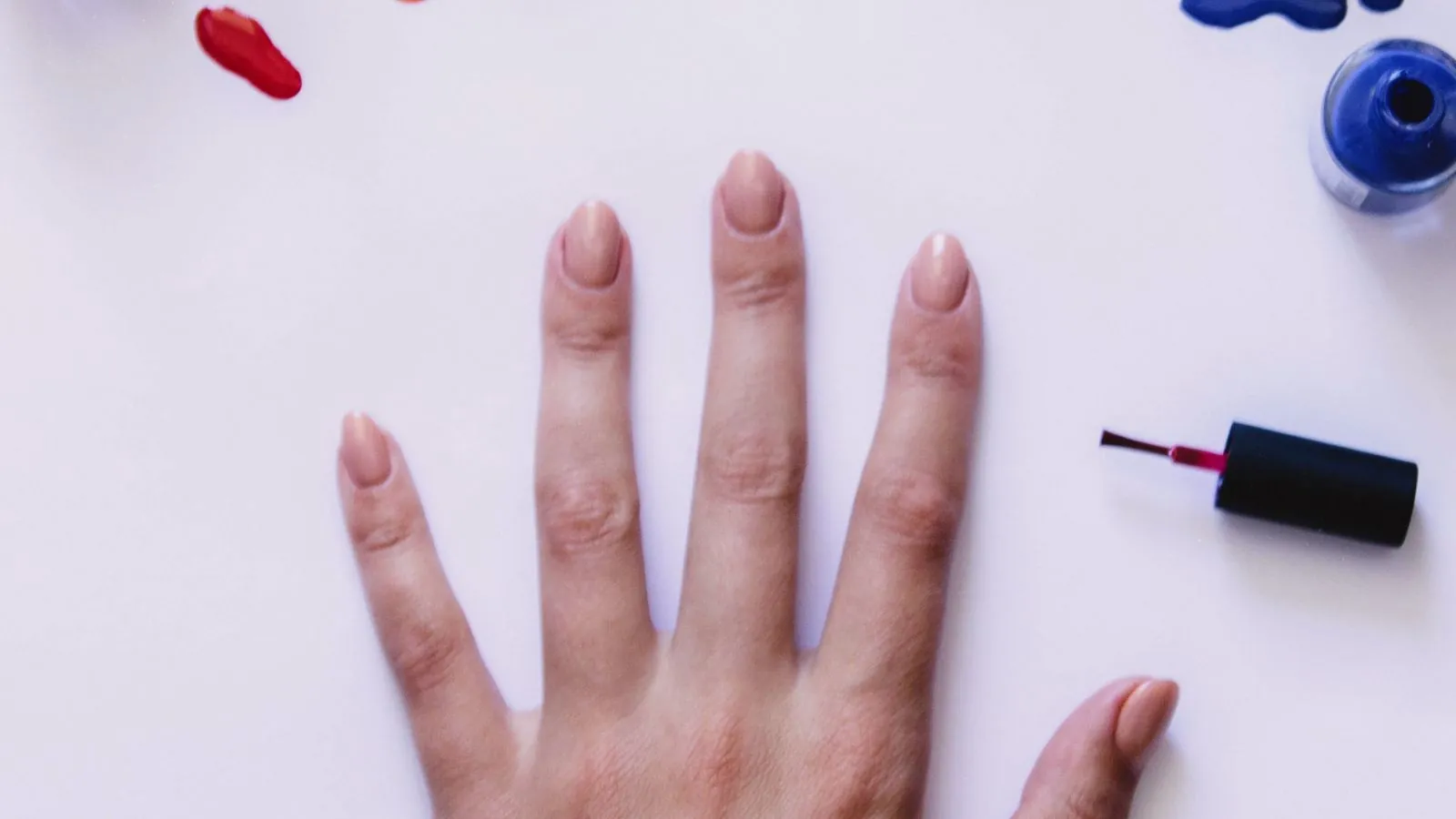
A mobile nail technician working from home has none of the assets that keep a traditional shop alive: no shopfront, no passer-by pushing the door open, no sign you notice on your way to buy bread.
You exist on two conditions only: people find you on Google, and your clients come back and talk about you.
👉 Everything else is secondary. This article is about those two things, and only those.
My name is Léo, I run Pépite Pass. We run Apple Wallet and Google Wallet loyalty cards, a prize wheel for Google reviews, and digital menus, for shops and independents all over France. I see a lot of home-based beauty businesses go by: nail technicians, hairdressers, beauticians.
And the conclusion is always the same: the ones who last are not necessarily the most technically gifted, they are the ones who have understood that their real job is to manufacture returns.
I am not going to teach you how to apply gel or a form: there are trainers far more qualified than me for that. My subject is the business around the set: how to find your first clients with no budget, and above all how to make sure each one becomes a regular who comes back every 3 weeks and brings two others along.
📍 1. Your real distinctive feature: you have no physical billboard
A nail bar in a shopping centre picks up clients just because it is there. The footfall does part of the work: dozens of women see the sign every day, some end up walking in.
You, working from home, have none of that. Nobody stumbles across you by chance. Nobody sees you on the way out of the supermarket.
That means something very concrete: 100% of your acquisition goes through two channels, and there is no third.
- Local search (your Google Business Profile), which gets you found by women in your area who are actively looking for a nail technician.
- Word of mouth, meaning your current clients talking about you and posting their nails.
The two are in fact the same lever seen from two sides: a happy client who leaves a review feeds your Google, and a happy client who shows her nails to a friend triggers word of mouth. Your best billboard is not a paid Instagram ad: it is the Google review and the photo posted by the client you have just sent away delighted. All your marketing should aim to produce those two things.
🌱 2. Finding your very first clients (weeks 1 to 6)
At the start, you have zero reviews, zero photos of your real work, zero reputation. It is the hardest moment, and that is normal. The goal of these first weeks is not to make money, it is to manufacture the raw material that will bring the next ones in: photos, reviews, mouths that talk.
In practice, here is the sequence I see work:
- Do 5 or 6 perfect sets on people around you. Friends, colleagues, family, neighbours. Take your time, get every detail right, and photograph the result in decent light. These photos are your first shopfront.
- Explicitly ask them to post and tag you.Not "if you feel like it", but "could you put up a story and tag me?". A friend will not do it spontaneously, she will do it if you ask nicely.
- Create your Google Business Profile on day 1. Even before your first real paying client. Fill in everything: area covered, hours, photos of your sets, description. It is free and it is the foundation of all your visibility.
- Ask these first people for a Google review. Even your cousin. Going from 0 to 8 reviews with a full rating radically changes the perception when a stranger lands on your profile.
This bootstrapping phase is thankless but short. Once you have a dozen reviews, solid photos and three or four regular clients talking about you, the machine starts to run on its own. From then on, your energy has to shift from "finding" to "keeping". That is where the real profitability is decided.
⭐ 3. Why your Google Business Profile is your only true shopfront
Picture a woman who has just moved to your town. She wants her nails done for a wedding in ten days. What does she do? She types "nail technician" followed by the name of her town, or "mobile nail technician".
Google brings up three or four profiles. In three seconds, she compares the rating, the number of reviews and the photos. She contacts one, maybe two. The others do not exist for her. 💀
You never see that moment. You will never know how many clients you lost because your profile had 4 reviews when the competitor had 60. It is invisible, and that is precisely why it is neglected. But it is the crossroads where almost all of your new clientele is decided.
So the goal of the first few months is simple to state: to accumulate Google reviews, regularly, from happy clients. I have written a full guide on this, which applies directly to your case: how to have more Google reviews in 2026. The basic rule: the right moment to ask for a review is just after the set, when the client is looking at her brand-new nails and she is at the peak of her satisfaction. Not three days later by message: right away.
The only real obstacle is that asking for a review feels awkward. You feel like you are begging. That is why a playful activation helps enormously: instead of saying "could you leave me a review?", you invite the client to scan a QR code and play a prize wheel that wins her a small prize. The animation leads her gently towards the Google review, and she leaves with a reason to come back and collect her prize from you. Worth knowing, because the question always comes up: this wheel collects no email or number. It serves only two purposes, Google reviews and giving away a prize. Nothing else.
🔁 4. The repeat purchase is already in your trade: do not let it slip away
Here is what makes the nail technician's business so distinctive, and so profitable when you equip it well: the need to come back is structural. Nail regrowth forces an infill every 3 to 4 weeks.
You do not have to convince a client that she needs to come back: biology takes care of that. Your only job is to make sure that infill happens with you, and not someone else, and that she does not put it off indefinitely.
Compare with other trades where loyalty is a constant battle:
| Business | Natural return frequency | Effort to bring them back |
|---|---|---|
| Nail technician | Every 3 to 4 weeks (regrowth) | Low: the need already exists |
| Restaurant | Highly variable, no constraint | High: everything has to be created |
| Wine shop, cheese shop | Irregular, tied to occasions | Moderate to high |
You are in the most comfortable box on the table, and many technicians do not realise it. The next appointment is almost a given.
The risk is not that the client no longer has a need: it is that, at the moment her nails have grown out, she puts it off ("I will call next week"), then a friend mentions another technician, and she leaves without even thinking about it.
👉 You lose clients through neglect, not through dissatisfaction.
Two simple habits sort out most of the problem:
- Offer the next appointment at the end of the session. While she is admiring her nails, suggest a date in 3 weeks' time. A booked appointment is a client who can no longer slip away elsewhere in the meantime.
- Give her a reason to think of you specifically. That is where a loyalty tool comes into its own for an independent.
💳 5. The digital loyalty card: the most profitable tool for an independent
If I had to recommend a single tool to a mobile nail technician just starting out, it would be a digital loyalty card. Not a cardboard card you stamp: a card that lives in your client's phone ✨, in Apple Wallet or Google Wallet, the card app that is already installed on every smartphone.
Why is it the ideal tool for your particular case?
- No app for the client to download. She scans your QR code or gets a link by text, she taps once, the card is in her phone. Four seconds. Nobody refuses that. It is essential when you work from home: the relationship has to stay smooth and natural, not administrative.
- You steer the return frequency. Mechanic of your choice: stamps (the 6th set free, for example), points, or a cashback pot. The client sees her progress at every visit. It is the endowed progress effect, documented in psychology for years: from the moment she has a few stamps, her brain tells her it would be a shame not to see it through.
- The reminders are free and unlimited. Push notifications on the lock screen cost nothing, unlike texts. You can nudge a client who has not been back for 5 weeks, wish her a happy birthday with a little treat, or announce a new seasonal design, without spending a single pound more.
- You finally know who your clients are. A cardboard card tells you nothing. The digital version gives you your best clients, their return frequency, who is starting to space out their visits. For a lone independent, it is the dashboard you never had.
The profitability calculation is unbeatable for a business like yours. The subscription is fixed, with no tiers and no charge per client. If the tool brings back even a single client a month who would otherwise have gone elsewhere, it has already paid for itself several times over. And unlike advertising, the effect does not vanish the day you stop paying for a campaign: it is retention, not disposable acquisition.
The cardboard card, by contrast, is a false friend: it is lost one time in two before it is filled, forgotten on the day of the appointment, and it teaches you nothing about your client. I have set out why the digital format changes everything in this article: the loyalty card with no app, how it works.
A question about the loyalty card for your business? Write to me
🤝 6. Turning every client into an ambassador
With no shopfront, your growth depends on your current clients bringing in new ones. A nail technician is in a dream position for that: your work is visible. A woman who leaves with gorgeous nails is a walking advertisement. Every time she taps at her keyboard, picks up a glass or takes a photo, her nails speak for you.
You just have to turn that passive visibility into an active recommendation. A few concrete levers:
- The end-of-session photo. Systematically offer to take a lovely photo of her hands and send it to her. She will post it far more willingly than a photo grabbed in a rush on her own phone. You control the quality of your own advertising.
- The Google review at the right moment. We have talked about it: just after the set, made easy by a QR code or the wheel. Every review is a shopfront brick working for you around the clock.
- The light referral."Bring a friend and you each get a free design next time." Simple, and formidably effective in a trade where women recommend their addresses to each other.
The basic mechanism of your business is this: a happy client becomes a regular, the regular leaves a review and brings a friend, and the cycle starts again. Loyalty and word of mouth are not two separate subjects: they are the same loop. The longer you keep a client, the more time she has to recommend you.
🔥 7. The mistakes that hold a home-based nail business back
I often see the same traps. If you are starting out, keep them in mind, they are costly and easy to avoid.
Mistake no. 1: neglecting the Google Business Profile. "I run on word of mouth, I do not need it." That is true until the day word of mouth plateaus, and then you have no other source. A well-filled Google Business Profile, with reviews, is what brings the strangers in. Build it from day 1.
Mistake no. 2: never daring to ask for a review. Most happy clients would be delighted to help you, they simply do not think of it. If you never ask, you stay at 5 reviews for a year while the competitor racks up 80. Make the gesture easy and light, and ask on the spot.
Mistake no. 3: letting clients leave with nothing to bring them back. A client with no booked appointment and no loyalty card is a client who can slip away to the first friend who mentions another address. You have done the hardest part (finding her, satisfying her), do not lose it all for want of a retention tool.
Mistake no. 4: spending on ads before you have a loyalty machine. Putting money into advertising when your clients do not come back is filling a leaky bucket. 🪣 Plug the holes first (Google reviews, loyalty card, next appointment booked), and only then think about paid acquisition.
These principles are not specific to nails: they apply to any beauty trade. If you also do hair or aesthetics, or if you want to dig deeper into loyalty in these trades, I have written a dedicated guide: the loyalty programme for hairdressers and beauty salons. And to see how other independent shops think about their clientele, these two articles are telling: opening a cheese shop and smoothing out seasonality and opening a wine shop and standing out with a club.
🎯 8. If I had to sum it up in one sentence
Being a mobile nail technician means practising a trade where the need to come back is guaranteed by nature itself, but where visibility hangs by a thread: no shopfront, no passing trade, just Google and word of mouth. So your success is not decided by your technique alone: it is decided by your ability to collect reviews and to bring back, again and again, every client you had such trouble finding.
Three levers, in this order: a Google Business Profile fed with reviews (your only true shopfront), a digital loyalty card that locks in the return every 3 to 4 weeks, and a client turned into an ambassador by a photo and a recommendation. All three cost little, are quick to set up, and turn a fragile, solitary business into a client base that comes back on its own.
If you are launching or growing your business and you would like to talk it through concretely, write to me on WhatsApp at 06 03 90 27 83. You can also see a demo of the loyalty card to get a precise idea. I will not sell you a miracle solution: I will tell you what I see working for the independents we support. It is free, no commitment, and it will probably save you a few months of trial and error.