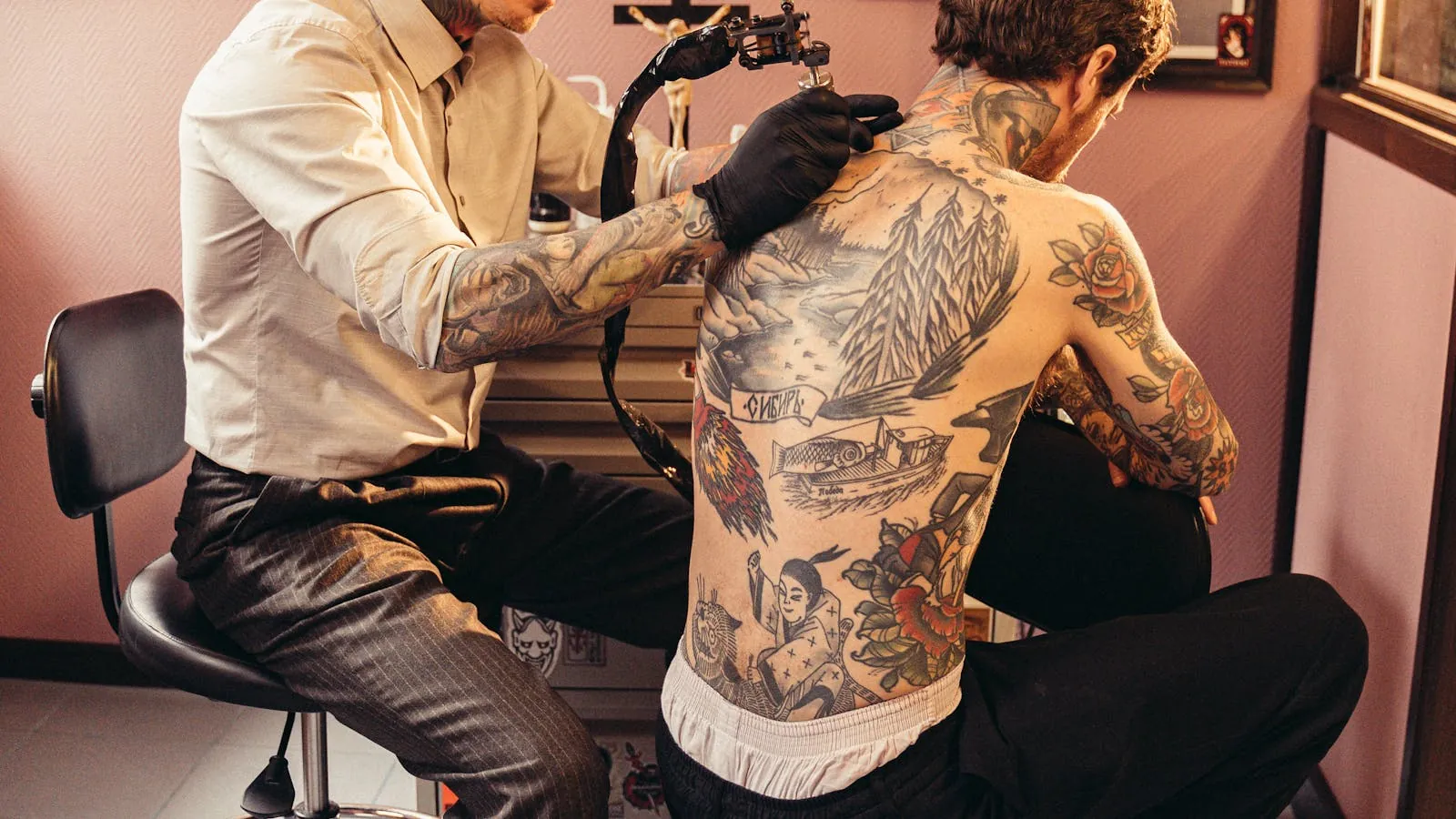
A tattoo is probably one of the rare purchases where a client can adore you, tell everyone around them about you, show off your work every summer in a t-shirt, and never walk back through your door for two years. Sometimes never. It is not a sign of dissatisfaction, it is the nature of the product: a big piece is rare, it is expensive, and it is charged with emotion. The whole difficulty of building loyalty as a tattoo artist lies in that paradox.
My name is Léo, I run Pépite Pass. We operate Apple Wallet and Google Wallet loyalty cards, plus re-engagement and review tools for local businesses all over France. Tattoo artists are not the most obvious businesses for anyone thinking "loyalty" in the sense of a stamp card. And yet, when you dig in, it is a trade where the client relationship is central, where word of mouth is gold, and where thousands of euros are lost every year for want of a simple way to stay in touch.
This article is not a course in dermography nor a guide to choosing your machines: I am not the right person for that, and there are artists a thousand times better placed than me. My topic is the business side: how to keep the connection alive between two pieces, how to stop losing a day's revenue on a cancellation, how to capture the side revenue that does come back often, and how to turn the natural word of mouth of your world into an acquisition machine.
🔁 1. The real problem for a tattoo artist: the repeat-purchase frequency is very low
Let's start by being honest, because that is what changes the whole strategy. The loyalty mechanic everyone knows, "10 purchases, the 11th free", works in a cafe, a bakery or a fast-food place because the client comes back several times a week. With a tattoo artist, it is the exact opposite: on the main piece, the return frequency is measured in years, not days.
Direct consequence: a card that rewards the number of big tattoos makes almost no sense. Nobody is going to get ten big pieces from you to unlock the eleventh free. So the value of a tattoo client is not captured the way it is in a high-frequency business. It is captured elsewhere, and that is exactly what most studios let slip away:
- Staying present in the client's mind between two pieces, so you are the artist they think of again when the urge comes back, and the one they send their friends to.
- Monetising side revenue, the kind that does come back regularly: touch-ups, piercing, aftercare, jewellery, small pieces and flash.
- Leveraging word of mouth, which is structurally stronger in tattooing than in almost any other trade, through reviews and referral.
In other words: the tattoo artist should not try to bring people back faster for the big piece (it is impossible and a bit unhealthy), they should try to never lose contact and to keep recurring revenue alive. The rest of this article breaks that down into concrete levers.
There is another specificity to keep in mind: a tattoo is an emotional purchase. The client is not just paying for a drawing, they are paying for an experience, a trust, a moment. That is excellent news for loyalty, because a client emotionally attached to their artist is far more loyal and far more of a promoter than a transactional client. But that attachment has a weakness: it erodes in silence. If you stop giving any sign of life for eighteen months, the emotion fades, and the day the urge for a new piece comes back, another name may well have slipped to the top of the list. Nurturing the connection is not cold marketing, it is extending a relationship the client already wants to keep.
📉 2. Why you lose 80% of your clients without even knowing it
Here is the scenario I see everywhere. A client books an appointment, spends 4 hours with you, lives a great moment, walks out of the studio delighted, congratulates you, posts their tattoo as a story.
And then? Nothing.
You have neither their number in a usable form, nor a proper way to reach out to them, and they have no mechanical reason to come back before the urge for a new piece takes hold again, in some vague future.
Meanwhile, this client:
- will need a touch-up in the weeks that follow (colour that has faded, a line to redo), and they might go elsewhere, or nowhere, because you didn't remind them of anything;
- might consider a piercing within the year, and will go to the first studio that comes to mind, not necessarily yours;
- will see three flash days from rival studios go by on Instagram, but never yours in their feed because the algorithm only shows your stories to a handful of people;
- will recommend your work to their friends when asked, but with nothing structured to turn that recommendation into a concrete appointment.
The common thread across all these lost moments is the absence of a direct, free and non-intrusive contact channel. You have Instagram, but Instagram belongs to Meta, shows your posts to a fraction of your audience, and doesn't tell your real past clients apart from a stranger who liked a photo two years ago. You may have an appointment book, but nothing to reach out en masse at the right moment. That is the gap to fill first.
The cost of this leak is invisible, and that is what makes it dangerous: you never see the client who didn't come back, you only see the ones who are there. Nobody tells you "I'd have happily come back for a second piece but I no longer knew how to reach you" or "I got my piercing elsewhere because I didn't think of you". Those euros show up on no line of your accounts, and yet they exist, month after month.
The first brick of a loyalty strategy for a tattoo artist is not a discount or a gift, it is simply to stop losing people you had already won over.
📱 3. Lever #1: a Wallet card as a contact channel, not a stamp card
Here is the shift in perspective that makes the loyalty card useful to a tattoo artist. Don't see it as a basket-based reward system (that doesn't fit your frequency), see it as a permanent communication channel sitting in the client's phone, which costs nothing to use and doesn't clog up their inbox.
Concretely, at Pépite Pass: at the end of the session, the client scans a QR code (on your counter, on the mirror, on the healing form), or taps a link you send them by text. Their card is added to their Apple Wallet or Google Wallet in one tap. No app to install, no account to create: it is a file that files itself next to their boarding passes and concert tickets. That detail is decisive for a tattoo artist, because nobody downloads a dedicated app for a studio they visit once every two years.
Once the card is added, you hold a channel: the Wallet push notifications are free and unlimited, and land directly on the lock screen. So you can send, sparingly (3 or 4 times a year, no more, that is the right rhythm for this trade):
- the announcement of a flash day with its date and theme;
- a slot freed up by a last-minute cancellation;
- a reminder of a touch-up or healing aftercare;
- the opening of your diary for the quarter;
- the arrival of a new artist or a new service (piercing, for example).
If you want a "stamps" mechanic anyway, don't apply it to the big piece but to recurring revenue: one stamp per piercing, per aftercare product or per small flash, with a benefit every X. There, frequency really exists and the mechanic holds up. The Pépite Pass card offers several mechanics (points, stamps, cashback) and you choose the one that fits your business. I detailed the program logics here: the loyalty program mechanics that really work, the grid transposes to a studio.
To dig into the re-engagement side, also have a look at how Wallet push notifications bring your clients back at no cost work. Everything described there for a restaurant applies word for word to announcing a flash or a freed-up slot.
📅 4. Lever #2: never lose a day on a cancellation again
This is the point that speaks to every tattoo artist, because it hits the wallet directly. A big session often means half a day, sometimes a whole day, blocked in the diary. A client who cancels two days out means that day is gone, and it is very hard to refill it within 48 hours through the usual channels.
The "I'll post a story" reflex almost always disappoints: your story is only shown to a fraction of your followers, those followers aren't all past clients, and the ones who are aren't necessarily free that Thursday. You're shooting in the fog. 🌫️
The method that works is the opposite: a targeted notification sent to the people who already have your card in their Wallet, so to your real clients, directly on their lock screen. "Slot freed up Thursday 2pm, a 1-to-2-hour project is possible, first to reply takes it." On a list of a few hundred clients, you almost always find a taker, because a lot of people have a waiting project they keep putting off for lack of a slot.
👉 You have just turned a dead day into a paid day, without spending a cent on advertising.
A question about re-filling your slots? Try Pépite Pass for free
The same mechanism helps smooth out your diary over the quiet periods. Every local trade knows its gaps (back to school, January, peak summer depending on the town), and knowing how to reactivate past clients at the right moment changes the profitability of a year. It is the same reasoning I develop for other seasonal businesses, for example in this article on how to smooth out the seasonality of a cheese shop: the channel changes, the re-engagement logic stays the same.
One detail that changes everything on the discipline side: this channel also lets you frame deposits and appointment reminders. Many last-minute cancellations simply come from people who forget or who never really confirmed. A reminder sent a few days before the session, placed on the lock screen rather than buried in an inbox, makes the no-show rate drop. You protect your diary upstream, instead of chasing the refill once the gap is created. And when a gap does happen anyway, you have the push to fill it. Both ends of the chain are covered by the same tool.
Think too about the case of the client walking physically past your studio. The Pépite Pass card offers a geo-push: a notification triggered when a cardholder passes within 100 metres of your place. For a studio on a busy street, it is a gentle way to remind someone with a project in mind of your existence before they have taken the plunge. Nothing aggressive, just a presence in the right place at the right moment.
💰 5. Lever #3: monetise the side revenue (where frequency exists)
If the big piece comes back every two years, the side revenue does come back often. And that is precisely where loyalty regains all its meaning for a tattoo artist. Three families of revenue to activate consciously:
| Side revenue | Real frequency | The associated loyalty lever |
|---|---|---|
| Touch-up | A few weeks after each piece | Automatic push reminder + touch-up valued as aftercare, not as a given |
| Piercing | Several times a year for the same client | Stamp mechanic on piercings, push on jewellery |
| Aftercare / healing | With every tattoo, plus repeat purchases | Card that rewards aftercare purchases, cross-sell at the till |
| Flash & small pieces | Several times a year possible | Push announcement of flash days to cardholders |
Piercing deserves a special mention. For many studios, it is the most regular and most profitable revenue: the same client can come back several times a year, with a jewellery basket that adds up. It is exactly the type of activity where a stamp card works (a free piercing every X, or a jewellery discount after a few visits) because the frequency is high enough for the client to see their progress. If you do piercing and you don't put it in front of your tattoo clients, you are leaving revenue on the table. 💸
Same logic for healing aftercare: you are the most legitimate person to sell the cream, the film, the product you already recommend out loud. A little loyalty mechanic on it, and you turn free advice into recurring revenue, while improving healing (so the result, so the review and the recommendation). It all holds together.
The right reflex is to reason in terms of lifetime value rather than session value. A client who comes for a big piece is worth, on paper, the price of that piece. But the same client, if they come back for a piercing within the year, buy their aftercare from you, enjoy a flash day and bring you two friends, is worth several times more.
The difference between those two clients has nothing to do with their generosity: it comes down to what you have put in place to capture the rest. Without a re-engagement channel or a mechanic on side revenue, you only touch the first line and you let the rest go elsewhere. With them, you turn every big piece into the starting point of a relationship, not a one-off transaction.
🗣️ 6. Lever #4: turn word of mouth into a machine
Tattooing has an asset few trades possess: the product is worn, shown off, and starts the conversation all on its own. The first question when someone admires a tattoo is "who's your tattoo artist?". So you have naturally very strong word of mouth. The job is to channel it, not to create it.
Two tools for that, and they complement each other.
Google reviews. In this trade where the client chooses on trust, the Google Business Profile is often the first filter: a stranger looking for a tattoo artist compares the ratings and the number of reviews before even looking at the portfolio. The problem is that a delighted client forgets to leave a review: they walk out of the session happy, they get on with their life, and that's it. You have to create the trigger at the right moment, ideally after healing, when the client is most satisfied with the result. Asking outright works, but many artists don't dare. A digital prize wheel lifts that awkwardness: the client scans a QR code, leaves their Google review, and takes a chance on a small prize (a free touch-up, an aftercare product, a discount on their next piece). It turns a slightly embarrassing moment into a quick game. For the full method, I wrote a dedicated guide: how to get more Google reviews in 2026.
Referral. It is the most natural acquisition channel in tattooing. A happy client brings their friends: you may as well formalise it to multiply it. A benefit on both sides (a free aftercare product, a discount on the next piece, a piercing), and above all a share that takes two seconds: a link or a QR code the client sends to a friend. Don't oversell the reward: the real engine is still the pride of showing off the tattoo, the discount is just a nudge. What has to be flawless is the simplicity of the gesture.
🔥 7. The mistakes I see most often with tattoo artists
From all my conversations with local businesses, some mistakes keep coming back like a broken record. If you run a studio, read this one twice.
Mistake #1: betting everything on Instagram. Instagram is an excellent portfolio and a good discovery channel for strangers. But it is not a loyalty channel: you control neither who sees your posts nor when, and you can't tell a past client from a curious onlooker. To reactivate your real clients (flash, slot, touch-up), you need a channel you own. Instagram gets people to come once; the Wallet card gets them to come back.
Mistake #2: not asking for reviews. You have dozens of delighted clients every month, and a Google Business Profile stuck at 30 reviews for two years. That is gold sitting idle. ✨ Ask systematically, at the right moment, and make the gesture easy. Every review is a sales argument working for you 24/7.
Mistake #3: letting cancellations cost you without reacting. A day left with a hole by a cancellation is sometimes several hundred euros lost. If you have no way to refill quickly, you just take the hit. A direct re-engagement channel radically changes things.
Mistake #4: neglecting piercing and aftercare. Many studios treat piercing and healing as sidelines, when they are precisely the high-frequency revenue, the kind a real loyalty mechanic works on. It is the most underused profitability lever in the trade.
Mistake #5: believing you need an app. I insist because it blocks a lot of artists: no, your clients have nothing to install. The card lives in the Wallet already present on their phone. No app, no friction, so a real adoption rate.
🎯 8. If I had to sum it up in one sentence
A tattoo artist doesn't build loyalty like a cafe, and that is perfectly fine. You don't need your client to come back every week. You need two things: to never lose contact with them so you stay the artist they think of again (and the one they recommend), and to keep alive the revenue that does come back: touch-ups, piercing, aftercare, flash.
The tools for that are simple and inexpensive: a loyalty card in the Wallet that gives you a free, direct re-engagement channel, a prize wheel to capture Google reviews without awkwardness, and a referral scheme that channels an already naturally powerful word of mouth. None of these levers depends on an algorithm, and they all work for you even when your client won't come back for two years.
If you run a studio and you want to talk about it concretely, write to me on WhatsApp at +33 6 03 90 27 83. I won't sell you a miracle solution: I'll tell you what I see working with the local businesses we support, and what, in my view, makes sense for your business. It is free and with no commitment. For another example of reasoning about a trade with a rare purchase and strong expertise, you can also read my article on how a wine shop stands out with a wine-lovers' club: the long-term-connection logic there is very close to yours.