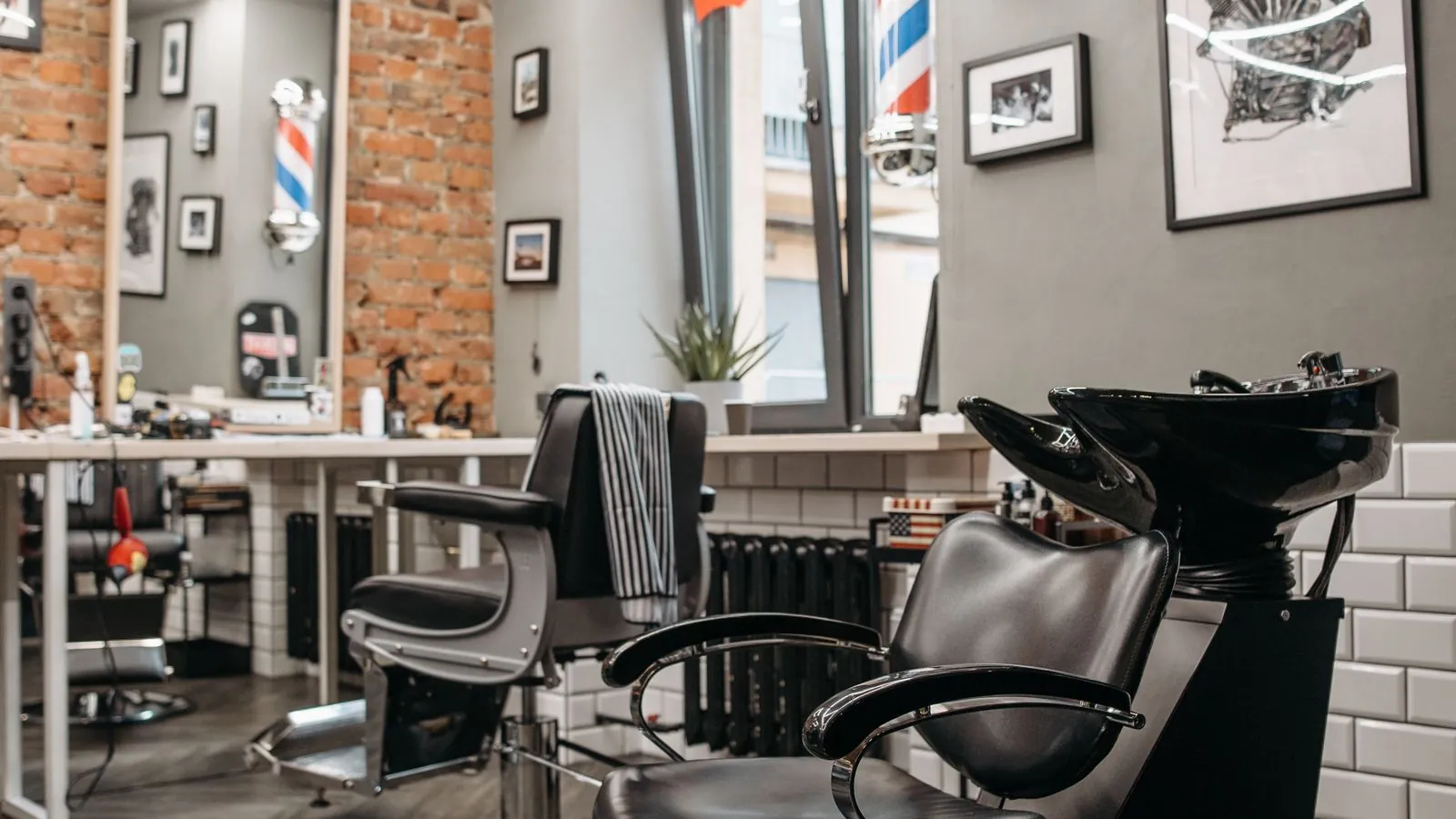
Barbers have something almost no other beauty trade has: a client who comes back almost like clockwork. Not once a year like the "special occasion" hairdresser, not on a whim like at a beauty salon. No: every three to four weeks, because the neckline grows back and the beard loses its shape.
On paper, it's a shopkeeper's dream ✨: predictable, almost automatic revenue. Except that in real life, this fine mechanism seizes up on two pitfalls that cost you a fortune without you ever really counting them.
My name is Léo, I run Pépite Pass. We run Apple Wallet and Google Wallet loyalty cards for businesses all over France, and I see a fair few barbershops go by. The observation is always the same: these are businesses with rock-solid footfall on paper, but that let their value leak out through two holes in the hull. The first is the no-show: the client who cancels at the last minute, or who simply doesn't turn up. The second is volatility: male clients who switch from one barber to another without a second thought as soon as a friend makes a recommendation, they move house, or a brand-new barbershop opens across the road.
This article isn't a lesson in cutting hair or trimming beards: you do that better than I ever could. My subject is how to turn that visit regularity, theoretically worth its weight in gold, into genuinely predictable revenue. And the answer comes down to two concrete levers: the prepaid package that locks in value up front, and the lock-screen reminder that cuts forgotten appointments in half. Let's get into it.
💸 1. No-shows, the invisible cost you pay every month
Let's start with the most painful hole, because it's the one you never count. A no-show is the client who booked and doesn't turn up, or who cancels too late for you to fill the slot. In an appointment-based barbershop, it's a daily reality. And because it's diffuse, you don't feel it as a loss: you tell yourself "oh well, he'll come next time".
Except that mathematically, it's a haemorrhage. 💀 Let's put down some simple numbers:
| No-show frequency | Average cut | Loss per week | Loss per year |
|---|---|---|---|
| 2 / week | €25 | €50 | ~€2,600 |
| 4 / week | €25 | €100 | ~€5,200 |
| 6 / week | €30 | €180 | ~€9,360 |
And even then, this table only counts the direct shortfall. A no-show slot is also an empty chair you couldn't offer to someone on a waiting list, and a barber paid to do nothing for 30 minutes.
👉 A no-show isn't a minor annoyance, it's a line on your accounts, often in the four figures per year.
Once you look at it that way, the urge to cut it down becomes a lot more urgent.
Why doesn't a client show up? In the vast majority of cases, it isn't bad faith: it's plain forgetfulness. He booked two weeks ago, his week is busy, the appointment slipped his mind. That kind of no-show is the easiest to recover, and it's exactly where the automatic reminder works wonders.
📱 2. The lock-screen reminder cuts forgotten appointments in half
Everyone has tried to remind their clients. The problem is the channel.
A reminder email? Drowned in an inbox, opened one time in five. A phone call the day before? It works, but it's you or your apprentice spending an hour on the phone instead of cutting hair. A text message? Effective, but it costs 5 to 8 cents each, and across several hundred reminders a month, the bill adds up.
The Wallet push notification solves this triple problem in one go. Once a client has added your loyalty card to their Apple Wallet or their Google Wallet, you can send them a notification that appears right on their lock screen, without them having to open anything at all. "See you tomorrow at 2pm, see you then." The message passes in front of their eyes when they check the time. That's exactly where you need to be to jog the memory of a forgotten appointment.
And the detail that changes everything for a barbershop: these notifications are free and unlimited with us. No counter to watch, no per-send surcharge like with text messages. So you can remind every one of the next day's appointments without a second thought about cost, win back dormant clients ("it's been 6 weeks since we saw you, your neckline must be starting to itch"), or fill a quiet Tuesday-afternoon slot. I laid out the full potential of this channel in this article on the Wallet push notifications that bring your clients back at no cost, written for restaurants but which applies word for word to a barbershop.
Let's be honest: a reminder doesn't wipe out 100% of no-shows. The client who cancels because he's ill or has something unexpected come up, you won't get him back, and that's fine. But plain forgetfulness, which makes up the bulk of the volume, drops sharply. And every saved appointment is €25 or €30 that stays in your till.
🎟️ 3. The prepaid package: you collect the value up front
The reminder tackles the no-show. The prepaid package, for its part, tackles both problems at once: it reduces the no-show and it locks your clientele against the competition. It is, in my view, the most underused lever in the trade.
The principle is childishly simple: instead of charging the client cut by cut, you sell them a package of several cuts in advance. For example: "5 cuts for the price of 4.5". The client pays once, at the counter, and you deduct one cut at every visit. Let's look at why it's so powerful:
- The money is already with you. You collect five visits in one go. Your cash flow breathes, and you've secured revenue you would otherwise have spread over five months, with the risk of the client leaving before the fifth cut.
- The client has a structural reason to come back. He has cuts already paid for waiting for him at your place. Psychologically, going to the barber next door would mean "wasting" what he's already put in. You're no longer one option among many, you're his barber, by design.
- The no-show drops mechanically. When you've already paid, you're far less inclined to skip your appointment. The loss feels real and immediate.
- The client becomes a VIP. He's made a gesture of commitment, so you can give him better treatment, a priority slot, a little extra now and then. It reassures him in his choice and strengthens the relationship.
The only real historical obstacle to the package was tracking. How do you know how many cuts are left? The paper booklet that gets lost, the Excel sheet nobody keeps up, the client who swears he had two cuts left when he didn't. That's exactly what the digital loyalty card solves.
✂️ 4. The cut balance lives in the phone, not in a booklet
Here's concretely how it works with a Pépite Pass digital loyalty card. The client arrives, buys his 5-cut package at the counter. You have him scan a QR code, and he adds his card to his Apple Wallet or his Google Wallet in one tap. No app to download, no account to create, no password: the card files itself away in the phone next to his boarding pass and his supermarket card.
From there, everything is automatic. At each cut, you deduct from your tablet or your phone, and the client's card updates by itself: "4 cuts left", then 3, then 2. He watches his balance shrink without lifting a finger. And the brilliant moment is when he has just one cut left: you trigger an automatic reminder, "just one cut left in your package, shall we top you up with 5 more?". That's precisely the moment when a package gets renewed, and you land on it at exactly the right time.
The fact that it's "app-free" isn't a technical detail, it's the heart of the matter. Ask a barbershop client to download an app to track his cuts, and you lose the vast majority right from the start.
👉 Nobody installs an app for their barber.
The Wallet card, on the other hand, is already there, in a tool the client opens every day. I explained why this point is decisive in this article on the app-free loyalty card.
Want to see what a package card looks like in the Wallet?
And of course, you can mix the mechanics. Some barbers prefer a classic stamp card ("10 cuts, the 11th free") over a prepaid package, because it's simpler to explain and doesn't ask the client to get his bank card out in advance. Both work. The prepaid package locks in cash flow and loyalty more firmly, the stamp is gentler at the entry point. You can even offer both and let the client choose.
⚓ 5. Male clients switch: how to anchor them
Let's talk frankly about the second hole in the hull: volatility. For a lot of men, a haircut remains an above-all functional act. It has to be done, tidy, quick, not too far away. There's often less emotional attachment to the brand than with other beauty services, and the perceived cost of switching barbers is low. A friend recommends his barbershop, a move three streets away, an opening promotion across the road, and off the client goes without regret.
The answer isn't "cut better": you already do, and in any case the client doesn't always notice the difference. The real answer is to create a structural reason to stay. That's exactly what the package and the loyalty card do, together:
- An unused prepaid cut balance is an anchor: going elsewhere means losing money already committed.
- Stamps to finish activate the endowed progress effect, that well-documented bias that pushes us to complete what we've started. Three stamps out of ten, and the client's brain tells him it would be silly not to see it through.
- A relationship where you call him by his first name and know his usual cut. At every scan, your tablet can show the client's first name and his history. "Hi Kévin, going for the usual fade?": that client isn't leaving. 🔒
- Targeted follow-ups when he starts spacing out his visits. You see in your stats that a regular hasn't been back for 6 weeks? A friendly push, and you catch him before he gets into the habit of going elsewhere.
The idea is simple: you turn a fragile habit into an anchored one. The client who has a package, stamps in progress, and a barber who knows his first name has no reason to go and try the competition. This logic is the same as the one I describe for salons and beauty parlours in this guide to the hairdresser and beauty salon loyalty programme, with one extra advantage for you: your visit frequency is far more regular, so everything triggers faster.
🔁 6. The monthly subscription: the next step
Once the prepaid package is running smoothly, some barbershops go further with a monthly subscription. The principle: a fixed price per month that entitles the client to a number of cuts (for example "2 cuts a month") or to unlimited cuts with regular upkeep. It's the holy grail of predictability: recurring revenue that lands every month, whether or not the client actually comes in.
The barber is probably the beauty trade where a subscription makes the most sense, precisely because visit frequency is the most regular in the sector: every three to four weeks, or twelve to fifteen visits a year. It's an almost mechanical rhythm, perfectly suited to a recurring plan. But two precautions:
- Calibrate the price carefully. The most motivated client (the one who'd want to come every two weeks) has to stay profitable. Run the maths on realistic maximum usage, not on the average.
- Keep it for your best regulars. The subscription is the next step for those who already come in like clockwork. For everyone else, the 5-cut prepaid package remains the best entry point: same locking effect, without the commitment that scares people off.
Whatever the plan, tracking happens in the same place: the card in the client's Wallet. Cut balance for the package, cuts left this month for the subscription, stamps for the classic card. One console on the barber's side, one card on the client's side, zero paper booklets.
🎯 7. What I actually see working in barbershops
I'm not going to throw made-up percentages at you like "+47% revenue": I hate that, and it would be dishonest. What I can give you are the concrete patterns I see coming up again and again among the barbers who steer their loyalty instead of enduring it:
- They offer the card at the counter from the very first visit, not "when they get round to it". A QR code next to the till, a word from the barber ("scan this, it gets you a free cut after 10"), and it's added in ten seconds.
- They push the package at the right moment: not at a stranger, but at the client coming back for the third time. That's when the habit forms, and when the package makes sense for him.
- They send a reminder the day before, without fail. It's become a reflex, like switching on the lights when they arrive.
- They win back the dormant ones once a month: a push to those who haven't been back for more than 5 or 6 weeks. A few clicks, several chairs filled.
- They watch their stats: who comes back, how often, who's dropping off. The built-in CRM tells them where the leaks are before they become departures.
None of these actions is complicated. What makes the difference is making them systematic, and that's exactly what a well-tuned tool allows: it turns good intentions ("I really should remind my clients") into an automatic routine that runs on its own.
🧮 8. How much it costs, and whether it's worth it
Let's be concrete about money. The Pépite Pass digital loyalty card starts with a free trial, no bank card required. After that, it's the equivalent of a coffee a day, no commitment, cancellable in two clicks, with no setup fee, and the number of clients is unlimited: no tier that pushes the bill up as you grow. Push notifications are included, with no per-send surcharge.
Now set that against what a single lever brings you:
- One no-show avoided per week at €25 already adds up to more than €100 a month recovered, far more than the subscription costs.
- One single 5-cut package sold in the month pays for the tool, and you'll sell far more than one.
- One volatile client retained means twelve to fifteen cuts a year instead of zero. Run the maths on just one client saved from the competition.
The maths comes out favourable almost every time, from the very first retained client of the month. This isn't marketing spend with an uncertain outcome like a flyer or an ad campaign: it's a tool that acts directly on two identified, quantifiable leaks.
💎 9. In short: your regularity is a treasure, stop letting it leak away
The barber starts out with an advantage most businesses envy: a clientele that comes back mechanically every three to four weeks. It's a frequency annuity. The problem is that it leaks through two holes: the no-show that empties slots, and the volatility of a clientele that switches without attachment.
Both are plugged with simple, inexpensive tools. The prepaid package collects the value up front, locks in the client and melts away the no-show. The lock-screen reminder cuts forgotten appointments in half without costing a penny to send. And the card in the Wallet keeps it all running with no paper booklet and no app, right where your clients look at their phone every day. Together, they turn your visit regularity, today partly wasted, into genuinely predictable revenue.
If you run a barbershop and you'd like us to look at your specific situation, message me on WhatsApp at 06 03 90 27 83. I won't sell you a magic formula, I'll tell you what I see working for the businesses we support. And if you'd rather explore on your own, you can watch a demo of the loyalty card right now.
To go further, two neighbouring reads that dig into the same loyalty logic on the local-business side: opening a cheese shop and smoothing out seasonality and opening a wine shop and standing out with a wine club. Good luck, and above all: your regularity, don't let it leak away any more.