Taking over a brasserie or a bistro looks like a fine project: the walls are there, the kitchen is running, there are already customers. Except what you are really buying is not the walls. It is two fragile assets that nobody explains to you at the moment of signing: a flow of customers concentrated on two services, with a gaping hole in between, and a Google reputation already built by the previous owner, often lukewarm. Good news: both of these problems are treated with the same move.
My name is Léo, I run Pépite Pass. We run Apple Wallet and Google Wallet loyalty cards, digital menus and a prize wheel to liven up businesses, for restaurants, brasseries and bars all over France. I see a fair few takeovers: people who buy a business, who inherit a team, regulars, a Google Business Profile, and who discover after three weeks that the hardest part is not surviving the lunch rush. The hardest part is all the rest of the day.
This article is not a legal guide to buying a business, nor a cooking course: there are accountants and chefs better placed than me for that. My subject is what decides whether a taken-over brasserie will thrive or run out of steam within six months: the slow hours and the online reputation. And there, I have plenty to say.
💎 1. What you are really buying: two fragile assets
When a buyer tells me about their project, they always give me the same figures: the turnover, the average lunch spend, the rent, the payroll. All of that matters, obviously. But it masks two things that really decide what comes next.
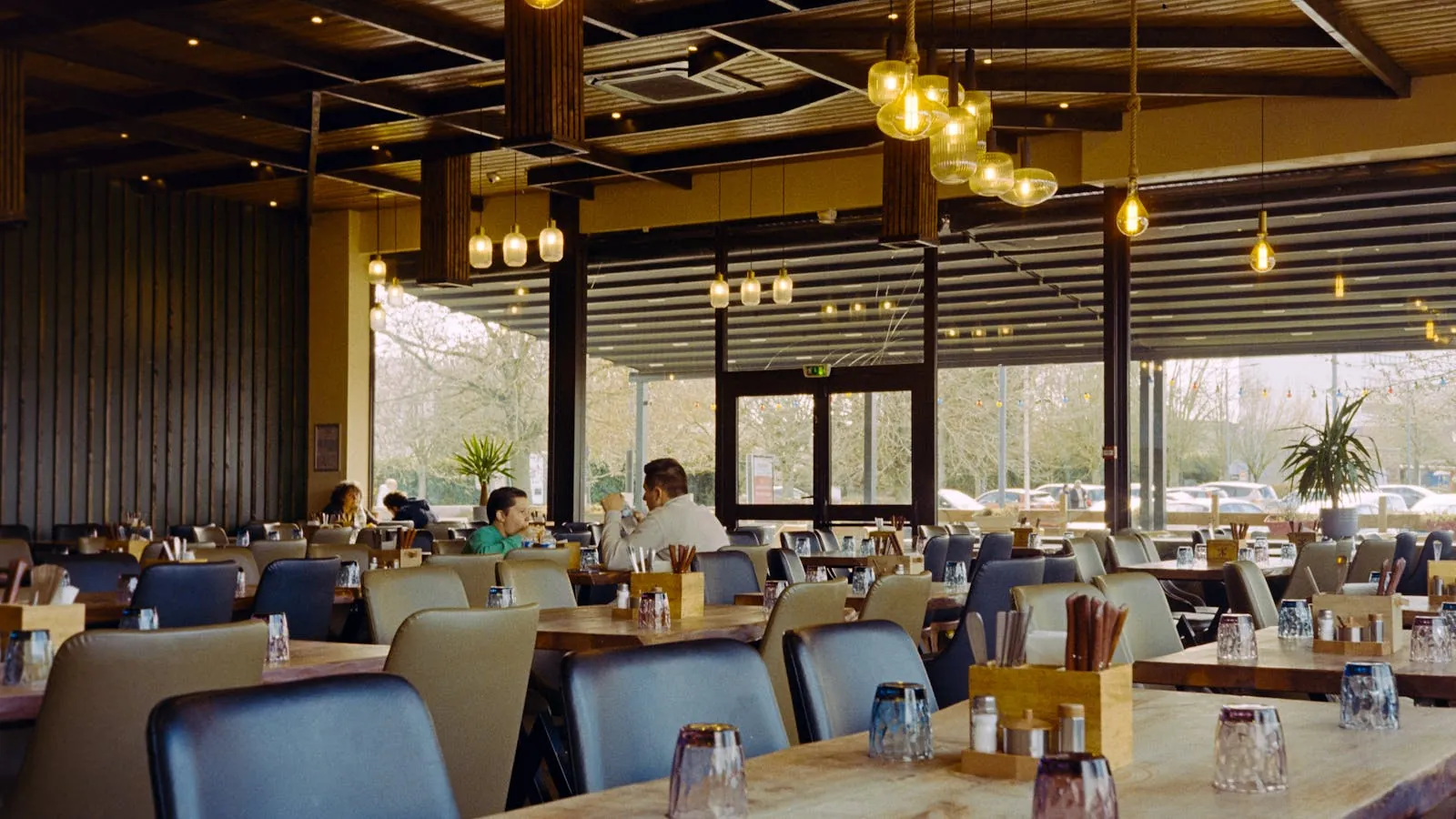
Asset number one: a flow concentrated on two services. A classic brasserie makes the bulk of its takings on the lunch service and the evening one. In between, and especially in the afternoon, it is a desert. 🏜️
You pay the rent, the heating, sometimes a member of staff, for a half-empty room. This is no small detail: it is often where all your lost margin sits.
Asset number two: a Google reputation already in place. Unlike someone opening from scratch, you do not inherit a blank profile. You inherit the previous owner's rating, their reviews, their photos, sometimes their curt replies to unhappy customers. And that rating is checked by hundreds of people in the neighbourhood every month before they decide where to have lunch.
The argument of this article is that these two problems are not separate. They are dealt with by the same mechanic: livening up the business to give a reason to push the door open in the slow hours, and using that flow to restart recent Google reviews. One move, two benefits.
😴 2. The afternoon hole: your margin asleep
Let us do the mental sum I do with buyers. A brasserie open from 8am to midnight makes sixteen hours of operation. Out of those sixteen hours, how many are really profitable?
The lunch service (say noon to 2.30pm), the pre-dinner and dinner slot (6.30pm to 10pm). The rest, more than half of your opening hours, runs at a loss or on a fragile break-even.
The trap is to believe the afternoon quiet spell is a given of the trade. That is not true. In a neighbourhood of offices, shops or homes, there are people out and about between 3pm and 6pm. People taking a break, waiting for an appointment, leaving work early, out for a stroll. They do not stop at your place because you give them no reason to.
And be careful: the wrong answer is the slashed promotion. "Coffee for 1 euro from 3pm to 5pm": you attract people who stay two hours over one coffee and drag down your margin. 💸 The right answer is to manufacture a pretext to come in, without discounting, and to turn that passer-by into a customer who will come back at a full service. That is the whole difference between a discount and an activity.
- A discount brings in people who only spend because it is cheaper. You lose margin without building a relationship.
- An activity gives a moment, a reason to come in, a small pleasure. The customer leaves with a good impression and a reason to come back, at full price.
🎡 3. Livening up the quiet spell: the wheel as a pretext to come in
This is where the mechanic of the prize wheel makes complete sense in a taken-over brasserie. The principle is dead simple, and that is what makes it effective: a customer (or a passer-by you invite in) scans a QR code placed on the table or at the counter, they play the wheel straight in their phone browser, with nothing to install, and they can win a prize you have funded yourself.
The detail that changes everything: to collect their prize, the customer has to come back to the shop. You take someone who was walking past at 4pm and you make them come back on a weeknight when your room needs bodies.
👉 A scan becomes a visit, then, if the service is good, a regular.
You set the prizes and their odds yourself. A free coffee, a homemade dessert, a sharing board for two, the aperitif on the next bill: it is up to you to calibrate so the prize is a pleasure without wrecking the margin. And with a single spin per device, you do not end up with a smart aleck who plays thirty times to scoop the top prize.
One point I want to be clear about, because I am often asked: the wheel collects no contact details. No email, no phone number. It does two things, and only two: generate Google reviews and let people win a prize to collect on the spot. If your goal is to build a customer file to send follow-ups, this is not the right tool: that is the job of the digital loyalty card, which is a separate product. The wheel stays focused on the activity and the review.
⭐ 4. The taken-over Google Business Profile: your shop window you did not write
Now, the second fragile asset. When you take over a business, its Google Business Profile already exists, with its rating, its reviews, its photos. And it is probably your first sales pitch without you having chosen it: the people in the neighbourhood who type "brasserie near me" land on it before they have even met you.
The classic problem of a taken-over profile:
- A lukewarm rating. 3.9 or 4.1 stars, because the previous owner never worked on their reviews and all that is left are the disappointed ones who took the trouble to write.
- Old reviews. The latest review dates back eight months. Google hates that: the freshness of reviews weighs heavily in the local ranking. A dormant profile drops mechanically.
- Curt or absent replies. Either the previous owner never replied, or they replied aggressively to an unhappy customer, and it stays displayed at the top of the profile.
- Dated photos that no longer look like what you offer today.
The reflex I sometimes hear is "I am going to delete the profile and create a clean one". Bad idea. You would lose the business's seniority and the review history, two things Google values. You do not throw a profile away, you restart it.
🔄 5. Restarting the review machine without forcing or cheating
Restarting a taken-over Google profile happens in two stages. First the tidy-up, then the flow.
The tidy-up is replying to the old reviews. Including, and especially, the bad ones. A human, measured reply that acknowledges the problem and explains that the place has changed hands sends a very strong signal to future customers reading the profile. I have written a full guide on this: how to reply to Google reviews, good and bad. It is the first thing to do in the days after the takeover.
The flow is generating recent reviews, regularly. And this is where it meets the subject of slow hours. Three 5-star reviews this month weigh more than a review from two years ago. But asking a customer for a review, face to face, is awkward for them and for you. Most waiters do not dare, and those who do it do it clumsily.
The wheel solves exactly that awkward moment. To play, the customer is invited to leave a Google review.
👉 It is no longer the waiter begging, it is the customer who wants to try their luck.
The gesture becomes playful, quick, and it fits perfectly the moment of the bill or the afternoon break. You gather a flow of fresh reviews without ever buying fake reviews or forcing anyone's hand, which would in any case be against Google's rules and risky for your profile.
If you want to dig into the review strategy in detail, beyond the wheel, I have laid out all the levers here: how to get more Google reviews in 2026. Worth reading alongside, it sets out the basics of local SEO nicely.
A taken-over Google profile to restart? Let us talk about it directly
🔗 6. Why the two problems are really the same one
Here is the point I really want to get across. When a buyer tells me "I have a slow-hours problem" and "I have a Google reputation problem", they think they have two projects. In reality, they have only one.
Livening up the business to fill the quiet spell means creating a flow of people physically present at your place at a calm moment. Now it is precisely at that calm moment, without the pressure of the rush, that a customer has the time and the inclination to play, to leave a review, to enjoy a little moment. The dead afternoon is not only a hole in the takings: it is also the best slot to manufacture recent reviews, because everyone is relaxed.
So the same tool, the same activity mechanic, serves you twice: it gives a reason to come in when the room is empty, and it feeds your Google Business Profile with fresh reviews that lift it in the local ranking. The more your profile climbs, the more new neighbourhood customers you attract, who in turn play and leave reviews. It is a self-sustaining loop ✨, and it starts with a very simple gesture at the entrance of your brasserie.
🤝 7. Do not break what you bought: the regulars
A word on the mistake I see most among enthusiastic buyers: changing everything at once. New menu, new decor, new prices, from the first week. It is the best way to scare off the regulars, who are nonetheless the first asset you paid for in the business.
The regulars of a bistro do not come first and foremost for the food. They come for the ritual: their table, their morning coffee, being greeted by their first name, the habit. It is exactly the same logic as for taking over a tobacconist-bar, where I laid out why the real value of a taken-over business is in its regulars far more than in the equipment or the walls.
The right tempo: keep the codes that work for the first few weeks, learn the faces and the habits, show that the place stays welcoming, and only then evolve the menu or the atmosphere. Livening up the quiet spells and restarting the reviews are added on top of the existing, they do not replace it. You build on the base you bought, you do not raze it.
🗓️ 8. The concrete 30-day plan
If you are taking over a brasserie or a bistro in the coming weeks, here is the order I would go about it on the slow-hours and reputation side. The rest (kitchen, team, management) is not down to me.
| When | Action | Why now |
|---|---|---|
| Week 1 | Take back control of the Google Business Profile, reply to the old reviews, refresh photos and opening hours | It is your shop window while you settle in. A human reply to the old reviews reassures people straight away. |
| Week 1-2 | Observe the regulars, learn the faces, break nothing of the existing rituals | You have just paid for this customer base. Losing it in the first week would be absurd. |
| Week 2-3 | Set up an in-room activity (prize wheel, QR codes on the tables) and set off the review flow | The flow of fresh reviews starts to lift the profile, and the activity gives a reason to come in during the slow hours. |
| Week 3-4 | Launch an offer that reads from the street on the 3pm-6pm slot (sharing board, coffee and cake) | The passer-by now has two reasons to stop in the afternoon: the visible offer and the game. |
| Month 2 and beyond | Calibrate the prizes, adjust the odds, track the spins and the progress of the Google rating | A quiet spell and a profile do not wake up in a day: consistency does all the work over time. |
This plan costs almost nothing compared with what people often spend on flyers or local advertising, and it attacks the two real weak points of a takeover at the same time. That is what I like about this approach: it is lean, it is honest, and it uses the flow you already have instead of trying to buy a new one.
🚀 9. And if you want to go further than the wheel
The wheel is the simplest tool to start with after a takeover, because it attacks the slow hours and the reputation straight away. But depending on your business, two other building blocks can be added on top, without replacing anything.
If you really want to build loyalty and be able to follow up with your customers (to fill a quiet evening, announce a new item, wake up a regular who has vanished), the digital loyalty card in Apple Wallet and Google Wallet gives you that lever: free push notifications on the lock screen, with no app to install. It is the natural complement to the wheel when you move from "I want more reviews and footfall" to "I want to keep my customers over the long term".
And if your brasserie leans towards food (a menu that changes often, booking, takeaway), the digital menu brings together the living menu, the shareable shop window, click and collect with no commission and booking in two taps. But do not put the cart before the horse: after a takeover, you start by waking up the quiet spell and the reputation, the rest comes later.
To give you some points of comparison on other takeovers and food-trade launches, I have written in the same vein about opening a bakery and building loyalty from daily footfall and about the budget for a pizzeria and online ordering with no commission. The logics often overlap.
📌 10. If I had to sum it up in one sentence
Taking over a brasserie is not taking over walls and a kitchen: it is inheriting a flow concentrated on two services and an online reputation you did not write. Both are fragile, and both are treated by the same move: livening up the business to give a reason to come in when the room is empty, and using that flow to restart a stream of recent Google reviews that lift your profile.
The prize wheel is not a magic wand, and I will never promise you a guaranteed result. But it is the most direct tool I know to attack these two weak points at the same time, without breaking your prices and without collecting anything awkward for your customers. If you are taking over soon and want to talk about it, write to me on WhatsApp at +33 6 03 90 27 83. I will tell you what I see working on the ground, it is free and with no commitment. And above all: do not let your afternoon sleep, and do not let the previous owner's rating decide your future.