
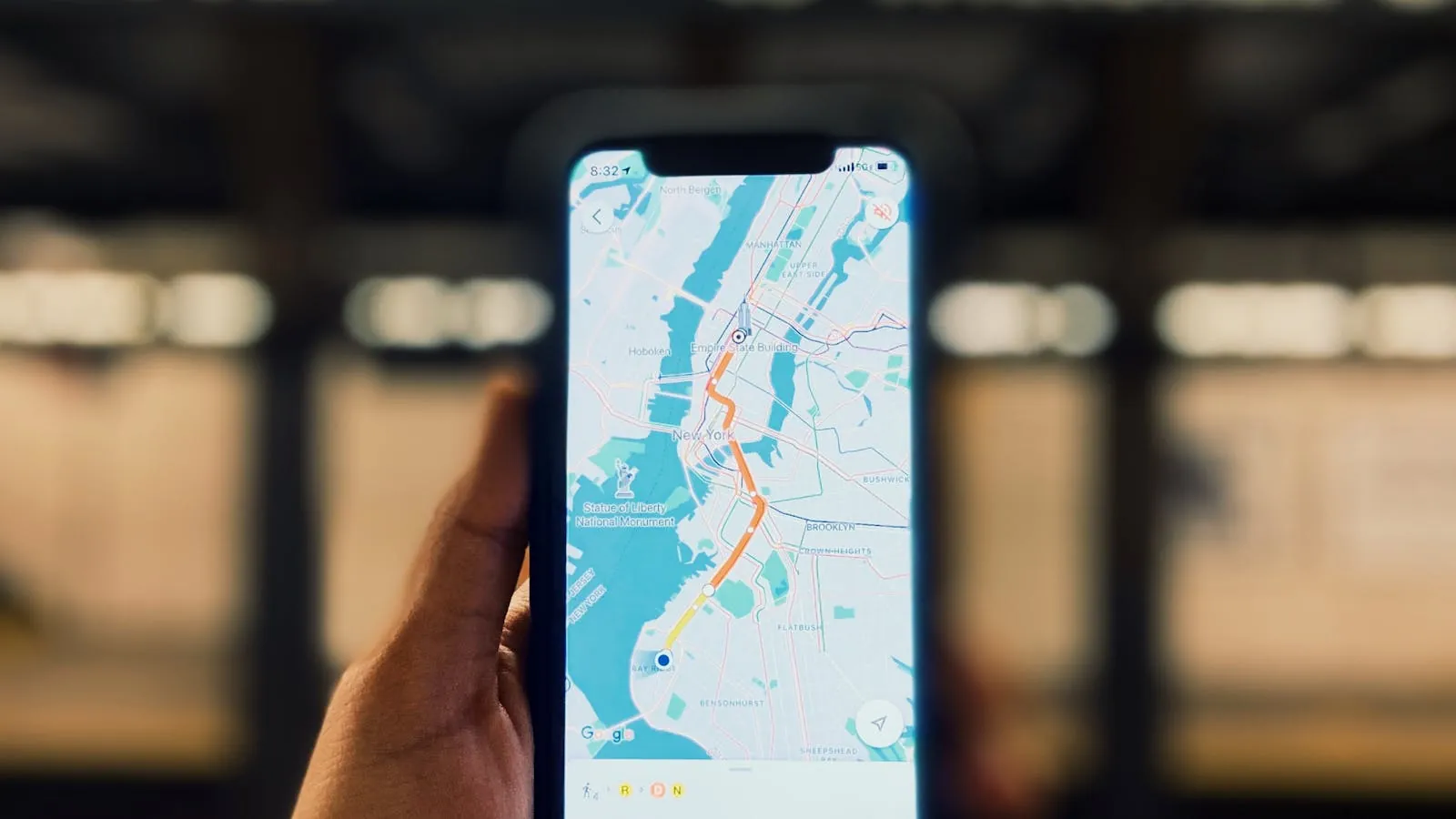
Every business owner I work with asks me the same question one day: "how do I rank first on Google Maps?". And behind that question there is almost always the same misunderstanding: the idea that you "optimise" the Maps ranking the way you optimise a website, with keywords and technical tricks. The reality is both simpler and more frustrating. Local ranking rests on three pillars, and the heaviest of the three cannot be controlled at all.
My name is Léo, I run Pépite Pass. We operate Apple Wallet and Google Wallet loyalty cards, digital menus and a prize wheel that helps businesses collect Google reviews, all over France.
So I spend my life with my nose in the Google profiles of restaurants, salons, shops and beauty studios, looking at why this one is in the top 3 and its neighbour is not. And the pattern is so consistent that in this article I am going to try to give you the full map: what really counts, what is useless, and what you can do this week.
No pointless SEO jargon, no promise of a "guaranteed page 1" (that does not exist). Just the real mechanics of the local pack, that famous block of three profiles Google displays at the top of the results when someone searches for a business near them.
💰 1. What the local pack actually is and why it is worth gold
When you type "bakery" or "hairdresser near me" on Google, you do not see ten results. You see a small map, then three highlighted profiles, with their rating, their review count, their hours and a directions button. That is the local pack. To go beyond those three profiles, the user has to click on "More places". And let us be honest: the vast majority of people never click.
In practice, being 4th on Google Maps means being invisible. 💀
The game is therefore not "ranking well", it is breaking into those three spots. And since your neighbourhood's competition is aiming for those exact same three spots, it is a zero-sum game: for you to move up, someone has to move down.
That is why understanding the mechanics really matters. You are not going to "optimise" in a vacuum, you are going to play against specific profiles, those of your direct neighbours. And the good news is that most of them make no effort at all on the one lever that separates them.
🏛️ 2. The three ranking pillars (and their real weight in 2026)
Google is surprisingly transparent about this. Officially, local ranking rests on three factors: relevance, proximity and prominence. The trap is that everyone knows the names but nobody ranks their real weight. Here is how I sum it up for business owners:
| Pillar | What it is | Do you control it? | Perceived weight |
|---|---|---|---|
| Proximity | The distance between the person searching and your business | No (short of moving) | Very strong |
| Relevance | How closely your profile matches the search typed | Yes, on the profile | Strong, but quickly capped |
| Prominence | How known and trustworthy Google judges you (reviews first) | Yes, durably | Decisive for separating businesses |
Look closely at the "do you control it?" column. That is what changes everything. Proximity is the heaviest factor, and it is precisely the one you can do nothing about. Relevance can be worked on, but it caps out fast: once your profile is complete and well categorised, you have done 90% of the job, and your competitor can do the same in one afternoon. That leaves prominence, the only ground where you can open a durable gap.
📏 3. Proximity: the factor you cannot control (and that is OK)
Let us start with the one that frustrates people most, to get it out of the way. Proximity is the distance between the place the person is searching from and your establishment. When someone types "restaurant" from their sofa, Google favours restaurants near their sofa. When they search from the office, it is the restaurants near the office. The local pack is a moving target: there is not "one" ranking, there is a different one on every street corner.
That means two important things. First, stop comparing yourself to a competitor on the other side of town: you are almost never in the same local pack. Second, do not try to cheat with the address: creating a fake listing in a busier neighbourhood is a gamble that ends in a suspended listing, and then you really do disappear. The physical location of your business is what it is.
But here is the twist: this frustration is an opportunity. If proximity is the biggest factor and nobody controls it, then between businesses in the same area, so at a comparable distance from the searcher, the heavy factor cancels out on both sides. Google has to separate three or four profiles all located 300 metres from the person.
👉 And that is where, exactly there, reviews become the tie-breaker.
✅ 4. Relevance: your profile, maxed out, once and for all
Relevance is how closely your profile matches what the searcher types. It is the easiest ground to work on, because it is entirely in your hands and it is settled quickly. Here is the list I have every business owner tick off before we talk about anything else:
- The right primary category. This is the most underrated setting. A "crêperie" filed under "restaurant" loses every "crêperie near me" search. Choose the most precise category that describes your core business, then add relevant secondary categories.
- A 100% complete profile. Description, hours (including public holidays), service area, attributes (terrace, accessible, contactless payment, etc.), link to the website, phone number. Every empty field is a signal of weakness.
- Recent, plentiful photos. Storefront, interior, products, team. Google and users love profiles that are visually rich and fresh. A profile with no photo, in 2026, breeds suspicion.
- The exact name, no keyword stuffing. Your business name, not "Marco's - Best Cheap Pizza London Delivery". Keyword stuffing in the name is against the rules and can get the profile suspended.
The key point to grasp: relevance is capped. Once this list is ticked off, you have reached roughly the maximum, and your competitor can reach the same maximum. It is necessary, but it does not open a gap. It is the entry ticket, not the competitive advantage.
⭐ 5. Prominence: where reviews make all the difference
Now we reach the heart of it. Prominence is how well Google considers your business to be known, active and trustworthy. It feeds on several signals: citations of your name, address and phone number elsewhere on the web, your overall presence, and above all, by far, your Google reviews. It is the most visible lever, the most actionable, and the only one that lets you open a durable gap with the shop next door.
But be careful, "reviews" is not a single signal. Google reads at least four dimensions, and it is by understanding them that you win:
- Volume. How many reviews in total. A profile with 200 reviews looks more solid than one with 12, to everyone, including the algorithm. That is the baseline.
- The average rating. Obviously. But a 4.6 across 150 reviews is far more credible and powerful than a 5.0 across 6 reviews, which reeks of favours from friends.
- Recency. This is the most underrated factor. A steady flow of fresh reviews tells Google "this business is alive, people are going there right now". A profile frozen for two years says the opposite, even with 300 reviews.
- Owner replies. Replying to reviews, all of them, positive and negative alike, is a signal of activity and seriousness. It shows Google and future customers that there is a human behind the profile.
Here is my thesis, and it is the whole article in one sentence: with comparable relevance and proximity, it is the flow of recent reviews that puts you ahead of the business next door. Not a one-off burst, a flow. It is the only truly durable lever in local search, because it is hard to catch up on: your competitor cannot invent six months of fresh reviews all at once.
If you want to dig into the method for collecting them, I have written a full guide here on how to get more Google reviews in 2026, and another, just as important, on how to reply to Google reviews without spending your evenings on it. Both work directly on the prominence pillar.
🔄 6. The flow of fresh reviews: the only truly durable lever
Everyone knows they "should ask for reviews". Almost nobody does it regularly, because it is awkward. Asking a happy customer "would you leave me a little Google review?" at the moment of paying is uncomfortable on both sides. The result: you do it for two weeks after opening, then you stop. And the flow dries up.
The problem is not willingness, it is the mechanism. You need a system that turns the review request into a natural and regular gesture, without depending on your courage of the day. And that is exactly the gap our prize wheel fills.
The principle is simple: you display a QR code in the shop (on the counter, the table, next to the till). The customer scans it with their phone, a wheel opens in their browser, they play, they win a prize you have chosen. No app to download, it is 100% web.
The review step slots into this playful moment, when the customer is relaxed and in a good mood, not at the tense moment of the bill. You turn the "I do not dare ask" into a fun activity. ✨
And because the customer has to come back to the shop to collect their prize, a scan becomes a visit, then a habit. You win on both counts: more fresh reviews (the prominence pillar) and a customer who comes back.
Let us be clear about what this wheel does and does not do, because I want to be honest: it collects no email, no phone number. It is not a contact-capture tool. It does two things, and only two: generate Google reviews and bring the customer back to collect their prize. On the anti-cheat side, it is watertight: one spin per device, with no way to relaunch the wheel for another try. You set the prizes and their probabilities yourself. No fee per scan or per prize, a fixed subscription, full stop.
See how the wheel collects Google reviews
This mechanism works well across very varied trades. I have laid out concrete cases, for example for a bubble tea shop that turns its Instagram audience into Google reviews and for a beauty studio that gets its clients playing to collect reviews. The lever is the same everywhere: making the gesture playful instead of awkward.
🧩 7. NAP consistency: the detail that dilutes your prominence
NAP is the acronym for Name, Address, Phone: your name, your address, your phone number. Google does not only read your profile, it cross-checks your information with everything it finds elsewhere on the web: directories, social networks, your website, the old forgotten pages. If this information matches everywhere, it trusts you. If it diverges, it doubts, and doubt dilutes your prominence.
The most common inconsistencies I see:
- An old phone number lingering on a directory that was never updated.
- The address written "12 High Street" here, "12 High St" there, "12 HIGH STREET" elsewhere.
- The business name with or without an accent, with or without an "&", depending on the site.
- An old listing from a previous owner that was never closed and cannibalises yours.
The concrete action: settle on one single official spelling of your name, one address, one number. Write it down somewhere. Then type your business name into Google and methodically clean up every place where the information diverges. It is thankless, it takes an afternoon, but it is a free prominence signal that 80% of your competitors neglect.
🔥 8. What is (almost) useless: stop wasting time
Let me be direct, because I get sold a lot of false good ideas. Here is what I advise you not to wear yourself out on for ranking:
- Posting on your profile every day. Google posts are not a proven ranking factor. They are useful for keeping the profile lively and converting a visitor, not for climbing. Post when you have something to say, not out of SEO discipline.
- Stuffing the name with keywords. At best it does nothing, at worst it gets the profile suspended. Do not play that game.
- Buying fake reviews. This is the worst bet of the lot. Google detects them better and better, removes them, and can penalise the profile for a long time. You risk losing years of reputation for an artificial and fragile gain.
- Multiplying listings or addresses. One listing per real establishment, that is all. Fake addresses are detected and sanctioned.
The time you do not spend on these false leads, put it into the only lever that really counts: bringing in a steady flow of honest reviews from genuinely happy customers.
📅 9. Your action plan for the week
Enough theory. Here is the exact order I would do things in if I took over a business tomorrow and wanted to break into my neighbourhood's top 3:
- Day 1: the profile. Check the primary category, fill in every empty field, add 10 recent photos, correct the hours. It is the entry ticket, do it thoroughly once and for all.
- Day 2: NAP consistency. Settle on an official spelling, type your name into Google, clean up the old diverging listings and directories.
- Day 3: observation. Type your activity into Maps from your shop. Note the three top-3 profiles, their review count and their recency. That is your real target, not an abstract number.
- From day 4 on: the flow of reviews. Put a regular mechanism in place (the wheel, a QR code on the counter, a systematic request at the right moment). Aim for a few fresh reviews every week, indefinitely. That is what will put you ahead.
- Ongoing: replying. Reply to every review, in a few words, positive and negative alike. A free and effective activity signal.
And do not forget that the goal is not ranking for the sake of ranking: it is bringing in customers who come back. The top 3 brings you the first visit. Turning that visit into a habit is another skill, which I laid out in this full guide to customer loyalty in 2026. The two go together: a well-ranked profile without loyalty is a leaking bucket.
🧭 10. If I had to sum it up in one sentence
Ranking first on Google Maps cannot be "hacked". The heaviest factor, proximity, cannot be controlled, and that is just as well, because it means the fight plays out between businesses in the same area. Relevance is an entry ticket that everyone can tick off. That leaves prominence, and at the heart of prominence, one truly durable lever: a steady flow of fresh reviews, with replies from the owner.
It is less sexy than "the secret technique to explode on Maps", but it is the truth on the ground. The business owner who sets up a regular review system and holds it for six months mechanically moves ahead of the neighbour with 300 reviews all two years old. It is slow at first, then it sustains itself, and it becomes very hard to catch up with.
If you want us to talk concretely about your profile and how to launch this flow of reviews without it becoming a chore, write to me on WhatsApp at 06 03 90 27 83. You can also see a demo of the prize wheel and judge for yourself. I will not sell you a guaranteed spot in the top 3, that does not exist. I will tell you what I see working at the businesses I work with, and how to act on the only lever that really depends on you.