You ordered a nice "Google Reviews" NFC plaque, you placed it on the counter next to the till, and for three weeks nobody has touched it. The customer looks at it, reads "hold your phone near", then puts their wallet away and leaves. You did not buy the wrong hardware. You have a reason-to-tap problem, not a technology problem. That is exactly what we are going to break down here, no fluff.
🪧 The NFC plaque, that nice object nobody taps
My name is Léo, I run Pépite Pass. We equip neighbourhood businesses all over France: restaurants, beauty salons, hair salons, shops, coffee shops.
One of our tools is built precisely to boost Google reviews at the point of sale, so I spend a good chunk of my weeks watching what makes a phone come out and what leaves the customer cold. The NFC plaque keeps coming up in conversations, so I might as well be straight about what it does and what it does not do.
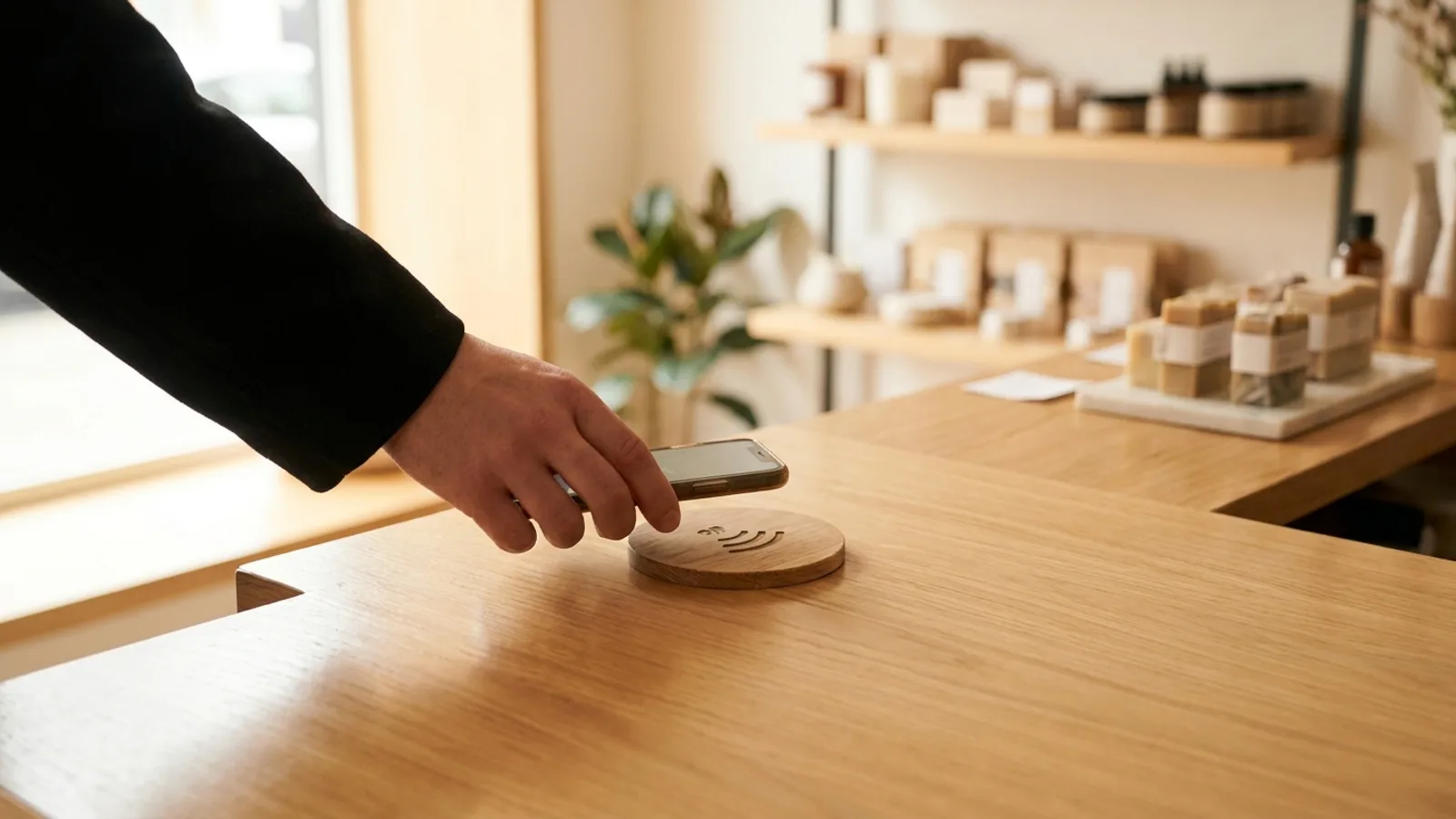
On paper, the NFC plaque is appealing. A nice object on the counter, a contactless chip, a modern gesture: the customer holds their phone near and, just like that, the review page opens. No slightly ugly black-and-white square, no framing to fiddle with. You can see why so many business owners order one. The problem is that the hardware was never the hard part.
On the ground, here is what I see: the plaque is nice, it looks professional, and on its own it converts almost nobody. The customer notices it, reads the message, and does not hold their phone against it. Not because the technology is failing, but because you are asking for an effort without giving the slightest reason to make it.
A silent NFC plaque is a billboard for a product the customer has no desire to buy: the Google review. 💀
🤷 The real problem: a passive stand gives no reason to act
Let us call things by their name. An NFC plaque, like a QR code stuck on the wall, is a passive stand. It sits there, it waits, it hopes the customer will take the step on their own.
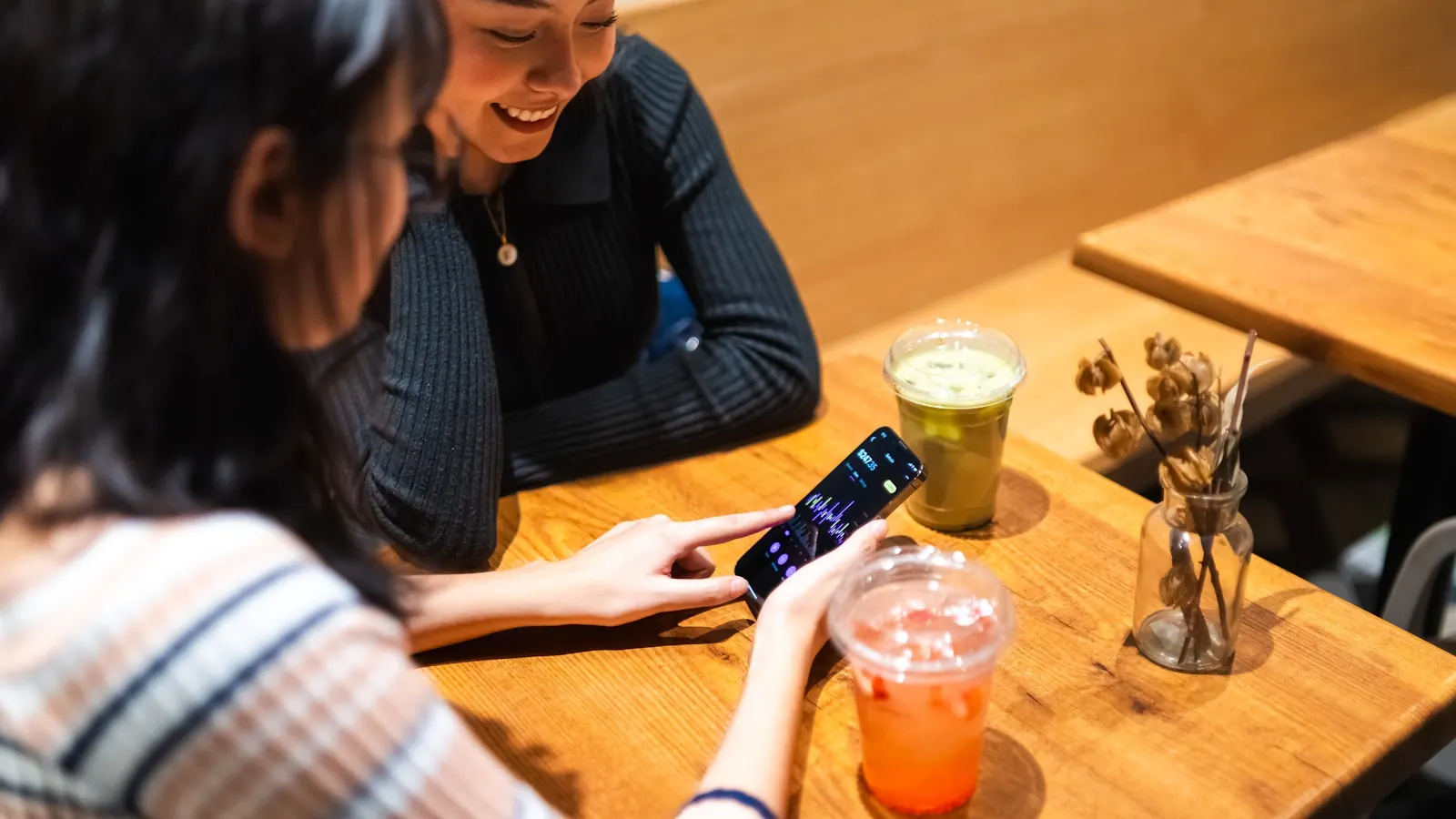
But a happy customer is almost always a rushed customer. They have just paid, they are already thinking about the rest of their day, and writing a review stays, for them, an unrewarded effort that gets them nothing.
👉 The passive stand relies on spontaneous generosity: the least reliable engine there is.
And be clear, this is not a flaw specific to NFC. A contactless chip and a paper QR code share exactly the same weakness when they stand alone: they display an invitation, but they create no desire. Switching technology changes nothing at the core. Going from a passive QR to a passive NFC plaque is just moving an ineffective sign from one wall to another.
Concretely, three reasons explain why your plaque stays cold:
- Placement: if the plaque is not within the few-second window right after payment, the peak of satisfaction has already passed and the customer has mentally moved on.
- The message: "your review matters to us" talks about you, not about the customer. It asks them for a favour, and favours do not get done when you are in a hurry.
- The lack of anything in return: nothing to win, nothing to experience, no curiosity sparked. The gesture has no reason to exist.
🤝 NFC plaque or QR code: the right duo, not a duel
People often ask me the question as if it were a duel: NFC or QR code? Wrong question. They are two supports for the same gesture, and they complement each other far more than they compete. The best option is often to have both, each one where it is strongest.
The NFC plaque is unbeatable at the counter and by the card reader: a nice object, a quick gesture, no framing to do. Its limit is that it stays put. The customer who did not hold their phone near in the shop will never do it from home, because the plaque did not follow them.
The printed QR code, on the other hand, has a superpower NFC does not: it travels. On the receipt, on the bag, on the cake box, it leaves with the customer and lands back in front of them in the evening, at ease.
Wide compatibility too: every phone reads a QR, whereas NFC depends on the model and sometimes on a setting being switched on. The winning combination often looks like this: an NFC plaque at the counter for the present moment, a QR on the receipt to take away. I have laid out the whole logic of where to place the paper stand in a dedicated guide, worth reading alongside this article.
- QR code for Google reviews at the till: the right spot to get people scanning
- How to get more Google reviews in 2026 without cheating
- In-store prize draw to collect Google reviews
📱 What finally gets people scanning: a reason to pull out the phone
If you take away only one idea from this article, let it be this one: the stand does not create reviews, it creates an opportunity. That opportunity only becomes a real review if the customer has a genuine reason to pull out their phone at that very moment.
As long as the plaque says "leave a review", you are betting on the altruism of a rushed customer. The day it says "tap and try to win", you are betting on their curiosity and their urge to win, two far more reliable engines.
This is exactly the problem we set out to solve with our prize wheel. The idea is simple: instead of asking for a review, you offer a game. The customer holds their phone near the NFC plaque (or scans the QR), the wheel opens straight in the browser, they spin, it takes three seconds, and they win a prize you have set.
Once the phone is out and the customer is caught up in the game, the Google review follows naturally, because they are already in the right context, on their screen, at the peak of satisfaction. We have replaced the unrewarded effort with a want: the gesture becomes a consequence instead of a request. ✨
🎡 The wheel plugged in behind the NFC plaque, in practice
Concretely, here is how it plays out on the customer's side. They hold their phone near the plaque at the counter. The wheel opens in their browser, with no app to install.
They spin it, they win a prize you have set (a free coffee, a discount, a small gift, whatever you like), and to claim that prize, they have to come back to the shop. Along the way, the Google review is offered to them at the right moment, freely.
What changes everything compared with an NFC plaque left on its own:
- A reason to scan: we have replaced the unrewarded effort with an urge to win. The phone comes out on its own.
- Zero friction: 100% in the browser, no app, no account to create. The customer is in the game within two seconds.
- A scan becomes a visit: since they have to come back to collect their prize, a customer who plays today drops by again tomorrow. You are not just manufacturing a review, you are manufacturing return frequency.
- You stay in control: the prizes and their odds are adjustable, and an anti-cheat system (a single spin per device) prevents abusive replays.
I am transparent on one point, because it is a rule for us: the wheel collects no email, no phone number. It serves two goals and only two: boosting your Google reviews and livening up your point of sale with a prize draw. This is deliberate, the customer plays without handing over their contact details, so the barrier to scanning is even lower and you stay clean on the trust side.
⚖️ The legal frame: liven things up yes, buy a review no
I always spell this out because it is the line never to cross. You do not buy a review, and you never tie the prize to a positive rating.
Google's rules clearly forbid it, and a business that rewards only 5-star ratings exposes itself to penalties and to fake reviews that eventually show. What you are doing is different and perfectly clean: you liven up the moment of payment with a game that makes people want to pull out their phone, then you let the customer post a Google review freely if they want to.
The rule is simple to keep in mind: the prize rewards taking part in the game, not the content of the review. Everyone who plays can win, whether they leave a 5-star review, a mixed review, or no review at all. It is this separation that makes the mechanic legal, and that is exactly how we designed it.
📊 Measure where it stalls, and adapt to your trade
A review stand with no measurement is flying blind. Most business owners look at the wrong number: they count the reviews, see few of them, and conclude "people do not want to leave reviews". That is almost always false.
You have to separate two completely different steps: how many people hold their phone near and scan (if that is low, your problem is placement or the message), and among them how many end up leaving a review (if that is low, it is the friction or the motivation further down).
A passive plaque shows you nothing at all, you only see the reviews that come in. A mechanic that counts the spins tells you exactly where the brake is.
The logic of the peak of satisfaction stays the same everywhere, but the precise moment changes depending on your activity:
- Restaurant, coffee shop: the plaque at the payment counter or near the card reader, at the moment the well-fed customer pulls out their card.
- Beauty salon, nail bar, hairdresser: right after the mirror, when the customer is visibly happy, before payment.
- Shop, grocery, patisserie: at the counter for the customer in front of you, and a QR on the bag or receipt to catch the one who is leaving.
And remember to physically test your stand once a month. A chip can stop working, a link can change, a sticker can get covered over. A dead stand does not shout, it just makes your reviews drop in silence. Thirty seconds of checking with your own phone are worth more than a month of reviews lost without knowing.
📝 If I had to sum it up in one sentence
An NFC plaque does not create reviews, it creates an opportunity to scan. That opportunity only becomes a real review if it lands in the right place (the point of payment), at the right moment (the peak of satisfaction), and with a genuine reason to pull out the phone. NFC is nice hardware, but a nice passive stand stays a passive stand. What triggers the gesture is the mechanic plugged in behind, not the chip.
Keep your NFC plaque at the counter, add a QR on the receipt for the customer who is leaving, and above all give a reason to play. If you want to see how the wheel spins for real and how I would place it at your point of sale, start a free trial, no bank card and no commitment.
At worst, you walk away with two or three ideas to test as soon as tomorrow. At best, your plaque finally starts working for you.