I do not open restaurants. I am not a chef, I do not know what a kilo of John Dory costs this week, and I would be quite unable to advise you on your menu or your concept. What I do, however, is work with plenty of restaurant owners at Pepite Pass, on retention, customer acquisition, digital tools. And there are 3 marketing mistakes that come up every single time with the ones who end up closing. Three. Every time. Here they are, no filter.
The figure everyone has been throwing around for ten years is that 60% of restaurants close within 3 years, and around 70% within 5 years. The INSEE and Banque de France studies on the survival of sole proprietorships in hospitality and food service confirm it: it is one of the toughest sectors in France. Everyone has the easy explanation: the rent, the payroll, the cost of ingredients, poor management. Fair enough. That is not my turf and I am not going to pretend otherwise. On the marketing side, however, I see exactly the same 3 mistakes repeating. And those, you can fix in a few weeks.
📉 1. The brutal figure and what it really hides
When a restaurant closes, the story we tell is always the same: "the concept was not catching on", "the neighbourhood changed", "costs exploded". It is rarely false. But it is never the whole story.
Behind 9 closures out of 10 that I have watched happen, there is the same marketing skeleton: no customer database, no way to bring people back, and an anaemic Google Business Profile that no longer draws anyone in. From there, the quality of the plate hardly matters: the restaurant simply has no acquisition or retention engine left. It runs on luck. 🎲
Here are the 3 marketing mistakes you find every time, and which I am going to be blunt about for the rest of this article. They are the only ones I am truly entitled to talk about; for the rest (concept, team, margin), your accountant and your cook will do a better job than me.
- Mistake 1: no retention strategy. No customer database, no card, no follow-up.
- Mistake 2: a toxic dependency on platforms (Uber Eats, Deliveroo) that take 30% and the data.
- Mistake 3: zero Google review strategy, when it is the number one lever for local acquisition.
If you recognise yourself in just one of these three, it is not a big deal, we can fix it. If you recognise yourself in all three, it really is urgent, and that is not a line to sell you something, it is what the sector figures are telling you.
🤝 2. Mistake 1: zero retention strategy (and 65% of revenue going up in smoke)
This is mistake number one, the mother of all the others. Most of the restaurants I audit have, literally, no way to reach a customer again after their meal. No email database, no phone number, no loyalty card, nothing.
👉 The customer pays, walks out, and they are dead to you.
If they do not spontaneously come back within 60 days, they probably never will, and you will not even know they are gone.
Why is that fatal? Because the economic rule of the restaurant business is relentless: around 65% of the revenue of a viable restaurant comes from customers who come back, not from new ones. If you have no system to bring people back, you fill the dining room from the top (with new customers you pay dearly to acquire) while it empties from the bottom (invisible lost customers). Mathematically, that does not hold for more than a few years. It is exactly what I broke down in How much a lost customer really costs in the restaurant business : a customer you never see again is 500 to 800 euros of gross margin walking out of the restaurant, not a 25 euro bill.
To solve this, what we built with Pepite Pass is a loyalty card for Apple Wallet and Google Wallet with no app. Concretely: at checkout, you offer the customer a QR code to scan, they add your card to their phone in 10 seconds (zero app to download, it sits in Apple's or Google's native wallet), and they join your customer base. From there, you can send them push notifications straight to the lock screen (birthday, stamp milestone, off-peak promo, win-back after a long absence). It is quiet, integrated, never perceived as spam because it is rare and useful.
The numbers we see with our restaurants after 90 days: +0.3 to +0.5 visits per month per enrolled customer. On a base of 300 regulars with a 25 euro average spend, that is 2,250 to 3,750 euros of additional revenue per month, and around 1,450 to 2,400 euros of gross margin. For the equivalent of one coffee a day, the return on investment is so absurd that we do not even run the maths anymore. And you can try it for free, with no credit card, no commitment, before you decide. If you want to dig into the exact mechanics behind it (tiers, rewards, referral), I broke it all down in The loyalty programme mechanics that actually work in restaurants.
⛓️ 3. Mistake 2: dependency on platforms (and 30% commission that is killing you)
Second mistake, and this one I see literally every week: excessive dependency on delivery platforms. Uber Eats, Deliveroo, sometimes Just Eat. The trap is nasty because at first, it works very well.
You launch, the volume comes in fast, you fill the off-peak hours, you are happy. And then, six months later, you look at your figures and 35% of your revenue goes through these platforms, you pay 30% commission on it, and your delivery customers are... their customers, not yours. You have become a tenant in your own restaurant.
To be very precise about what a platform really costs, here is the table we present to every restaurant we audit:
| Channel | Commission | Customer data | De-listing risk |
|---|---|---|---|
| Uber Eats / Deliveroo | 25 to 35% | None (belongs to the platform) | High (algorithm, penalties) |
| Direct click and collect | 0% | 100% yours | None |
| Direct booking (site / QR) | 0% | 100% yours | None |
| TheFork / other booking platforms | 2 to 5 euros per cover | Partial | Moderate |
The point that should chill you is not the commission (a paid channel can absolutely be part of the mix). The point that should chill you is the middle column: you do not own your own customers. If Uber Eats decides tomorrow to change its algorithm, to boost a competitor, or to suspend you for 72 hours over a score dispute, you lose 35% of your revenue in one click. 💀 I have seen it happen. Several times. And half the restaurants it happened to could not absorb the blow.
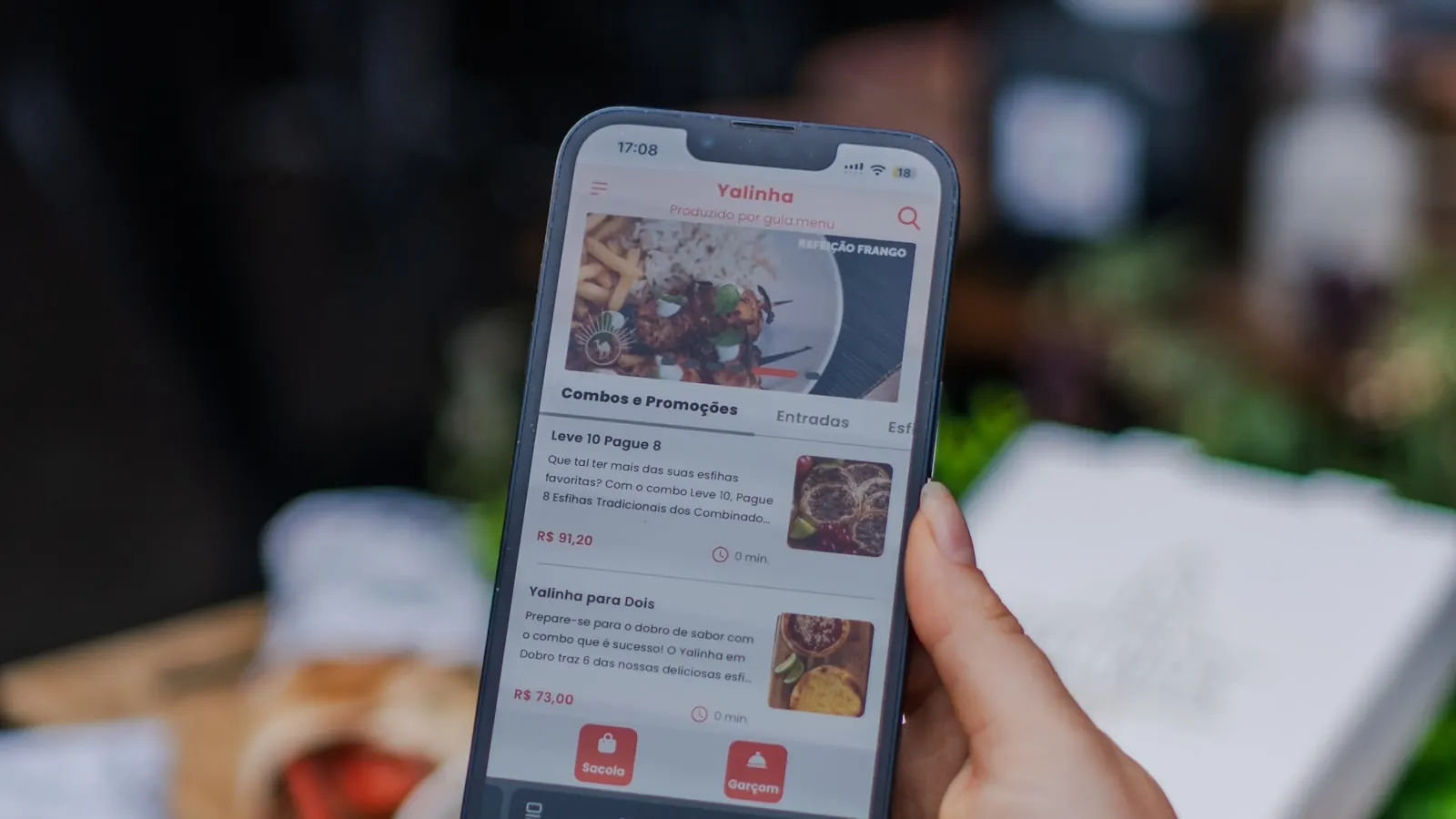
To solve this, what we built at Pepite Pass is a digital menu with click and collect and booking at 0% commission. Concretely: you get a link and a QR code with your menu, your dishes, your photos, your set menus. The customer scans it on the table or on Instagram, orders takeaway, pays online, books a table. No commission: the order comes straight to you, not to a platform. And above all: you recover their name, their email, their number. It is your customer from then on.
The idea is not to remove Uber Eats overnight. The idea is to build a direct channel alongside it that will capture, month after month, your regulars who no longer want to pay the 4.99 euro delivery surcharge. After six months, we typically observe: 30 to 50% of the delivery volume shifted to direct click and collect, with the saved commission dropping straight into margin. For a restaurant doing 15,000 euros a month in delivery, that is easily 1,800 to 3,000 euros a month of recovered margin.
🔥 The "Uber Eats is free" trap
A word on what we often hear: "Uber Eats is free, I do not put anything up front". No. You pay, and you pay dearly. You pay on every order, you pay in customer data, you pay in dependency, and you pay in margin. The platforms' lie is that there is no initial investment. But the investment is your margin on every order, for life. A direct channel takes a 2-3 week effort to launch, and after that, it runs on its own, with your margin intact.
See the 0% commission digital menu
⭐ 4. Mistake 3: no Google review strategy (and the number one local acquisition lever you are leaving on the table)
Third mistake, the most invisible and probably the most costly in the long run: the total absence of a Google review strategy. Most of the restaurants I audit have between 30 and 150 reviews on their profile, half of them from two years ago, and an average rating between 3.8 and 4.2. That is enough not to be blocked, it is not at all enough to gain visibility.
Let us remember what happens when a future customer looks for a restaurant. They type "Italian restaurant Paris 11" or "restaurant near me" into Google or Google Maps. And Google shows, in order: the profiles with the most recent reviews, the best ratings, and the strongest local relevance.
If you are at 4.1 stars with 80 reviews whose most recent dates from March 2024, you are on the second page. Nobody sees you. Nobody walks through your door. You pay Uber Eats to plug the gap, and the loop closes.
The work of Michael Luca at Harvard (2016) shows that one additional star on Yelp/Google translates into +5 to +9% in revenue on average for independent restaurants. Going from 4.0 to 4.5 is 3 to 5% more revenue, with zero ad spend. It is the marketing lever with the best effort-to-impact ratio in food service, and it is the one nobody touches.
To solve this, what we built at Pepite Pass is a prize wheel for Google reviews. Concretely: at the end of the meal, you present a QR code (on the bill, at the front desk, on the table). The customer scans it, leaves their Google review, and spins a wheel that hands out rewards (free coffee, dessert, discount on the next visit, a bet on a glass of champagne). Every mechanic respects Google's rules: no reward in exchange for a positive review, only for the act of leaving an honest review.
What we observe over 30 days: 5 to 10 times more reviews than before, an average rating that naturally climbs because happy customers are over-represented (statistically, unhappy ones write spontaneously, happy ones forget unless you nudge them), and local traffic that takes off within the next 60 days. One of our restaurants in Lyon went from 4.1 to 4.6 stars in 6 weeks, with 180 extra reviews. Revenue observed over the following quarter: +11%.
🎯 5. The combo that saves you: all 3 fixed together
Now, here is what you really need to understand: these 3 mistakes are not independent. They form a system. When you fix just one, the effect is nice. When you fix all three together, something exponential happens. Here is why:
- The loyalty card captures the customers walking through the door today and brings them back. Without it, all the other efforts evaporate.
- The digital menu plus click and collect shifts platform orders to direct, so it protects your margin AND captures extra customer data (which in turn feeds retention).
- The Google review prize wheel feeds the acquisition of NEW customers on Google Maps, who themselves become loyal via the card. A virtuous loop.
Here is the table of the estimated impact on an average bistro (40 covers, 25 euro average spend, 250,000 euros of annual revenue) after 6 months of putting all three in place:
| Lever | Effect observed at 6 months | Margin recovered /year |
|---|---|---|
| Wallet loyalty card | +0.3 to +0.5 visits/month on the regulars base | ~15,000 to 25,000 euros |
| Digital menu plus click and collect | 30 to 50% of delivery orders shifted to direct | ~12,000 to 25,000 euros |
| Google review prize wheel | +0.3 to +0.5 stars, x5 to x10 reviews | ~12,500 to 22,500 euros |
| Estimated total | A restaurant in controlled growth | ~40,000 to 70,000 euros |
These are not marketing numbers. They are orders of magnitude observed on comparable restaurants that we work with. The upper end of the range is very achievable when the 3 levers run together for 12 months. And the cost of the Pepite Pass tools is the equivalent of one coffee a day to go and capture 40 to 70k euros of margin. You can even try it for free, with no credit card and no commitment, before you decide. If you have an ROI calculation that beats that one on another line of your P&L, let me know, I am all ears.
✍️ 6. If I had to sum it up for a restaurant owner who writes to me tomorrow
Here is what I would say in five lines to a restaurant owner who sends me a WhatsApp message tomorrow at 11.47pm after their service:
- If you have no customer database, that is the absolute priority. An Apple/Google Wallet loyalty card gets set up in 48 hours, and it starts capturing from the very first service.
- If Uber Eats accounts for more than 25% of your revenue, you are in the fragile zone. Build a direct channel now, gently, without breaking what already works.
- If you have fewer than 200 Google reviews with a velocity below 10/month, you are invisible. Set up the wheel, it is probably the fastest lever to activate.
- If you want a complete view of customer retention in 2026, I have a dedicated guide that details all the mechanics and their ROI.
- And if you just want us to look at your case together in 15 minutes, I am reachable on WhatsApp at +33 6 03 90 27 83. I look at your Google Business Profile, your Uber Eats flow, I tell you what I see.
One last thing. I am not telling you that a restaurant closes solely because of marketing. You know better than me the weight of the rent, the teams, the suppliers, the tax burden. That is not my trade and I will not pretend otherwise. What I do know, however, is that nearly all the restaurants I see close would have had an extra chance with these 3 marketing levers in place. Not the miracle cure. Just an extra chance. And in a sector where 60% close within 3 years, an extra chance changes everything. ✨
Leo, founder of Pepite Pass.