You see the full dining room, the service ticking over, the till ringing. All is well. Except that at every service, two or three customers walk through the door never to return, and you are not counting them.
They are the real hole in your P&L. Not food cost, not payroll: the lost customers. And most restaurant owners have never reached for the calculator to work out what it costs. Today, we do it together.
This article is not marketing waffle. It is a cold calculation, step by step, with a concrete example of a Paris bistro that you can reproduce with your own figures in ten minutes. The goal: to give you a real economic compass for deciding where to put your energy and your marketing budget in 2026.
Spoiler: if you run a restaurant doing 30 to 80 covers at a €25-35 average spend, you are probably leaving between €40,000 and €90,000 of gross margin on the table every year, simply because you have not organised the retention of your customers. It is a brutal figure, but we are going to prove it line by line.
🧮 1. The basic calculation: spend × frequency × margin × lifespan
LTV (lifetime value) is the fundamental metric every restaurant owner should know, and that almost nobody calculates. It is quite simply what an average customer brings to your establishment over the whole span of your relationship. The formula is crystal clear:
LTV = Average spend (incl. tax) × Monthly frequency × 12 × Lifespan (years) × Gross margin %
Each of these levers is actionable. And that is precisely what makes this calculation magical: if you move even a single parameter by 10%, your average LTV shoots up, and the cost of a lost customer explodes. Let us test it.
For the sake of the demonstration, let us take the 4 parameters one by one and look at their sensitivity:
- The average spend. The hardest lever to move in the restaurant business, it depends on your menu, your positioning, your clientele. A +5% is already an excellent result, and you work it through the menu (suggestions, starter prices, set-menu format).
- Visit frequency. The most powerful and the most accessible lever. Taking a customer from 1.4 to 1.8 visits per month is +28% of revenue without opening a single new table. That is exactly what a good loyalty programme does.
- Lifespan. Often overlooked, yet critical. Going from 2 years to 3 years is +50% of LTV. It depends essentially on perceived quality and... on frequency.
- Gross margin. You know it by heart. It is your food-cost menu, your supplier negotiations, your management of unsold stock. A +2 margin points has a direct multiplier effect on everything else.
🍽️ 2. A concrete example: Jean's bistro, €25 average spend
Picture a classic Paris bistro. 40 covers, 50 services a week across lunch and dinner, a clientele of neighbourhood regulars and local office workers. Here are its "baseline" figures, the ones we see at half the restaurants we work with:
- Average spend (incl. tax): €25
- Average frequency: 1.4 visits per month per customer
- Gross margin: 65% (after food cost)
- Average customer lifespan: 3 years
Let us run the calculation: €25 × 1.4 × 12 months × 3 years × 65% = €819 of gross margin per customer over the lifetime. In other words, every face you never see again after their visit represents, on average, €819 that will never land in your till.
👉 Not 25. Eight hundred and nineteen.
Now, the moment where it really stings. Out of 100 new customers who push open Jean's bistro door in January, how many come back in February? How many stay loyal at 12 months? Industry figures show that roughly 60 to 70% never come back after their first visit. That means that out of these 100 customers, 60 to 70 walk off with, in their invisible pocket, €819 each.
Let us multiply: 65 × €819 = €53,235 of gross margin "left on the pavement" every month.
👉 Not over a year. Every month.
That is the real hidden cost of having no retention, and it is usually the most painful line in a restaurant's budget, because it is invisible.
Let us be a little more precise about this, because I am sometimes accused of being pessimistic. Out of these 65 customers who do not come back, some would have returned once or twice within the year. Say we lose "only" half of their LTV. That still comes to 65 × €410 = €26,650 of gross margin evaporating every month, or €320,000 of margin over the year. Compare that to a loyalty programme subscription that costs the equivalent of a coffee a day. The order of magnitude is beyond dispute.
👀 The lost customer, made visual
If you want an image that sticks, picture this: every customer who leaves your restaurant and whom you will not see again has just laid a €500-800 note on the table, and picked it back up on the way out. You do not see it, because it is virtual, spread over 36 months. But the money is not in your till. And it could have been, for the price of a loyalty card offered at the checkout.
💸 3. The real cost of acquiring a new customer (Google Ads, Instagram, flyers)
Now that we know what a lost customer is worth, let us look at what a brand-new one costs. Because most restaurant owners, faced with the "my dining room is not full" problem, reach for the acquisition taps: Meta ads, Google Ads, flyers, influencers. It is legitimate, but it is often the wrong budget call.
Here are the realistic ranges seen in 2026 for restaurants in medium to dense urban areas:
- Local Google Ads: €0.80 to €2.50 per click, ~5% conversion into a real visit ⇒ €16 to €50 per new customer.
- Meta Ads (Instagram + Facebook): €0.50 to €1.80 per click, ~3% conversion ⇒ €17 to €60 per new customer.
- Flyers in the catchment area: ~1% response, printing + distribution cost €0.15 to €0.30 per flyer ⇒ €15 to €30 per converted customer.
- Local influencers (micro-influencers): €150 to €800 per sponsored post, very volatile ROI depending on the creator ⇒ €20 to €80 per customer who actually shows up (and that is generous).
Let us be honest: the average cost of acquiring a new customer in urban dining sits between €20 and €40 once you factor in the time spent, the creatives, the bowls you bin and the unsold stock. And that customer, as we have just seen, only has a 30 to 40% chance of coming back a second time if there is nothing to hold on to them.
🔥 Why acquisition alone is a budget trap
The "I am short on customers, so I advertise" reflex is a classic trap. Suppose Jean's bistro decides to pour €1,000 a month into Meta Ads, which is a fair budget. With an acquisition cost of €30, that brings in 33 new customers a month. If 35% come back a second time (the rate observed with no loyalty programme in place), that leaves 12 genuine new regulars a month, or ~145 over the year.
Not bad on paper. Except that these new regulars will, in turn, be subject to a 30 to 40% retention rate over the following year. With no retention lever, it is a leaky bucket: you fill it, it leaks, you fill it, it leaks. And every month you pay €1,000. Conversely, investing the equivalent of a coffee a day in retention and keeping even 50% more of your visits is 5 to 10x more efficient per euro invested.
⭐ The silent impact of Google reviews
Michael Luca, a professor at Harvard Business School, showed in a landmark study (2016) that one extra star on Yelp/Google drove a 5 to 9% rise in a restaurant's revenue. That is enormous. Except that to climb one star, you have to accumulate dozens (or even hundreds) of new Google reviews, and therefore: satisfied loyal customers who come back. Once again, retention feeds acquisition.
📈 4. How much one extra loyal customer brings in
Back to Jean's bistro. He has 300 customers he considers his "regulars". Suppose that, through a well-built loyalty programme, we manage to get them to make just one extra visit per quarter. That is +0.33 visits per month per customer. Here is the full simulation table:
| Scenario | Visits/month/customer | Monthly revenue | Monthly gross margin | Annual gross margin |
|---|---|---|---|---|
| Before programme | 1.4 | €10,500 | €6,825 | €81,900 |
| +0.2 visits/month | 1.6 | €12,000 | €7,800 | €93,600 |
| +0.33 visits/month | 1.73 | €12,975 | €8,434 | €101,205 |
| +0.5 visits/month | 1.9 | €14,250 | €9,263 | €111,150 |
On the median scenario (+0.33 visits), we are talking about +€19,305 of annual gross margin. For a loyalty tool that costs the equivalent of a coffee a day, the ROI runs into tens of times the outlay. At 0.5 extra visits, it is ~61x. These are not exotic figures: it is what we observe at Pépite Pass restaurants that use their push notifications seriously after 90 days of operation.
Let us break down where this +0.33 visits per month comes from so nothing stays abstract. It is roughly:
- A "Thursday lunch" push every week ⇒ ~5% of returns triggered ⇒ ~+0.2 visits/month across the base.
- A visible stamp mechanic (8 visits = a free dish) that naturally speeds up the last visit before the reward ⇒ ~+0.1 visits/month.
- A personalised birthday notification once a year with a free dessert ⇒ ~+0.03 visits/month smoothed out.
Add the three together and you are at +0.33 visits/month. It is nothing and it is everything. Nothing because it is microscopic seen from each individual customer. Everything because, multiplied across your base, it becomes one of the biggest margin lines in your annual P&L.
See a worked simulation for my restaurant
⚖️ 5. Acquisition vs retention: the table that settles it
The compared cost of acquisition versus retention is one of the most-quoted rules in marketing, and one of the least applied in the restaurant business. The industry benchmark (Bain & Company, Harvard Business Review) sits around a factor of 5 to 7: it costs 5 to 7 times more to win a new customer than to keep an existing one. Here is what that looks like, translated into euros for Jean's bistro:
| Action | Unit cost | Gross margin generated | ROI |
|---|---|---|---|
| Acquire 1 new customer (Google Ads) | ~€30 | ~€140 (visit 1 + 40% come back ×€819) | ~4.7x |
| Acquire 1 new customer (Meta) | ~€35 | ~€140 | ~4x |
| Retain 1 existing customer (+0.3 visits/month) | ~€1.30/year (tool + reward) | ~€64/year | ~49x |
| Free push to Wallet-equipped customers | €0 per send | €15 to €80 per campaign per customer | ∞ |
Free push to installed Wallet cards is the atomic weapon of restaurant retention in 2026. It is the equivalent of having the direct phone number of every regular, without paying a penny per message, without any app to install. To dig into this lever, see our guide on Wallet push notifications in the restaurant business.
🎯 6. The 3 retention levers that really change the numbers
Not all retention levers are equal. In 2026, across the bistros, brasseries and neighbourhood restaurants we work with, three mechanics stand out in terms of measurable impact on visit frequency:
📱 Lever 1: the digital Wallet loyalty card
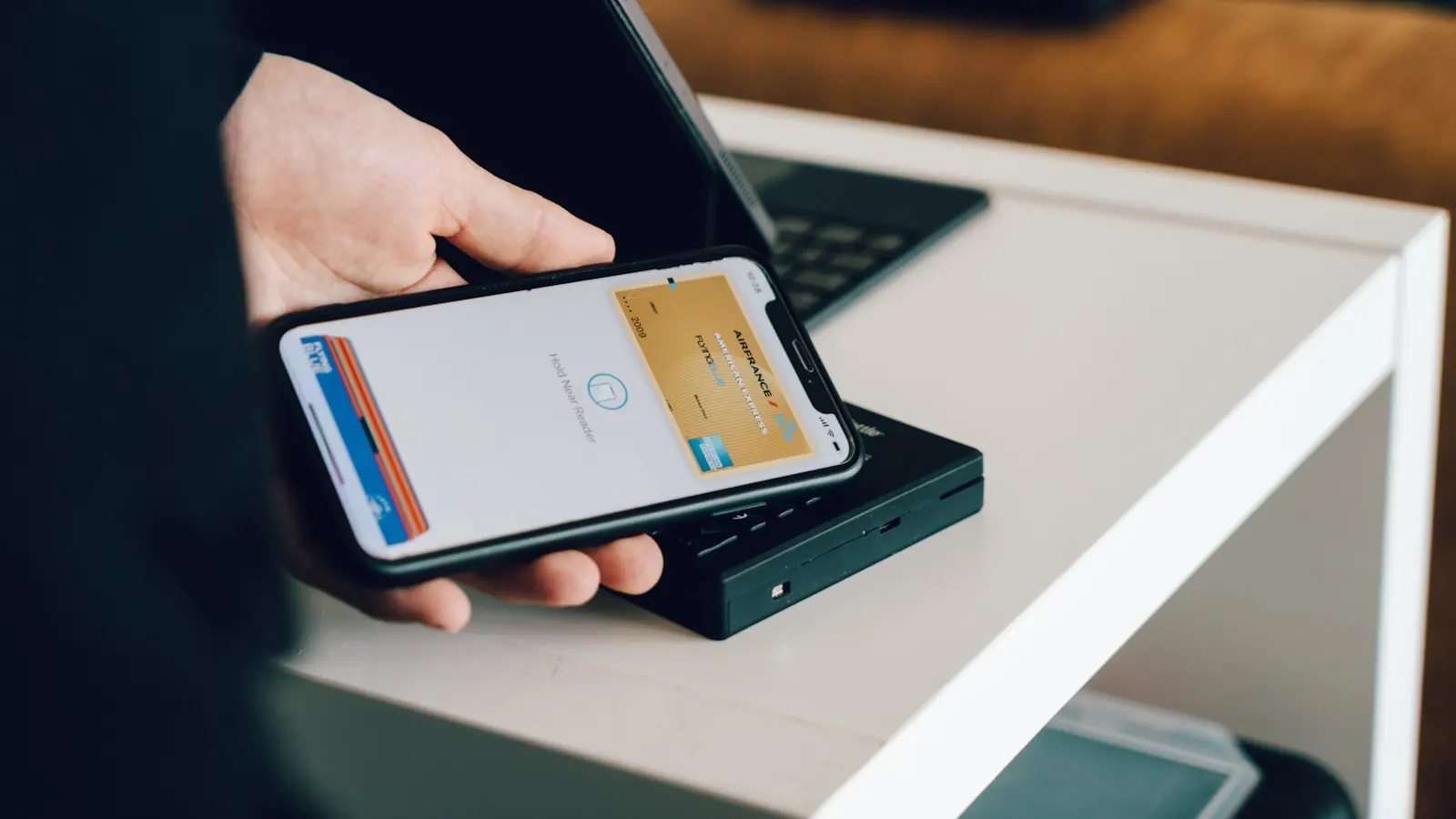
Not the paper card that gets lost in the wallet. Not the app you have to download (a catastrophic conversion rate: ~3% of customers who are asked to download an app actually do it). The Apple Wallet / Google Wallet digital card installs in 5 seconds via a QR code at the checkout, with no friction. And it lives in the phone's wallet, right next to the bank card. Unbeatable.
🔔 Lever 2: smart push notifications
Once the card is installed, you have a direct channel, free, with no cost per send, to every customer. No spam, no overpriced SMS, no email that ends up in the Gmail promotions tab. A notification pushed at the right moment (3pm on Thursday for brunch, 6.30pm on Friday for pre-dinner drinks) commonly generates 5 to 15% extra bookings on the targeted service.
🤝 Lever 3: a simple mechanic that speaks to the customer
No 12-tier system with convertible points, coefficients and an astrophysicist's calculator. A good restaurant mechanic fits in one sentence: "On your 10th visit, your dessert is on us" or "For every €50 spent, €5 off". To dig deeper: see the loyalty programme mechanics that really work.
The golden rule we observe across the 200+ Pépite Pass restaurants: a mechanic a customer discovering the card can understand in 5 seconds generates 3 to 4 times more engagement than a sophisticated one. The human brain does not like doing maths at the checkout. The clearer it is, the more the card gets installed, and the more visit frequency follows.
💰 7. The break-even point of a loyalty programme
At this stage, the fair question is: "OK, but from how many retained customers does this become profitable for me?" Let us calculate it properly, still on Jean's bistro.
The cost of a programme like Pépite Pass comes to the equivalent of a coffee a day. Let us add the cost of the rewards given away (free dessert on the 10th visit: ~€5 of food cost × ~10 rewards handed out per month = €50 a month). The annual total stays very modest next to what follows.
Extra gross margin needed to reach break-even: a few hundred euros at most. With a €25 average spend at 65% margin, you need a handful of extra visits per month. On a base of 300 loyal customers, that is +0.019 visits per customer per month. Microscopic. Below every value seen in the field (the low average is +0.2).
In other words:
- If your programme generates even half an extra visit per customer per year, you are 10x above the break-even point.
- If you sign up just 50 regular customers and each of them comes back 2 more times in the year, you cover your annual subscription × 5.
- The programme pays for itself as soon as 5 extra customers come once more per month. Five customers. Out of 300.
It is this asymmetry that makes retention so formidable: we are talking about levers that look tiny (0.2 visits is a customer coming in four times instead of three in the quarter), which turn into thousands of euros at the scale of the whole base.
⚠️ 8. The calculation mistakes I see all the time
Working through this calculation with restaurant owners, I keep running into the same biases. If you want an honest view of your P&L, avoid these traps:
- Confusing revenue and gross margin. A €25 bill is not €25 of profit. It is ~€16 after food cost, and less still after fixed costs. Always think in margin.
- Overestimating customer lifespan. 5 years is extremely rare in urban areas (people move house, change neighbourhood, change job). 2 to 3 years is more realistic for a classic neighbourhood bistro, 1 to 2 years for an office-worker restaurant.
- Forgetting that frequency is not fixed. A customer who feels recognised (loyalty card, personalised push, greeted by their first name) mechanically goes from 1 to 2 times a month on average. That is the lever that changes everything.
- Counting Instagram acquisition as "free". The time spent posting, replying to DMs, making stories, that is a salary, at least €25/hr. Over 5 hours a week, that is €6,500/year. It is never free.
- Not distinguishing new customers from repeat customers. You have to segment your base. Without it, you will never know where your marketing really goes. A digital card does this work automatically.
🙈 Trap #1: "my customers come back anyway"
It is the sentence I hear most often, and it is almost always false. Without data (loyalty card, CRM, bookings), you only see the faces you recognise (that is, the most loyal 15 to 20%). The remaining 80%, you mistake for new arrivals, and you do not see that they are not coming back. That is exactly why the first step is to measure.
🪑 Trap #2: "my dining room is full, I do not need this"
Your dining room is full today. Wonderful. And in 6 months, when a new restaurant opens 100 metres away, or a key chef leaves, or a wave of strikes wrecks your office-worker traffic? Retention is not an answer to an emptiness problem. It is insurance against external shocks. The restaurants that survive the hard periods are always the ones that had a solid base of traceable regulars, not the ones doing volume through TheFork and Uber Eats.
💎 Trap #3: "loyalty cards look cheap"
That was true for the stamped card. It is no longer true for the digital Wallet card, which lives in the phone's wallet next to the bank card and the health card. If you run a high-end restaurant, the loyalty card can take the shape of a private programme (birthdays, tastings, regulars' events). To dig into the comparison: paper vs digital loyalty card.
✅ 9. If I had to sum it up in one sentence
A lost customer in the restaurant business does not cost one average bill. It costs an LTV, that is, for a classic urban bistro, between €500 and €1,200 of gross margin. And every month, statistically, you lose several dozen of them without even seeing them.
Retention costs 5 to 7 times less than acquisition. A well-built Wallet loyalty programme (card + free push + simple mechanic) pays for itself as soon as it generates 5 extra visits per month on a base of 300 customers. It is microscopic in effort, enormous in effect.
And the detail that changes everything: unlike acquisition, which is a recurring cost (you pay every month for every new customer), retention is an asset. Once a customer has installed their Wallet card, you can reach them again for free, for life. It is exactly like building your own base of Instagram followers, except that every "follower" is a real customer who has already eaten at your place and agreed to be sent notifications. No paid advertising channel produces this kind of asset.
If you want to dig in concretely, read our related guides: how to retain your restaurant customers in 2026, the loyalty programme mechanics that work, Wallet push notifications and the complete guide to the digital loyalty card. Or start your free trial right away: you will have your Apple/Google Wallet card and your first equipped customers this afternoon.