I will be blunt: in 2026, the paper loyalty card is a dead weight. Not an opinion, a calculation.
And yet I still walk into bistros, hair salons and shops where the stamp card sits by the till, half folded. This article is here to compare honestly: what it really costs, what you lose, what you gain, and when, let us be honest, it still makes sense to keep paper.
I am Léo, founder of Pépite Pass. I sell a digital loyalty card, so yes, I am biased.
But I have also run the numbers for dozens of business owners before they signed up, and some of them decided that paper was enough for them. No problem. This article is not a sales pitch, it is a comparison with numbers.
To set the scene, we are talking here about the classic stamp card (buy 10 coffees, the 11th is free), not the plastic supermarket-style cards with barcodes and a till scanner, those are another topic, usually reserved for chains. The comparison that follows is aimed at local businesses: bistro, restaurant, hair salon, beauty salon, shop, bakery, greengrocer, café. In short, the ones that today have a stamp and a stack of cards by the till.
💸 1. The paper card: what it really costs (and that nobody works out)
When I ask a business owner "how much does your paper card cost you a year?", the answer always comes in two stages. First "nothing, it is free". Then, after 30 seconds, "well, actually...".
Let us break it down honestly:
- Card printing: on average €0.15 per card at a local printer, on 350gsm card stock, double-sided. For a busy business, count on 500 cards a year. That is €75/year on printing alone.
- Stamps: a good rubber stamp with your logo costs €15 to €25. You have to replace it every 2-3 years (it wears out). That is ~€8/year.
- Ink and ink pads: a refillable ink cartridge is €5 to €10, replaced 2 to 4 times a year depending on volume. That is ~€25/year.
- Annual redesign: at least once a year, you change the design (logo update, new opening hours, graphic refresh). Design cost + new print run: ~€80.
- Lost / damaged stock: cards that get wet, left in storage for 18 months, with a typo spotted too late. ~€20/year wasted, at a minimum.
Direct total: ~€208/year, or €17/month. At this point, the business owner tells me: "Well, that is still cheaper than your subscription". Except we have not counted the hidden cost, the one that really hurts.
🙈 The hidden cost: customers who forget their card
Based on the field feedback I have compiled over two years from restaurant and shop owners who use it, around 70% of customers forget their paper card when it is time to pay. What do they do? Three options: they turn down a stamp (so your programme does not run), they ask you for a new card (waste), or they leave a little annoyed (a straight loss).
Say you have 200 regular customers. If 70% forget one time in two, that is 140 occasions a week where your loyalty programme simply does not work.
The point of a loyalty card is to nudge the customer to come back. If the tool only works 30% of the time, you are paying for nothing, paper or not.
And there is an even more insidious cost: a customer who loses their card halfway through (5 stamps out of 10) mentally gives up on the programme. They will not come back specifically to start a new card from zero. You have lost them without knowing it.
Over a year, a typical bakery can lose 30 to 60 loyal customers just because of this. It does not show up in the till, it shows up in the revenue curve that flattens out.
📱 2. The digital card: what it really costs (and what it earns you on top)
Pépite Pass is the equivalent of a coffee a day. No setup fees, no hardware to buy, no app to make your customers download. And you start with a free trial, no bank card: you see before you pay anything.
At first glance, it looks more expensive than the €208 of the paper card. Except we are comparing a car and a bicycle. Here is what you buy on top:
- Unlimited push notifications: you send a message that appears directly on the lock screen of your customers' phones. No paper equivalent.
- Real-time updates: the stamp is added on the customer's side the moment you scan. The customer sees their card update in their Wallet.
- Precise statistics: how many customers have installed the card, who comes back, who drops off, who has reached their reward. No paper equivalent.
- Per-customer personalisation: first name, sign-up date, birthday, visit frequency.
- Zero loss: the customer rarely loses their phone, and even if they switch phones, their card is synced through their Apple/Google account.
- Multi-location: if you have several addresses, the same card works everywhere, and you see which location retains customers best.
And above all: the digital card works even when the customer has forgotten it. Because it is on their phone, which they carry with them.
The 70% of customers who used to forget the paper card? They have their Wallet on them. Your programme runs at 95% effectiveness instead of 30%. ✨
📊 3. A numbers comparison over 12 months
Let us put the numbers side by side, for a business that gets through 500 cards a year, with 200 genuinely active customers.
| Cost item | Paper card | Pépite Pass |
|---|---|---|
| Card printing (500/year) | €75 | €0 |
| Stamps + ink | €33 | €0 |
| Annual graphic redesign | €80 | €0 (included, editable at will) |
| Lost/damaged stock | €20 | €0 |
| SaaS subscription | €0 | Free trial, then the equivalent of a coffee a day |
| Programme effectiveness | ~30% (forgotten cards) | ~95% |
| Customers won back by push (estimated) | 0 | +10 to +15 per campaign |
| Estimated additional revenue/month* | €0 | +€250 to +€500 |
* Assumption: 10 customers won back × average spend €25 × 2 visits/month. Obviously adjust for your own business.
On direct cost alone, paper looks cheaper. But that is not the right question. The right question is: does my programme generate extra revenue?
A paper card brings no one back. It rewards those who are already there. A digital card, through push notifications, brings back customers who would have drifted away. And that is where the ROI is decided: not in the cost, but in the return.
⚖️ 4. A feature comparison
Beyond price, let us look feature by feature. This is often where business owners make their decision.
| Feature | Paper | Digital (Wallet) |
|---|---|---|
| Win back a customer who stopped coming | Impossible | Targeted push in 30 seconds |
| Announce an event / something new | A poster in the window, seen by 10% of customers | Push to the screen of every customer who installed the card |
| Customer's birthday | You do not know whose | Automatic, personalised push |
| Visit tracking | Stamps added up, no dates | Timestamp on every stamp |
| Customer identification | Anonymous | First name + history |
| Losing the card | Stamps lost, start over | Restored via Apple/Google ID |
| Multiple locations | One card per address, unreadable | A single card, stats per location |
| Design update | A full reprint | Edited in 2 minutes, pushed to everyone |
| Environmental footprint | Paper, ink, waste | Zero printing |
Out of 9 features, paper trails on all 9. This is not a fair fight, it is a comparison between a book of metro tickets and a Navigo travel pass.
Both work. Except only one tells you what is going on.
A situation this table does not cover? Write to me
💎 5. The 4 real hidden advantages of digital
Beyond the table, there are 4 benefits business owners do not suspect until they have tried it.
💰 5.1. The push reminder that brings in cash
You have 200 customers with the card installed. Tuesday evening you are empty. You send a push: "Tonight, dish of the day at €12 instead of €16".
10 minutes later, 8 bookings. The push is free, unlimited, included in the subscription.
No paper equivalent does that.
📈 5.2. The customer data that changes how you see things
You see which customer has not been in for 45 days when they used to come every two weeks. You see which day of the week pulls the biggest crowd, which peak at which hour. You see which customers reached the reward but never came back to claim it (and you win them back).
This data, you do not have with paper. Never.
🧳 5.3. The card that follows the customer everywhere
The customer switches phones? Their card arrives automatically on the new one, through their Apple or Google account. They forget you for 3 months? The card is still in their Wallet, waiting for a push. With paper, the moment it is lost, your customer is lost. 💀
😌 5.4. Zero friction for the customer
No app to download, no account to create, no password.
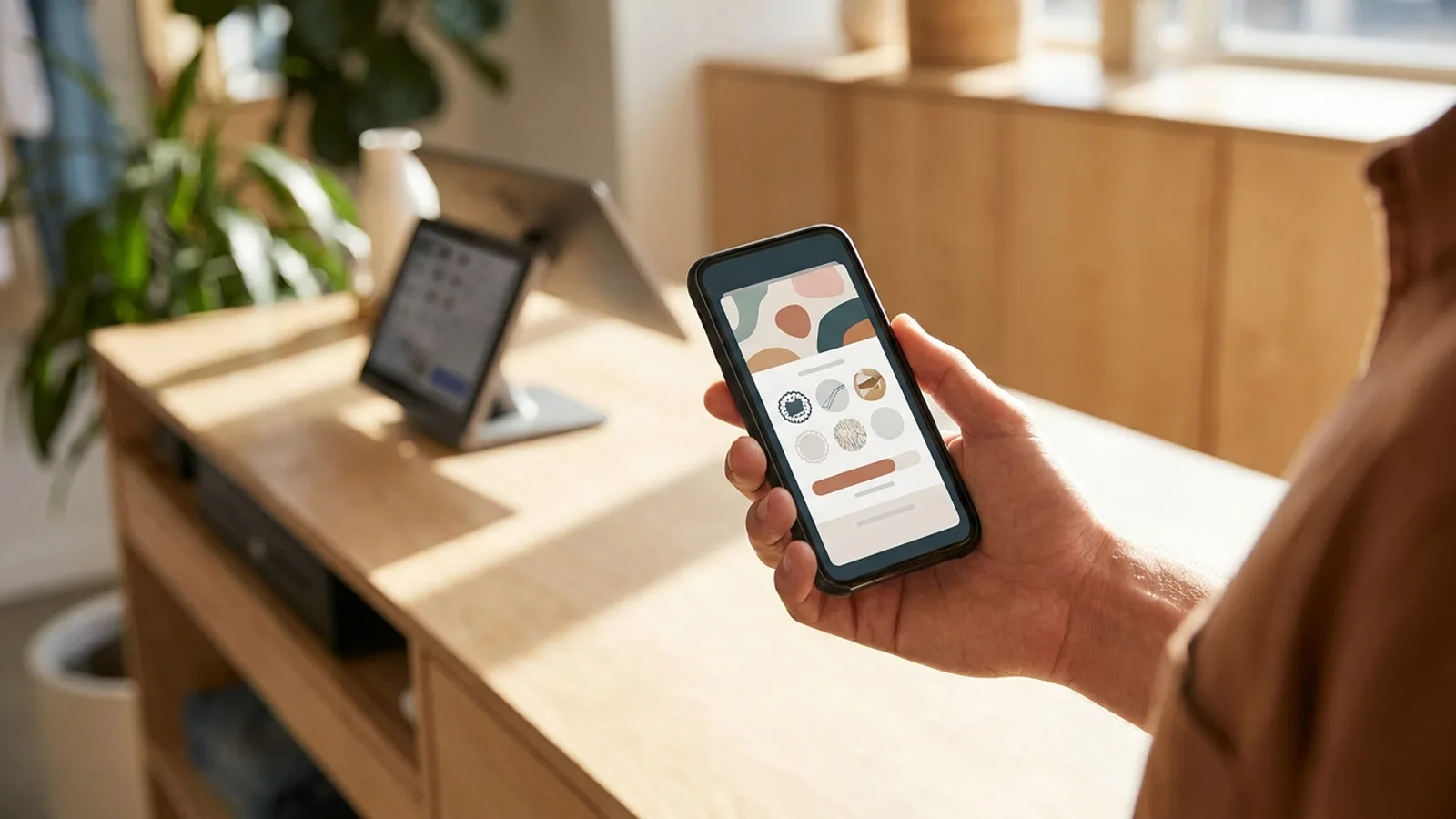
👉 Scan the QR, first name, add to Wallet. 5 seconds.
Faster than filling in a paper card with your name, your number, your email. The sign-up rate is markedly higher: I regularly see 70 to 85% of customers agreeing, versus 30 to 40% with a paper card where you have to fill in fields.
And a detail that matters at the till: you no longer have to manage physical stock. No more cards to reorder, no more stamp drying out, no more ink pad to freshen up.
The till is cleaner, faster, and the team no longer gets it wrong ("is that your 9th or your 10th stamp?"). The QR scans, the tool counts, end of story.
To dig into this friction-free point, I wrote a dedicated article: the loyalty card with no app. And if you want to see how push notifications bring your customers back, see the complete 2026 guide.
🔥 6. The 3 classic arguments for paper (and why they no longer hold in 2026)
I will be fair: the business owners who defend paper are not dinosaurs. They have real reasons. But those reasons are crumbling in 2026. Let us look at the three main ones.
👵 "My customers are older, they do not know how to use this"
In 2026, 84% of French people aged 60 to 74 use a smartphone (Médiamétrie figure). My most active push users are... customers over 65, who have understood that the phone does not lose the card.
The demographic argument held in 2018. Not in 2026.
❤️ "It is warmer, more personal"
A paper card is anonymous. It carries no name, no birthday, nothing. You do not know who this customer in front of you is.
The digital card, on the other hand, carries the customer's first name, how long they have been coming, their recent visits. You can call them by their first name from the second visit. That is warmth.
💳 "I do not want to pay a subscription"
Fair point. But look at what you already pay in subscriptions: card terminal, internet, till software, professional coffee machine, refrigeration contract, alarm.
You are not paying the equivalent of a coffee a day for "something extra", you are replacing a broken tool (paper that does not work 70% of the time) with one that works. And the trial is free, you see before you pay.
📄 7. When to keep the paper card (yes, sometimes)
I am honest: there are 3 cases where I advise sticking with paper.
- Very low customer volume: you have 20-30 regulars, you know them all by heart, you have no flow of new customers to turn into regulars. Digital will not bring you much, keep it simple.
- Very thin margin per sale: if each visit brings €2 of net margin, bringing back one more customer a month does not cover the subscription. Rare in food service, common in newsagents or ultra-discount local shops.
- You will never use the push notifications: if you are allergic to "marketing", if you refuse under any circumstances to send a customer a message, you are paying for features you will never open. Be honest with yourself: stay on paper.
For everyone else (that is, let us be realistic, 90% of local businesses), the maths leans towards digital. And even in the 3 cases above, I would rather say it before you sign up than after. If you want to dig into the real cost of a customer who drifts away, see how much a lost customer costs in food service.
🏁 8. The verdict
The paper vs digital card debate is not a technology debate, it is a return-on-investment debate. Let us recap:
- The paper card costs ~€208/year in visible terms, but far more in hidden cost (70% of cards forgotten = a programme running at 30% effectiveness).
- The digital card is the equivalent of a coffee a day, but it works at 95% and adds push notifications, data, birthdays, multiple locations.
- The mathematical break-even sits around 2 to 4 customers won back per month. Beyond that, digital is by far more profitable.
- Digital is also simpler at the till, faster to sign up to, more convenient day to day.
If you are reading this article, you already have a doubt. My advice: do not think in terms of "another subscription", think in terms of "a tool that makes me money". The free trial is made for exactly this: you test it in real conditions, you count the customers won back, you decide.
And if you want to go further into the complete loyalty strategy, do not miss how to keep your customers coming back in 2026. Want to get started? Launch your free trial or write to me directly on WhatsApp, and I will set up your first card with you.