I get this question almost every week: "What is the best loyalty card software?" My honest answer is that it mostly depends on what you refuse to pay for. Because in 2026, the real issue is not the feature set (everyone knows how to stack digital stamps), it is the hidden fees. Setup billed, hardware forced onto the till, an app the customer has to download, a yearly commitment: that is where the money goes, and that is what sales pages carefully avoid showing you. I am Léo, founder of Pépite Pass, so yes, I have a bias, and I own it. But I am going to compare the market's approaches without inventing competitor prices I do not know.
🎯 Before comparing: the 4 questions that sort out every software
When a business owner asks me to help them choose, I never start with the features. I start with four questions. On their own they rule out 80% of the bad choices, because they focus on what the vendor does not put forward.
- Does my customer have to download anything? If the answer is yes, an app, you will lose a large share of people at sign-up. That is criterion number one.
- Do I have to buy or rent hardware? A terminal, a dedicated tablet, a reader: each one is a cost and a potential breakdown behind the till.
- Are there setup fees? Many tools show a gentle monthly price and bill a one-off setup that nobody counts into the total cost.
- Can I genuinely test before paying, and with no bank card? The way a vendor answers that tells you everything about how confident they are in their product.
Keep these four questions in mind for what follows. Everything else (the card design, the number of stamps, the colours) is secondary. A beautiful card that nobody installs is worth nothing.
🗂️ The main families of loyalty software (and what they hide)
The French loyalty market for business owners is occupied by several players with very different logics. Names like Zerosix, HeyPongo or Loyeo come up often in searches. Rather than throwing prices at you that I cannot verify to the last cent, I would rather describe the four main approaches, because that is what determines your real cost and your adoption rate.
💳 1. The plastic barcode card
This is the model of the chains and big retail: a physical card with a barcode, a scanner at the till. Sturdy, but heavy for a local business: you print, you store, you hand out, and the customer ends up with one more card in their wallet.
A recurring manufacturing cost, and zero way to win the customer back after their visit. For an independent, it is rarely the right tool.
🖥️ 2. The terminal or tablet sitting at the till
Several solutions on the market run on a dedicated screen on the counter: the customer types in their phone number, the screen adds up their points. It works, and phone identification is simple for the customer.
But you are adding hardware to manage, a manual step at every visit, and often a hardware or subscription cost tied to that terminal. In a rush, that tablet quickly becomes a drag on the team.
📥 3. The in-house app to download
Some offers propose an app in your name, or a shared app where the customer finds several businesses. On paper, it is appealing. In real life, it is the adoption killer.
👉 Nobody wants to download an app for a single café or a single bakery.
I come back to it further down because, in my view, it is the biggest mistake on the market.
📲 4. The card in the phone's native Wallet
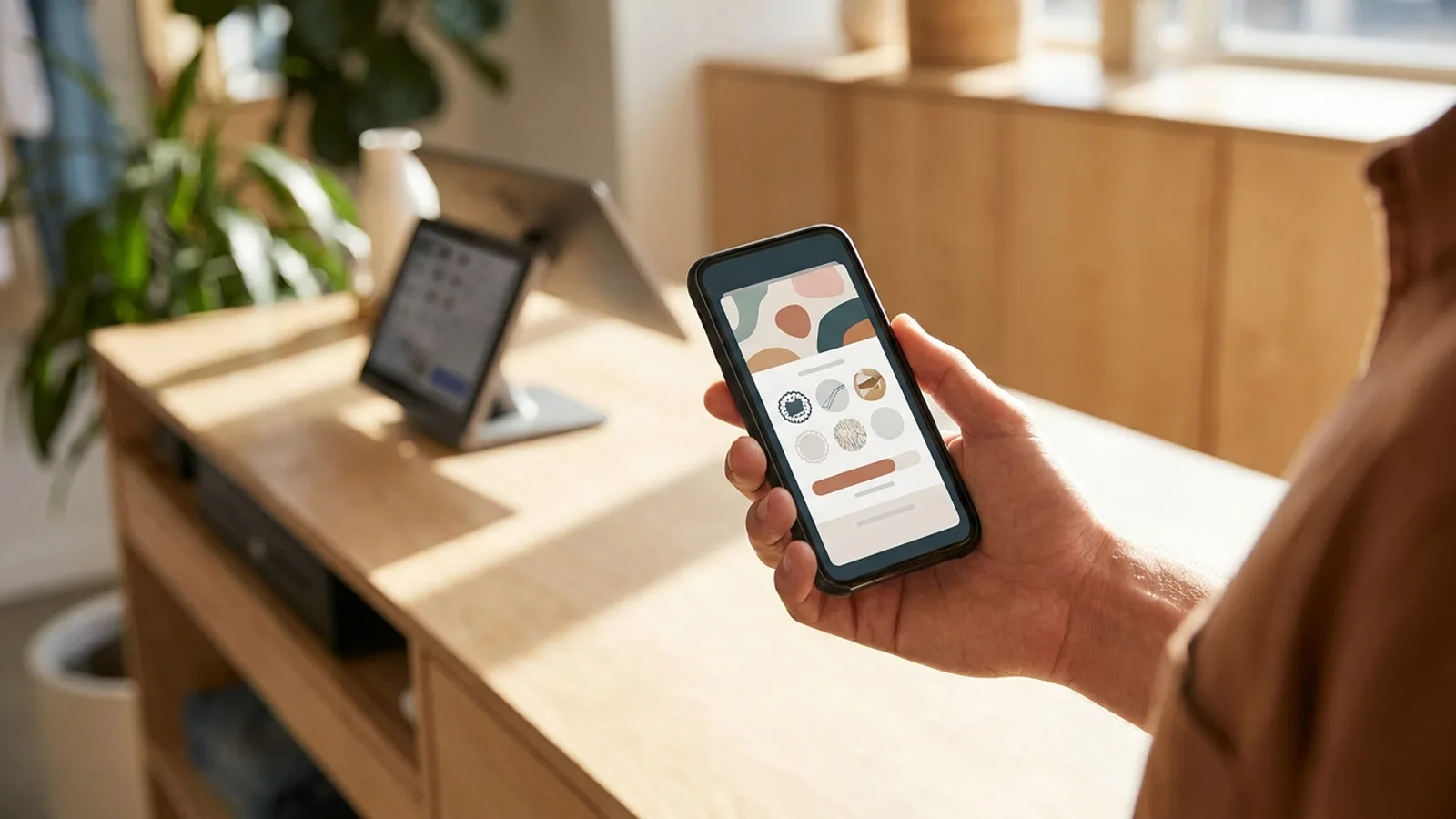
This is the approach I chose for Pépite Pass: the loyalty card is added directly into the wallet already present on the customer's phone, Apple's and Google's. No app, no account, no specific hardware at the till.
The customer scans a QR code, enters their first name, and the card is there in a few seconds ✨. And you can push a notification to their lock screen whenever you want to bring them back.
💸 The hidden fees that inflate the real bill
This is the real comparison ground. The monthly price on display means nothing until you have added up everything that comes around it. Before signing anything, ask the vendor for the total cost over twelve months, all included. You will sometimes be surprised.
Here are the items that come up most often:
- Setup fees: charged once, sometimes several hundred euros, for the initial configuration. They never show up in the headline price.
- Hardware: terminal, tablet, reader, counter stand. To buy or to rent monthly. That is more budget and one more thing that can break.
- The app: when a dedicated app is required, its development or maintenance is sometimes passed on, and above all it costs you in customers lost at install.
- The yearly commitment: many offers lock you in for twelve months. If the tool does not suit you after two months, you still pay for the next ten.
- Options on top: SMS, notifications beyond a quota, advanced statistics. The base is cheap, but everything that is actually useful costs extra.
My advice: ask each vendor a single question, in black and white. How much do I pay in total in the first year, setup and hardware included, with no options? The clarity of the answer says more than any demo.
🔥 The app trap: the silent killer of loyalty
If I had to keep just one criterion from this entire comparison, it would be this one. Every step you add between the till and the installed card loses you customers. And downloading an app is the most costly step of all.
The customer has to open a store, search, download, accept the permissions, create an account, confirm an email. At each of these steps, some give up.
For a single business, most do not even start. 💀
A card that lives in the native Wallet has none of this friction. The wallet is already installed on the phone, the customer already uses it for their train tickets or their boarding pass. Adding a card is one scan and a first name.
A concrete result I see in the field: where an app scares the majority away, the wallet gets almost everyone to sign up at the till. Out of a thousand customers a month, the adoption gap runs into hundreds of active cards.
📱 Why I bet on the native wallet (no app)
I am not going to pretend to be neutral: I built Pépite Pass around the native Wallet because I genuinely think it is the only approach that holds up for a local business in 2026. Here is why, concretely:
- Zero app to download: the card is added into the wallet already present on the phone, in a few seconds, with no account and no password.
- Zero hardware at the till: you scan the customer's QR with your phone, nothing else to plug in or recharge.
- The lock-screen notification: that is the real lever. You push a message to cardholders to bring them back on a quiet Tuesday, without going through an email that ends up in spam.
- The card carries the customer's first name: you know who comes back, you can wish a happy birthday, win back a customer who has not been in for six weeks.
- No lost card: it lives in the phone, always with the customer, unlike the stamp card forgotten in a drawer.
For the detail of the mechanics (how many stamps, which reward, when to follow up), I am not going to lay it all out here, but there are simple rules that make the difference between a card that sleeps and a card that brings people back.
🤝 The free trial with no bank card: the real trust test
There is one detail in a loyalty software offer that tells me more than the whole sales page: can I test it without handing over my bank card? When a vendor demands your bank details before even letting you see the tool running, ask yourself what they fear you might discover during the trial, or what they plan to charge if you forget to cancel in time.
I made the opposite choice for Pépite Pass: the trial is free and asks for no bank card. You create your card, install it on your own phone, and test it at the till on real customers for a few days. You see the real adoption rate, the sign-up speed, the effect of a first notification.
Then, and only then, you decide. A good loyalty tool does not need to trap you to keep you.
✅ My honest comparison grid, criterion by criterion
If you have to decide between two or three software options this week, here is the grid I would use in your place. Tick the boxes for each tool. The best one is the one that ticks the most boxes without extra charges:
- The customer can install their card without downloading an app.
- No specific hardware is needed at the till (just your phone).
- There are no setup fees.
- The commitment is not locked for twelve months, you can stop.
- You can send a lock-screen notification to bring customers back.
- The card carries the customer's first name and lets you follow up with them by name.
- You can test everything for free, with no bank card, before paying.
- The total cost over twelve months is clear, with no essential hidden option.
A tool that ticks these eight boxes will make you money from the very first weeks, because the crux is not the subscription price, it is the number of customers it brings back. Software that is half the price but that nobody installs ends up costing you infinitely more.
🚀 Where to start, concretely, this week
Do not overthink the choice. Take the two or three tools that keep coming up in your searches, run them through the grid above, and above all: test the one that lets you try with no commitment. You will learn more in three days at the till than in three hours of comparisons.
If you are still torn between keeping your stamp card and going digital, or if you want to dig into the mechanics that truly bring customers back, these articles get straight to the point:
- Digital loyalty card for restaurants: the complete 2026 guide
- Paper vs digital loyalty card: the real numbers
- The mechanics of a loyalty program that brings customers back
- The loyalty card with no app: how it works
And if you just want to see what it looks like on your own phone before deciding, create your card and test it. It is free, with no bank card, and you have nothing to download. It is also, deep down, the best way to know whether loyalty software deserves your money: put it in the hands of your real customers.