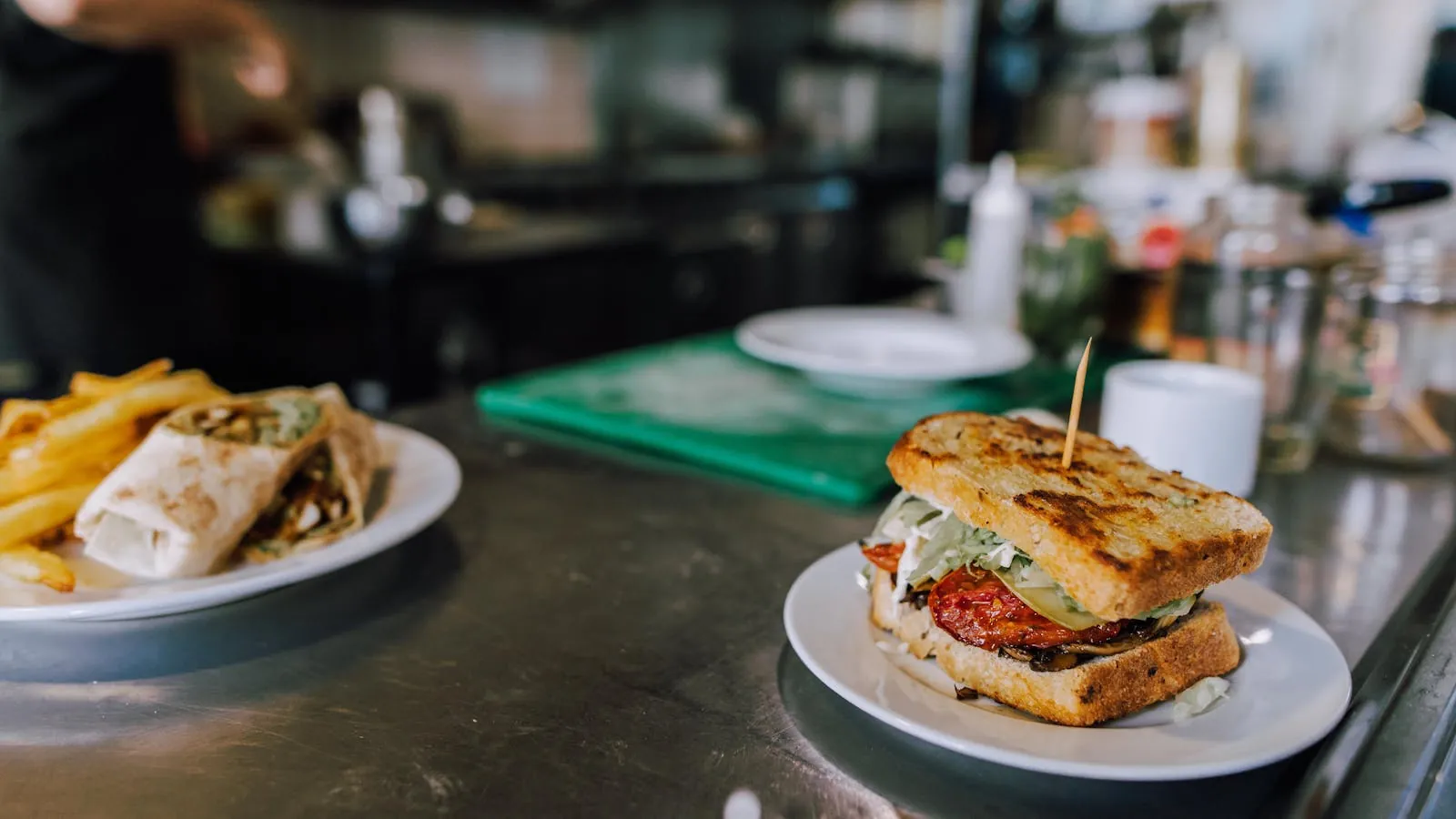
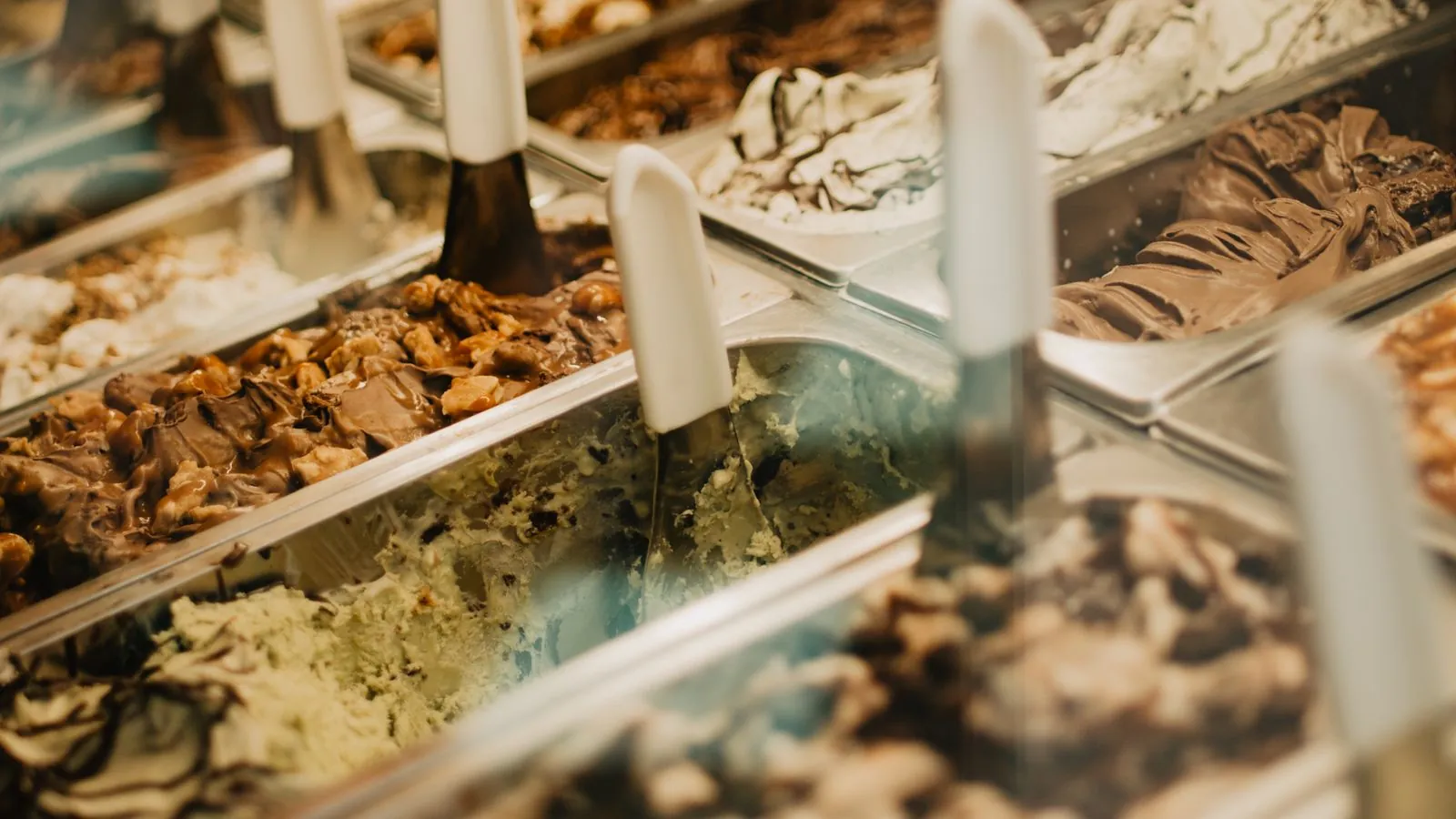
Everyone looks at the photo: the packed terrace in July, the queue at the counter, the sun on the tubs of ice cream. It is true, it is beautiful, and it is the easy part. The real craft of running an ice cream shop, the one that decides whether you last three years or shut down after two seasons, is not played out in July. It is played out in November, when the street is empty, the shutter is half down, and your summer customers no longer think about you at all.
My name is Léo, I run Pépite Pass. We operate Apple Wallet and Google Wallet loyalty cards, digital menus and booking for food businesses all over France, including ice cream shops and ice cream parlours.
From supporting so many of them, I have seen a very clear pattern emerge: the ice cream shops that struggle do not struggle because they sell badly in summer. They sell very well in summer. They struggle because every spring, they start their conquest again from scratch.
This article is not a guide to choosing your batch freezer, your base recipe or your cone supplier. There are master ice cream makers far better placed than me for that. My subject is the number one structural challenge of the trade: seasonality, and what you do with the connection to your customers during the six months when they do not come. Because that is where, and nowhere else, your real profitability is decided.
📅 1. Seasonality is not a detail, it is the trade
The first reflex of a future owner: "the margin on a scoop is huge, the ingredient cost is tiny, so it is profitable." That is true per scoop. It is false across the year. Because an ice cream shop lives with a brutal distortion that few businesses know to this degree: it makes most of its turnover over four to five months, and it pays its rent over twelve.
Look at the typical activity curve of a French ice cream shop, it is almost a caricature:
| Period | Share of annual turnover | What really happens |
|---|---|---|
| May to September | Around 80% | The peak. The street is full, you are run off your feet, you hire |
| April and October | The shoulder months | It depends on the weather, weekends up and down |
| November to March | The deep trough | Empty street, running costs, customers forgetting you |
The consequence is inescapable: your profitability is not decided by the margin per scoop, which is good for all your competitors too. It is decided by two questions no one asks early enough: what do you do with your premises and your customer connection during the trough, and how much of your audience from one season comes back the next without you having to win them all over again?
🔥 2. The invisible trap: restarting your conquest every spring
Here is the scenario I see replayed every year. An ice cream shop has a superb season. In July and August, hundreds of different people come through the door, taste, love it, and leave happy.
Then October arrives. The shop closes, or ticks over. And there, the hourglass turns over: every passing day, those hundreds of happy customers forget you a little more.
By the following March, when the fine days return, these people still fancy an ice cream. But they no longer have any particular connection with you. They will go to the first ice cream shop that comes to mind, or the one they happen to walk past. You have become one option among many. All the value you built the previous summer, that capital of people who liked you, has evaporated over the winter.
👉 That is what starting your conquest from scratch means.
And that is what caps the profitability of most ice cream shops: they never build up value from one season to the next. Every spring, they set off from the same starting line, as if they had just opened. Their season 3 looks like their season 1. They keep spinning, but they do not climb.
By contrast, an ice cream shop that keeps the connection with its summer customers starts each season higher than the last. Its audience grows year after year. Its March reopening is no longer a roll of the dice on the weather and passing trade, it is a reactivation of an audience it already has. That is exactly the difference between a business that survives and a business that establishes itself.
🍫 3. Diversifying the offer: useful, but not enough
The classic answer to seasonality is diversification. And it is a healthy one. Many ice cream shops that last have a hybrid concept or a winter offer:
- Ice cream and crepes, or ice cream and waffles: the hot crepe and the waffle take over when the cold cuts the craving for ice cream. Same counter, same team, different menu.
- Tea room and hot chocolate: you turn the room into a cosy winter spot. Homemade hot chocolate is a magnet for families on Wednesdays and weekends.
- Coffee and frozen desserts: ice cream yule logs in December, vacherins, takeaway desserts for the holidays. It is often the best winter peak for an artisan ice cream maker.
All of that spreads the turnover, absorbs the rent across twelve months, keeps the team busy. I recommend it every time the location allows.
But let us be clear about what diversification does not do: it does not maintain the connection with the people who do not walk past your shop in winter. Your July tourist, your family on holiday, your customer who lived ten minutes away but does not go out in winter, you will not see them at the hot chocolate counter. And they are often the ones who make up the bulk of your summer.
In other words: diversification solves the problem of your premises (what do I do with my shop in winter). It does not solve the problem of your audience (how do I not lose my summer customers). These are two different projects, and the second is almost always the more neglected.
🎯 4. The real lever: a direct channel to your customers, all year round
If I had to keep just one thing for an ice cream shop, it would be this: during your season, capture a direct connection with your customers, and keep it open all winter. That is what lets you never start from scratch again.
Historically, this connection went through the cardboard stamp card. For an ice cream shop, it is the most unsuitable tool there is. The customer takes it in July, happy with their ice cream, then tucks it away.
Six months later, it is at the bottom of a beach bag stored in the cupboard, or in the bin. You have no way to remind them of it, and in any case you never had their contact details. Cardboard, for a seasonal business, is loyalty that self-destructs at the end of the summer. 💀
The digital version changes everything, and that is precisely where running an ice cream shop gets interesting. Here is what happens concretely in the ice cream shops we support: the customer orders their ice cream, your server shows them a QR code next to the till, the customer adds it to their Apple Wallet or Google Wallet in a few seconds (no app to download, like a boarding pass). On each visit, they build up stamps or points depending on the mechanic you choose.
But the stamp is not the main point for an ice cream shop. The point is what this card lets you do in winter. Once a customer has your card in their Wallet, it stays there all year, whether they come or not. And you earn the right to send them free push notifications on their lock screen, as many as you want, with no sending cost.
The scenario that changes a season: it is 12 March, it is 18 degrees for the first time this year, everyone fancies an ice cream without quite admitting it yet. You send a push to your whole audience from last summer: "We reopen Saturday at 2pm. Flavour of the day to celebrate: Sicilian pistachio. See you Saturday!" Hundreds of people you had not seen since October receive this message at the right moment.
You no longer pray for passing trade: you trigger a queue. And it cost you neither a stamp, nor an SMS, nor a euro of advertising.
See how the free Wallet push works
Beyond the reopening, this direct channel serves you all season to smooth out the quiet spells: announcing a new flavour, filling a slow Tuesday afternoon, flagging that you are closing early because of the weather, winning back a customer who has not come in for three weeks. And if you want to hit hard on a specific launch, you also have SMS and email in the same console. But for the everyday, the free push is enough, and that is what makes the Wallet loyalty card so well suited to a business whose margin per sale is small and whose volume is seasonal.
☀️ 5. The reopening window: your most important commercial moment
I want to stress this point because it is the one almost every ice cream shop misses. The first genuinely fine days of spring trigger an almost reflex craving for ice cream in people. The problem is that this craving does not carry the name of any particular ice cream shop. The first one to bring itself back to the customer's mind wins the game.
In practice, here is how I see the clever ice cream shops play their reopening:
- Three to four days before, a first message to the audience: the reopening date, the signature flavour of the day. You plant the seed.
- The day before or that morning, a short reminder: "It is today, we are waiting for you from 2pm." The customer gets the reflex at the right moment.
- A small reason to come quickly if you want to create a peak: a free scoop on reopening day for cardholders, or a limited-edition flavour. You turn an ordinary reopening into an event.
The goal is not to bombard. It is to exist in the customer's mind at the exact second their craving for ice cream wakes up, after a whole winter of silence. An audience of regulars properly woken up at the reopening means a season that starts at full tilt instead of taking three weeks to warm up.
💸 6. Controlling your fixed costs during the low season
The third pillar, more down to earth, is managing your costs during the trough. I am not going to give you a management lecture, but here are a few principles I see respected by those who last:
- Rent is the enemy of winter. If you negotiate a lease, try to get seasonality built into the rent, or coldly anticipate that you will pay five full months to fund twelve months of premises. A rent set against summer turnover is a deadly trap in January.
- The team must breathe with the season. Seasonal contracts at the peak, a reduced core in winter. It is hard on a human level, but a full-summer payroll in the depths of winter is unforgiving.
- Partial closure is a strategy, not an admission of failure. Closing three days a week in January or cutting hours can be the most profitable decision of the year. Again: pulling the shutter down does not mean cutting the customer connection.
This last point is the bridge between cost management and loyalty. You can perfectly well pull the shutter down from November to March to save money, while keeping your communication channel active. Your Wallet loyalty card costs nothing to leave running through the winter: it sleeps in your customers' phones, ready to be woken. ✨ You combine the best of both worlds: rock-bottom costs and an intact audience for spring.
⚠️ 7. The mistakes that condemn an ice cream shop to start over every year
From seeing so many of them, I keep a little blacklist. If you are opening soon or tackling your second season, keep it to hand.
Mistake 1: treating loyalty as a July topic. The loyalty card is not there to reward the customer during the summer, when they come back anyway because it is hot. It is there to exist in their phone in winter, to bring them back in March. If you set up your system in late August, you have missed the whole capture season. The card must be in place from the very first day you open.
Mistake 2: confusing closing with disappearing. Many ice cream shops close in October and cut absolutely everything: no more presence, not a single message, radio silence until spring. Six months of silence is six months during which your customers build new habits elsewhere. Keep a small voice active: a message in December for the frozen yule logs, another in February to tease the reopening.
Mistake 3: betting everything on acquisition, nothing on retention. Putting your budget into billboards, flyers and local advertising to attract new customers every summer, while letting last year's slip away, is filling a leaky bucket. Bringing back a customer you have already won costs a fraction of what it costs to attract a new one. For a seasonal business, this is even more true: your real treasure is the list of people who have already loved you.
Mistake 4: neglecting Google reviews at launch. An ice cream shop that opens lives largely off passing trade and the tourist who types "ice cream shop near me." Your rating and your number of reviews weigh heavily in the decision. It is a subject in its own right that I will not develop here, but know that there are playful ways to gather reviews without having to beg for them.
📝 8. If I had to sum it up in one sentence
Opening an ice cream shop and filling it in July is the easy part, the sun does half the work. The real trade, the one that separates the ice cream shop that establishes itself from the one that struggles, is what you do from October to March with the connection to your customers.
Three levers, in this order: diversify the offer to occupy your premises in winter, control your fixed costs during the trough, and above all keep a direct channel to your summer customers so you never restart your conquest from scratch. The first two are well known. The third is the one almost nobody works on, and yet it is the one that decides whether your season 3 starts higher than your season 1.
The digital loyalty card in Apple Wallet and Google Wallet is the tool that makes this third lever concrete for an ice cream shop: a card that stays in the customer's phone all year, and a free push that wakes your whole audience at the first sunshine. No commitment, cancellable in two clicks, a free trial to see if it changes your spring. If you want to talk it through concretely, message me on WhatsApp at +33 6 03 90 27 83. I will not sell you a miracle recipe, I will tell you what I see working on the ground.
To dig deeper into retention, I also recommend this complete guide to customer loyalty in 2026 and the article explaining why a loyalty card with no app works so much better than cardboard. And if you are in launch mode for a food business, the field feedback on how to build loyalty with daily footfall when you open a bakery shares the same philosophy: the customer you keep is worth ten times the one you have to win back. Have a great season, and above all: do not let winter erase your summer.