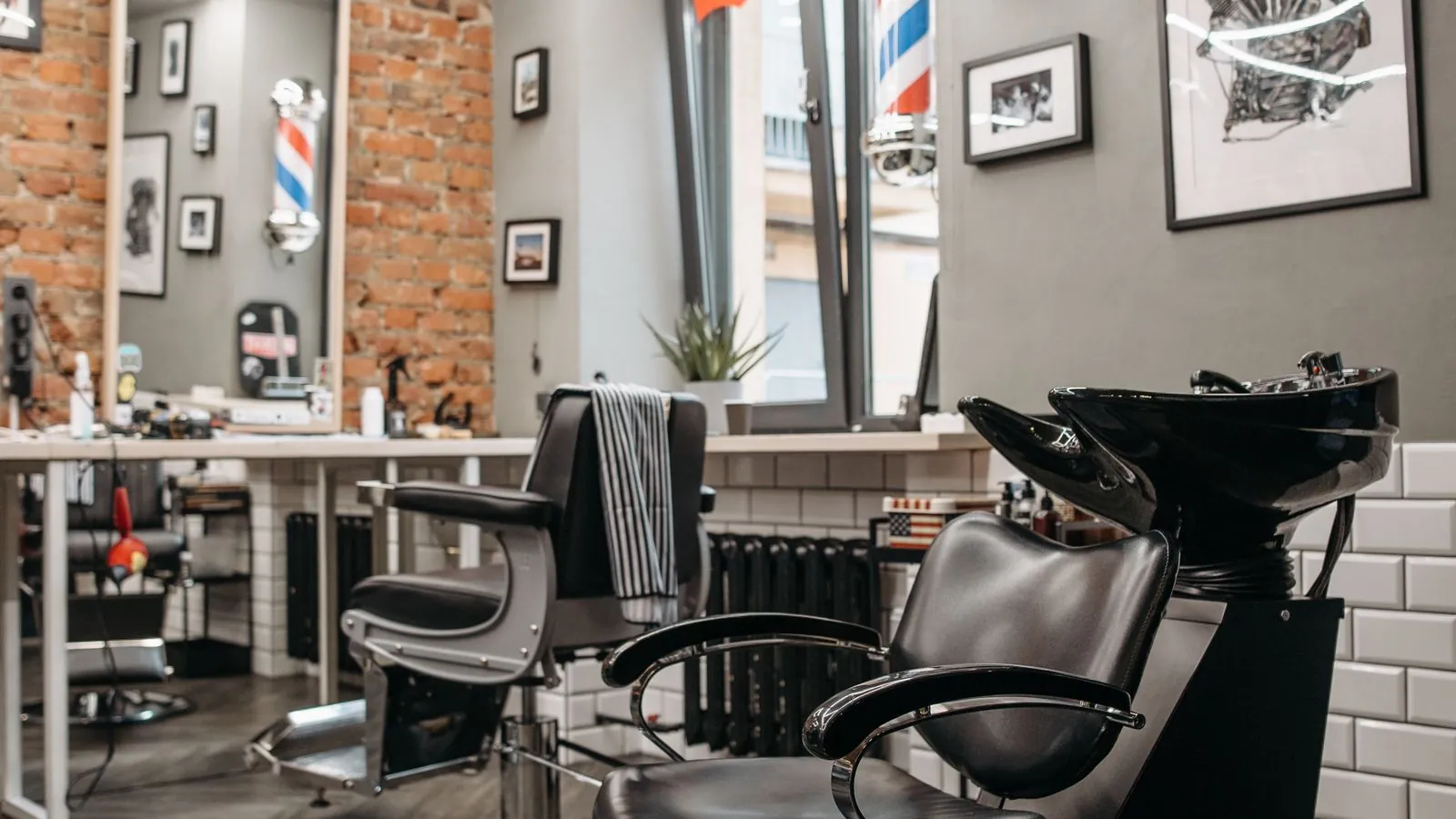
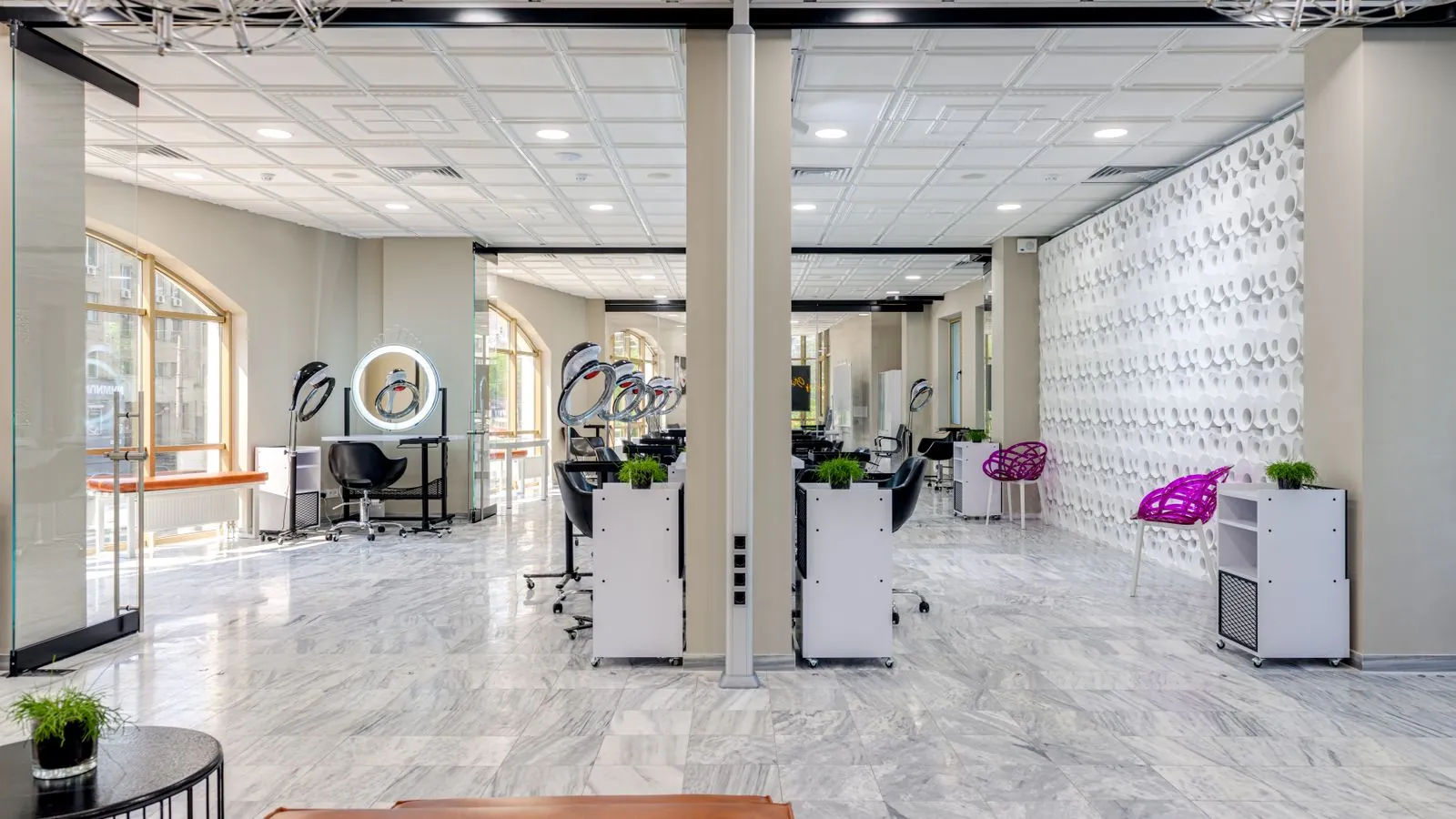
It is 3pm on a Tuesday. In your salon, a wash basin heating up for nothing, two empty chairs, and a stylist sweeping up hair that is already gone. Next to that, your Saturday appointment book is crossed out from morning to night, with a waiting list you cannot fit anyone into. This imbalance, this yo-yo between a saturated weekend and a week on idle, is the number one leak of revenue in a hair salon. And the bad news is that an empty chair can never be recovered.
My name is Léo and I run Pépite Pass. We operate Apple Wallet and Google Wallet loyalty cards for local businesses all over France, and hair salons are among the trades where I see this demand-concentration problem most clearly. The hairdresser who tells me "I do not have enough customers" almost always has, in reality, the right number of customers: they are just all stacked onto the same two days.
This article is not a lesson on cutting technique or on choosing your colour brand: you know your craft better than I do. My subject is the steering of your schedule: how to fill Tuesday and Wednesday afternoons without slashing your prices, without damaging your image, and without spending a budget you do not have. On that, I have something to say.
🎯 1. The real problem is not volume, it is concentration
First thing to understand: an empty chair is not one sale fewer, it is a sale lost for good. A cut not sold on Tuesday at 3pm does not carry over to Saturday: Saturday is already full.
👉 You will never make that hour back.
That is what makes the problem so insidious: it makes no noise, there is no unhappy customer, just a silent hole in the till at the end of the week.
Lay your week out flat and you will spot the pattern straight away:
| Slot | Typical fill rate | What is at stake |
|---|---|---|
| Saturday | Saturated, waiting list | Demand turned away for lack of space |
| Friday late afternoon | Full | Working people before the weekend |
| Tuesday / Wednesday afternoon | Very quiet | Pure dead loss, unrecoverable |
| Thursday morning | Variable, fragile | The first to go if there is a cancellation |
The most natural reflex here is to look for more customers: a social media campaign, flyers, an opening promotion. But adding demand to a salon that already turns people away on Saturday only piles even more people onto the full slots.
You spend money to make your own traffic jam worse. The right goal is not to increase demand, it is to smooth it.
💸 2. Why the "I lower midweek prices" reflex backfires
When a salon decides to tackle its quiet hours, the first idea that comes out is almost always: "20% off Tuesday colours". It is tempting, it is simple, and it is a mistake. Here is what actually happens when you slash prices midweek:
- You cannibalise your full price. Some of your 60-euro Saturday customers are perfectly able to come on Tuesday. If you advertise 20% off on Tuesday, they shift: you do not gain a customer, you lose margin on a customer you already had.
- You train your customers to expect discounts.Once a customer has paid 20% less for her balayage, the full price psychologically becomes "the inflated price". You damage the perceived value of all your work.
- You attract the wrong customers. Discount hunters are not loyal by definition: they will go to whichever competitor slashes prices the following week. You fill Tuesday with people who will not come back.
The solution is not in the price, it is in the targeting. You should not shout a public discount at the whole neighbourhood. You should whisper a precise gesture to the right person, on the right slot, at the right moment.
And to whisper, you need a direct channel to your customers. That is the whole point.
I laid out this reasoning through the lens of revenue in another article, because it is exactly the same mechanism: why an independent hairdresser's revenue is a real variable, and not a fate you simply endure. The schedule is the number one lever on that variable.
📲 3. The direct channel: your real lever on the quiet hours
The underlying problem is that most salons have no wayto reach their customers between two appointments. You might have 800 people in your point-of-sale software, but no direct, free, read channel to tell them "I have a slot left this afternoon".
The phone is slow and intrusive. Texts cost several pence each and end up as marketing spam. Email, nobody opens it. 💀
This is where the digital loyalty card changes everything, not for its points counter, but for the channel it opens for you. When a customer adds your card to their Apple Wallet or Google Wallet, you gain the ability to send them free, unlimited notifications directly on their lock screen. In concrete terms:
- A cancellation frees up your chair at 2pm? You push it in two clicks: "Cut-and-blow-dry slot free this afternoon at 2pm, reply to book it". You turn a hole into an appointment. ✨
- Your Wednesday afternoon is deserted? You push a targeted gesture (a complimentary treatment for any Wednesday booking) only to the customers likely to be free midweek, not to everyone.
- A customer has not been in for three months? You follow up without picking up the phone, at the very moment you have space to offer her.
The difference with texts is financial and it is huge: the Wallet push costs nothing to send, so you can communicate at whatever frequency serves your schedule without watching a meter. I explain in detail why this channel gets read where email dies in this article: the Wallet push notifications that bring your customers back at no cost. It is written for restaurants, but the mechanism is exactly the same for a salon.
A question about the notification channel? Write to me
📍 4. The geo-push: proximity as the trigger
A hair salon is a neighbourhood business by nature. Your customers live or work nearby, and they physically walk past your window several times a week without thinking about it. The 100-metre geo-push exploits exactly that: when a customer who has your card in their Wallet passes within 100 metres of the salon, their phone can display a notification.
Picture the scene: a customer heads home from work on a Thursday evening, she walks past your salon, and her screen displays "We have a blow-dry slot left tomorrow morning, fancy it?". The message lands at the exact moment she is on the street, three metres from your door, in the right frame of mind.
No advertising budget buys you this level of relevance in timing and place. It is top-of-mind presence triggered by real proximity, not by constant bombardment.
Of course, it takes a light touch: you do not geo-push every day, you keep it for the moments when it genuinely matters (a gap to fill, something new to announce). But used sparingly, it is one of the most effective tools I see working across local businesses.
💳 5. The loyalty card, the other half of the equation
We have talked about the channel, but let us not forget the heart of the matter: loyalty itself. A salon lives on return frequency. A customer who comes back every six weeks for her colour is worth infinitely more than a new face who passes through once. The Wallet loyalty card is above all there to shorten the gap between two visits and to lock in that regularity:
- Three mechanics to choose from: points (1 euro spent = X points), stamps (the digital version of the paper card, for example every 10th blow-dry free), or a cashback pot. You pick what fits your customers.
- The endowed-progress effect: as soon as a customer sees she has stacked up a few stamps towards her reward, her brain tells her it would be a shame not to see it through. It is a mechanism documented in behavioural psychology for years, and it works just as well on a blow-dry as on Sephora points.
- An automatic birthday push or points-to-use reminder: all legitimate excuses to bring a customer back, and while you are at it, onto a quiet slot.
The digital card also fixes every flaw of the paper card: it is never lost (it lives in the phone), never left at home, it costs you nothing to print, and above all it gives you a CRM: you see your best customers, your return curves, who has not come back. It is that data that lets you target your quiet-slot follow-ups intelligently instead of shouting into the void.
For the detail of loyalty mechanics specific to the beauty trades, I have written a dedicated guide: the loyalty programme for hairdressers and beauty salons. It complements this article nicely: here we talk about filling the schedule, there about building regularity over time.
🗓️ 6. A concrete plan for the next 30 days
Enough theory. Here is what I would advise a salon that wants to seriously tackle its quiet hours right now, without turning everything upside down:
Week 1: equip the till. Put your loyalty card QR code by the payment counter, with a clear poster. Train the team to offer it systematically: while the colour develops, the customer has all the time in the world to scan. Goal: get as many of your regulars as possible into the Wallet, because they are the ones who will fill your gaps.
Week 2: segment. In your CRM, spot the profiles who can come midweek: retirees, the self-employed, remote workers, parents on leave, students. These are your priority targets for quiet-slot follow-ups. No point pushing a Tuesday 3pm slot at someone who works fixed hours.
Week 3: test the anti-cancellation push.At the first hole in the schedule that appears, do not just take it. Push a targeted notification, "free slot this afternoon", to your midweek segment. Measure how many chairs you recover. It is the most telling test: you will see revenue appear where there was nothing but emptiness.
Week 4: set up the ritual.Put in place a recurring gesture on your quietest day (a complimentary treatment, priority booking, never a public price cut), reserved for your midweek segment. The idea is to gradually build a habit: "at my hairdresser, on Wednesday, you get pampered".
None of these steps requires lowering your listed prices. None requires an advertising budget. Everything rests on a direct channel to your existing customers and a little targeting. That is what steering demand instead of enduring it looks like.
⭐ 7. And what if I really do not have enough customers?
Let us be honest: some salons, especially the youngest ones, do not only have a concentration problem, they have a real shortfall in local awareness. In that case, before smoothing anything, you need to get the salon known and look after its online reputation. A hair salon's Google rating carries a lot of weight: it is often the first filter for a new customer looking for a hairdresser in the neighbourhood.
This is where a tool like the prize wheel can help: the customer scans a QR in the salon, plays in her browser (no app), wins a small prize, and in exchange leaves a Google review. To claim her prize, she has to come back to the salon: a scan becomes a visit, then a regular customer. It turns the awkward "I do not dare ask for a review" moment into a quick game while the colour develops. But that is the subject of acquisition: once the customer is in, it is loyalty and schedule steering that will bring her back.
This logic of smoothing out activity is not, incidentally, unique to hairdressing: every seasonal business or one with concentrated demand faces the same challenge. I have written similar things for other trades, for example on smoothing the seasonality of a cheese shop or on how to stand out with a club when you open a wine shop. Every time, the common thread is the same: keep a direct channel to your customers so you steer demand rather than endure it.
✅ 8. If I had to sum it up in one sentence
Your salon does not have a customer problem, it has a distribution problem. Saturday overflows, the week sounds hollow, and every empty chair is revenue gone for good.
The temptation to slash prices is a bad one: it damages your image and trains your customers to expect discounts. The real solution is to keep a direct, free, read channel to your already-loyal customers, so you can push the right gesture onto the exact slot that stays empty, at the right moment.
That channel is the loyalty card in the Wallet and the free notifications that come with it, rounded out by the proximity geo-push and a CRM that tells you who to target. The whole thing costs less than a single service recovered in the month, and it is up and running in a few days, with no commitment.
If you would like us to look at your specific case, your schedule, your gaps, your type of customer, message me on WhatsApp at 06 03 90 27 83. I will not sell you a miracle solution: I will tell you what I see working at the salons we support, and whether it is worth it for you.
You can also see a demo of the card before deciding. But whatever you do: stop looking at your empty chairs as an inevitability. They are appointments just waiting for you to go and get them.