Most in-store events cost a lot, make noise for a day, and leave absolutely nothing behind. The food truck drives off, the balloons deflate, and by Monday morning your shop is as empty as before. The problem is not the event itself: it is that it was designed as an event, and not as a machine for bringing people back.
My name is Léo, I run Pépite Pass. We operate Apple Wallet and Google Wallet loyalty cards, prize wheels to liven up the point of sale, and digital menus for businesses all over France. So I see a lot of shop events go by: good ones, expensive ones, and plenty that make the same mistake. This article is what I tell owners who ask me "what event can I run to get my shop going again?".
My argument fits in one sentence: a profitable event is not the one that fills the shop on the day, it is the one that forces a second visit.
Everything else is decor. Let us look at how to build that in concrete terms.
🔥 1. The flaw in 90% of events: the footfall spike with no return
Here is the scenario I see most often. An owner wants to give their shop a boost. They organise a special day: a tasting, a product demo, a small gig, a food truck by the door, maybe flyers handed out around the neighbourhood the week before.
On the day, it works: there is a crowd, an atmosphere, nice photos for Instagram. The owner is happy, and so is the till.
Then the next day arrives. And now, nobody. Footfall drops right back to its previous level.
Worse: the owner has spent money (the supplier, the decor, the free samples) for a single day of turnover, with no lasting effect. On balance, the event often cost more than it brought in.
Why? Because this event is a footfall-spike event. It draws people in once, gives them a moment, and lets them leave with no mechanical reason to come back.
The customer has consumed their experience, full stop. They have nothing in their hand, nothing on their phone, nothing to come back and collect. You gave them a nice memory, which is kind, but a nice memory does not keep a business running.
The fundamental mistake is the success metric. Most owners measure their event by the number of people present on the day. But that figure says nothing.
The only one that counts is: how many of those people come back the following week. And for a classic footfall-spike event, the honest answer is: almost none. 💀
🔁 2. The return-loop event: the right mental model
Let us now contrast two models, because that is where the whole difference lies.
| Criterion | Footfall-spike event | Return-loop event |
|---|---|---|
| Goal | A crowd on the day | A scheduled second visit |
| What the customer leaves with | A memory, nothing concrete | A prize to collect, a card on their phone |
| Effect the next day | Back to square one | A flow of customers coming back to collect their prize |
| Measurable? | Barely (you count heads) | Yes (cards added, prizes collected, returns) |
| Cost per retained customer | High, often infinite (zero retained) | Low, fixed subscription with no per-scan fee |
The return-loop event rests on a simple, well-documented principle of behavioural psychology: once a person has won something, they feel a strong pull not to lose it. If the prize is "to collect in store", they will come back for it. You have just turned a single scan or a one-off visit into an almost guaranteed second visit.
And that second visit is the real treasure. Because it is what kicks off the habit. The customer walks back through your door, crosses paths with your salesperson again, rediscovers your products, and nine times out of ten they buy something while collecting their prize.
The third visit is the one that creates the regular: you become a regular at a place you have already visited three times. The return-loop event is exactly a machine for manufacturing that second visit.
🎁 3. The central lever: the prize you collect in store
If I had to keep just one event mechanism, this would be it. The principle is dead simple: instead of giving an instant gift, you have the customer win a prize they have to come back to collect in store.
Let us compare the two options for the same budget:
- Instant gift: you give away a sample, a freebie, a discount right away. The customer is happy, they leave with it, and that is that. The transaction is closed. No reason to come back. You bought a smile.
- Prize to collect later: the customer plays, wins a prize, but has to come back to pick it up. You have the same cost, but this time you bought a visit. And a visit turns into a habit.
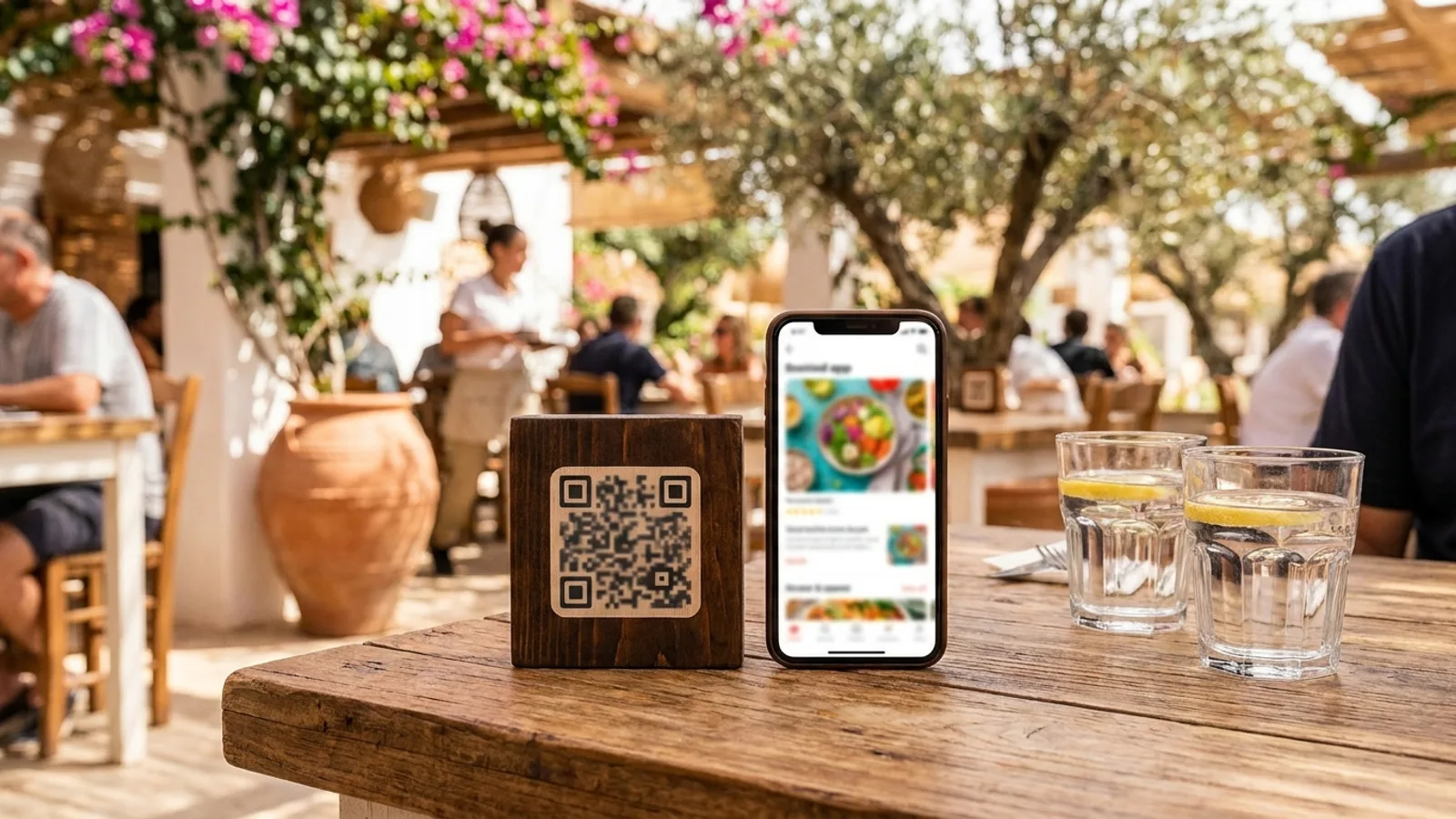
This is exactly the mechanic of the prize wheel we operate at Pépite Pass. The customer scans a QR code in store, spins the wheel straight in their browser (100% web-based, no app to install), and wins a prize. To collect it, they have to come back and see you.
👉 A scan becomes a visit, then a loyal customer.
You set the prizes and their odds yourself, so you have total control over your cost: there is no charge per scan or per prize, just a fixed monthly subscription.
One important note, because the confusion is common: this wheel captures no email and no phone number. It is not a contact-collection tool.
Its role is twofold and only twofold: getting the customer to play so they come back, and inviting them to leave a Google review. Honesty on the ground above all.
Anti-cheating is handled by Pépite Pass: one spin per device, and replays are blocked. You do not have to keep watch to stop anyone playing ten times to grab all the prizes.
See how the prize wheel brings your customers back
💳 4. Graft loyalty onto the event to keep the customer
The prize to collect buys you a second visit. But to turn that second visit into a lasting customer, you need a second stage: a loyalty card. The event is the spark, loyalty is the engine that keeps the fire going.
The right moment to get your loyalty card added is precisely during the event. The customer is in front of you, in a good mood, available, and holding a phone to scan or play.
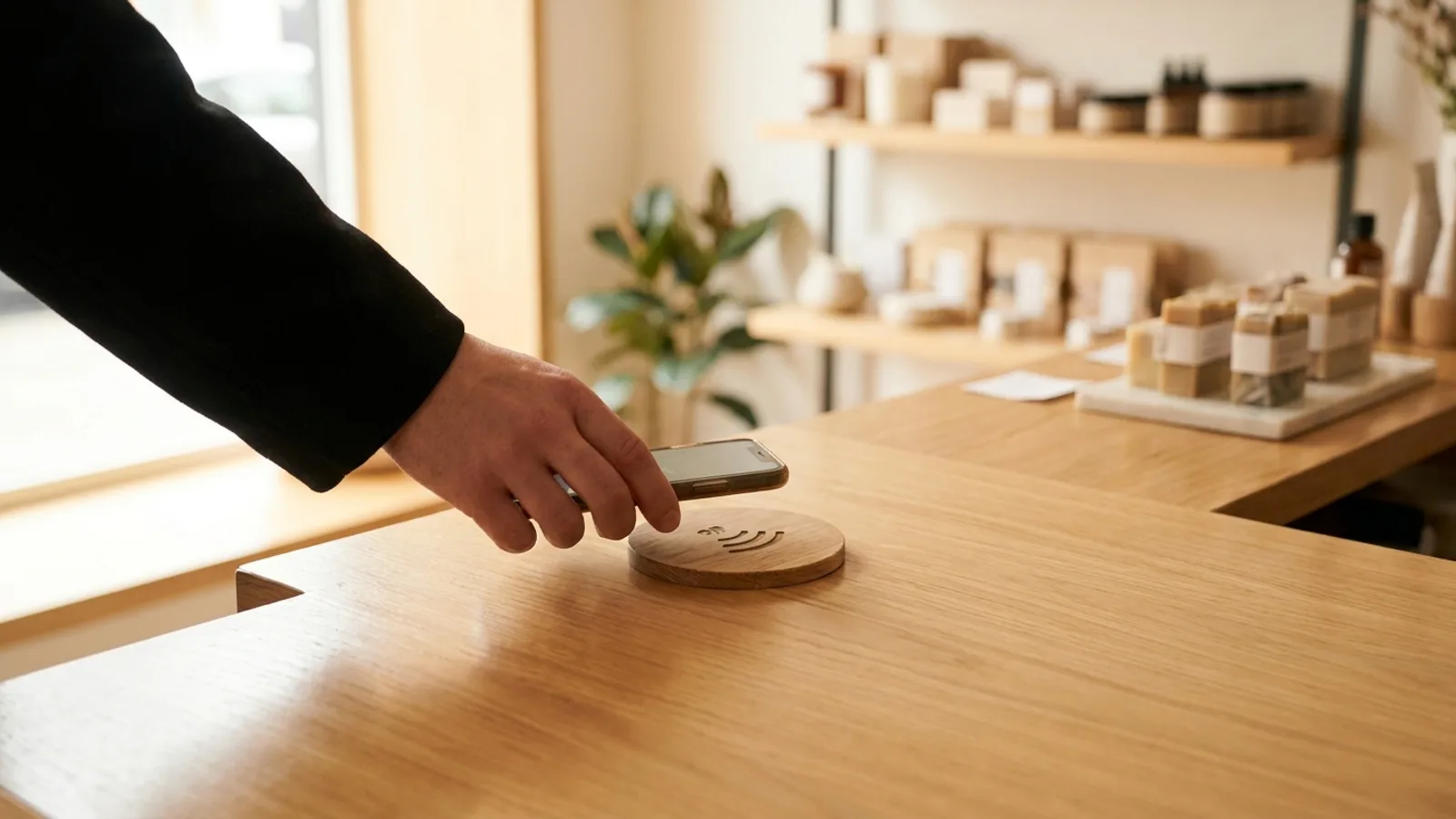
It is the ideal moment: you offer to add your card to their Apple Wallet or Google Wallet, it takes a few seconds and there is no app to download. The card sits in the phone like a boarding pass.
From there, you hold the relationship. When the customer comes back to collect their prize, you add their first stamps or their first points.
They are now engaged in a journey: they still need a few more to reach their reward, and their brain whispers that it would be a shame not to finish. This is the endowed progress effect, documented in behavioural psychology for twenty years, and it works just as well in a clothing boutique as at a Sephora counter.
The real bonus is the follow-up channel. Once the card is in the phone, you can send free, unlimited push notificationsto the customer's lock screen.
The week after the event: "your prize is still waiting for you". Later: "new collection just in", "you have 2 stamps left before your reward". Without paying for a text message. This is what keeps an event working for you weeks after it has ended.
If you want to dig into loyalty mechanics themselves, I have laid out the options (points, stamps, cashback) in this article on the loyalty programme mechanics that really work, and I explain why a card in the Wallet beats the cardboard card in the loyalty card with no app to download.
⭐ 5. The Google review: the hidden benefit of a good event
Here is a side effect that is too often ignored. An event is the best moment of the year to gather Google reviews.
Your customers are happy, present, and have just had a positive experience. The ground is perfect.
The usual problem is that asking for a review makes everyone uncomfortable. The salesperson does not dare, the customer says "yes, yes, I will do it" and forgets two minutes after leaving. The result: an event full of delighted people, and not a single extra review on your profile.
The prize wheel solves this elegantly: the customer leaves a Google review, then spins the wheel to try to win a prize. The review request turns into a game rather than a chore. You come away from your event with three benefits at once: footfall on the day, fresh reviews that lift your Google Business Profile, and customers who have to come back to collect their prize. This is exactly the combination I see working at other local businesses, for example at beauty and nail salons that want more reviews and loyal clients, or at a bubble tea shop turning its Instagram audience into Google reviews.
🎯 6. How to orchestrate a return-loop event in practice
Enough theory. Here is the framework I recommend, step by step, for a neighbourhood shop that wants an event that genuinely pays off.
- Before (2 to 3 weeks): announce the event. Signage in the window, a post on Instagram and on your Google Business Profile, a word to customers who drop by. The goal is not to attract strangers, it is to alert your existing customers and the immediate neighbourhood.
- During: the visible event (tasting, demo, atmosphere) acts as a magnet to get people in. But the heart of the setup is the prize wheel QR code, clearly visible at the till, with a display kit. Every visitor scans, leaves a review, plays, and wins a prize to collect.
- Right after: at the moment of play, you offer to add your loyalty card to their phone. The customer therefore leaves with two reasons to come back: their prize to collect, and their card to keep alive.
- The second visit: when they come back to collect their prize, you give them their first stamps or points, and you bring them into the loyalty journey. Often, they buy something while they are there.
- After (the follow-up): the following week, a free push notification for those who have not yet collected their prize, then regular follow-ups to keep the habit going.
Do you see the difference in kind? It is no longer a one-off event, it is a funnel: each step pushes to the next.
The visible event brings the scan, the scan brings the review and the prize, the prize brings the second visit, the second visit brings loyalty, loyalty brings the habit. The decor makes little difference to your figures; it is this funnel that does.
💸 7. What it costs, and how to measure it
Let us talk money, because that is where most owners go wrong. A classic event can quickly swallow several hundred euros: supplier, food truck, decor, flyers, free samples. And all of that for a single day, with no measurable return.
The return mechanism, on the other hand, runs on a fixed cost: a monthly subscription, with no charge per scan or per prize. The only variable costs are the prizes you give away, and you are the one who calibrates them.
The rule I always give: do not spend a single euro on an event that has no built-in return mechanism. Otherwise, it is money poured into a leaky bucket.
And above all, measure the right figures. Not the number of heads on the day, but:
- The number of loyalty cards added during the event: your future follow-up base.
- The number of prizes actually collected: each collection is a second visit you attribute directly to the event.
- The number of customers who come back a third time within the month: this is the signal that you have manufactured regulars, not just visitors.
- The Google reviews gained over the period: an asset that keeps drawing people in long after the event.
With a digital loyalty card, this data is in your dashboard: return curve, top customers, frequency. An event that generated 60 cards added and 40 prizes collected brought you 40 traceable second visits. A footfall-spike event leaves you nothing to measure, and that is precisely the sign that it brought you nothing.
✅ 8. If I had to sum it up in one sentence
A successful in-store event is not the one that fills your shop for a day: it is the one that creates a reason to come back ✨. The decor draws people in, but it is the return mechanism that builds loyalty. And the simplest, most profitable lever is the prize you collect in store: it turns a scan into a visit, then the visit into a habit, all while feeding your Google reviews along the way.
Combine the two stages: a prize wheel to get people playing, winning and coming back, and a loyalty card to stay in touch and follow up for free. The event then becomes the entry point of a lasting relationship, and no longer a costly flash in the pan. To go further on the topic of retention, I recommend this complete guide to customer loyalty in 2026: the principles hold for a shop just as much as for a restaurant.
If you are planning an event and want us to work out together the return mechanism suited to your business, write to me on WhatsApp at 06 03 90 27 83. I will not sell you a miracle event, I will tell you what I see working at the businesses we support. It is free, no commitment, and it will save you from paying for a day that gives you nothing.