
You run a cheese shop or a cut-to-order butcher. Your products are good, your customers come back, word of mouth works in the neighbourhood. And yet, when someone new types "cheese shop" or "butcher" near them on Google, you are not necessarily the first door they push.
The problem is almost never the quality of what you sell. It is that this quality stays invisible online.
My name is Léo and I run Pépite Pass. We build simple tools for local shops: loyalty cards in Apple Wallet and Google Wallet, digital menus, and a prize wheel that helps push up Google reviews and bring customers back. I spend my days with food shop owners, and I always see the same paradox: the best artisans in the neighbourhood sometimes have the poorest Google Business Profile. Not for lack of happy customers. For lack of reviews, plain and simple.
This article is not a lesson in cutting or in cheese ageing: you know your trade a thousand times better than I do. My subject is what happens before the customer pushes your door: the moment when they compare you to two competitors on their phone, and when your Google Business Profile decides on your behalf. And above all how to take back control of that moment, concretely, with no app and without slashing your prices.
🤝 1. A food shop is chosen on trust, and trust is read on Google
Buying cheese cut to order or meat from the counter is not like buying a tin can. The customer entrusts you with something intimate: what they will serve their family, what they will put on the table for a meal that matters. They are not buying a product, they are buying a trust. Is the meat properly stored? Will they be given honest advice? Will the cheese be aged just right?
That trust used to be built solely by word of mouth and by the shop sign you could see from the street. Today, it is built first on the screen. Someone who has just moved into the neighbourhood no longer asks their neighbour: they type "cheese shop near me" and look at three things, in this order:
- The average rating: below 4.3 stars, there is doubt. Above 4.6, there is a presumption of seriousness.
- The number of reviews: a 5-star rating on 4 reviews reassures nobody. A 4.7 rating on 180 reviews means that plenty of people go there and come out happy.
- The content of recent reviews: the customer reads the last three or four. If the most recent one is eight months old, your shop looks asleep, or even closed.
There is the trap: you can be the best artisan on the street, but if your profile shows 4.4 stars on 23 reviews and the last one dates from last year, the new customer will go to the competitor with 4.6 on 140 fresh reviews. Not because they are better. Because they are more visible and more reassuring on the screen.
👉 Quality is not enough if it cannot be seen.
🔥 2. The real barrier is not dissatisfaction, it is never being asked
When I tell a business owner "you need more Google reviews", the first reaction is often defensive: "my customers are happy, if they do not leave a review it is because they do not think of it". Exactly. That is the whole point. The barrier is not that your customers are disappointed. The barrier is that they are never asked.
You have to understand a fundamental imbalance in online reviews:
- An unhappy customer feels a strong emotion. They go home annoyed, they open Google, they write. Frustration is a powerful fuel for taking action.
- A happy customer leaves pleased, puts their cheese in the fridge, and never thinks about it again. The review brings them nothing personally. They have no emotional trigger to act.
The result: left to themselves, your reviews mechanically tilt towards the dissatisfied, who are a minority but a motivated one. Your dozens of loyal customers, the ones who have adored you for years, stay silent. So your profile does not reflect the reality of your shop: it only reflects the people who had a reason to write.
The only way to fix this is to give your satisfied customers a small reason to act, at the exact moment they are happy: at the till, just after the purchase. Not an email three days later that they will not read. On the spot, immediately, while the smile is still there. I have laid out the whole method in this guide: how to get more Google reviews in 2026.
🎡 3. The prize wheel: one scan, one review, one return visit
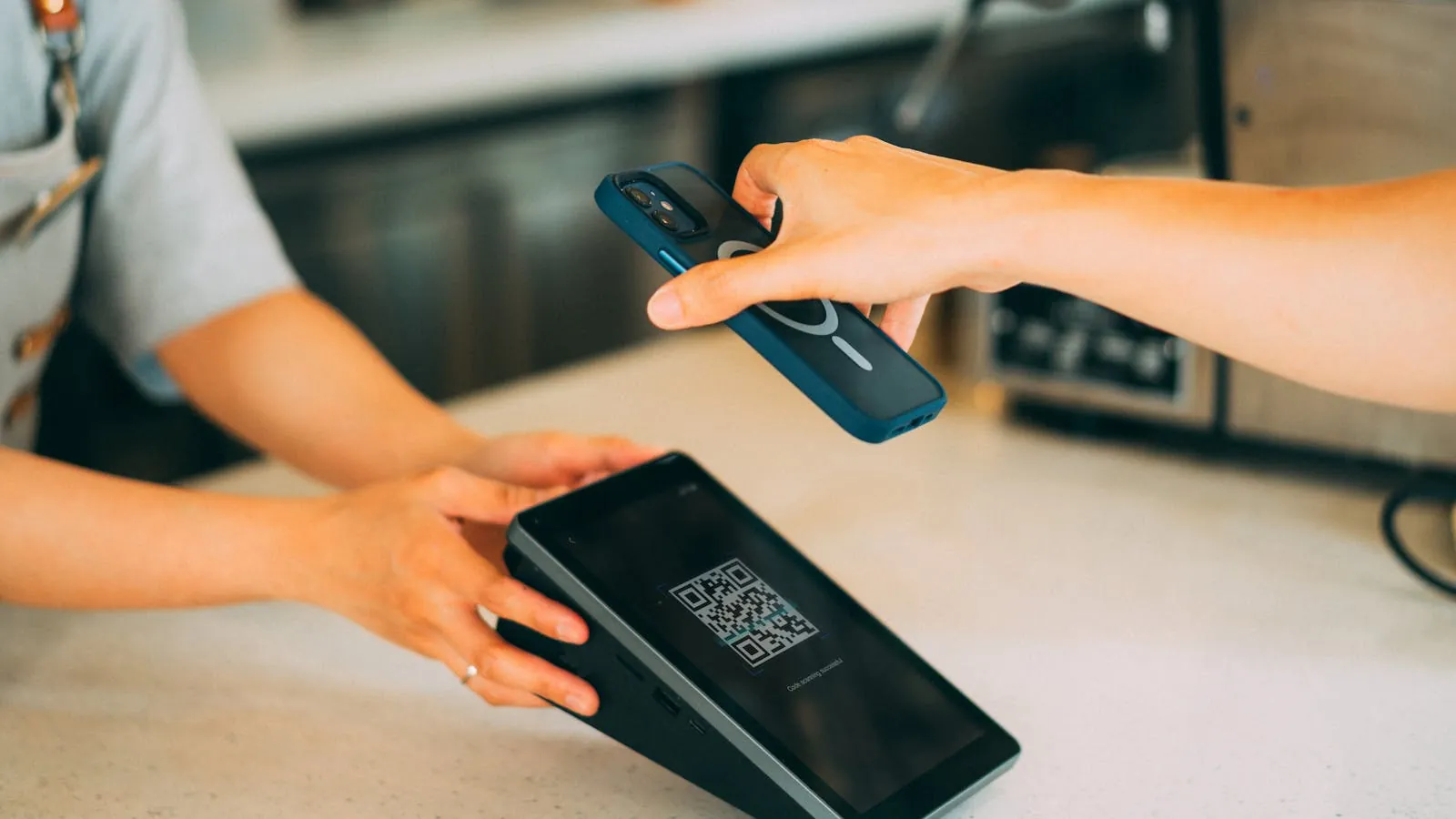
Here is how it works in concrete terms, because this is where it gets interesting for a food shop. The prize wheel comes down to a QR code placed near your till, on a small stand or stuck on the counter window. The customer's journey:
- They have just paid for their piece of Comté and their slice of tart. You tell them: "try your luck, scan the QR code, you could win something for next time".
- They scan with their phone camera. The wheel opens straight in the browser, with no app to download.
- They are invited to leave a Google review. It is quick, two taps, and they do it on the spot while they are still happy with their purchase.
- They spin the wheel and win a prize: a portion of cheese, a homemade sausage, a discount on the next platter.
- To collect their prize, they have to come back and see you. The gift is not handed over straight away, it is there to be collected next time.
Look at what happens in a single fifteen-second interaction: you have gained a Google review that would not exist otherwise, and you have scheduled a return visit.
👉 A single visit becomes two.
And in a food shop, the second visit is often the one that builds the habit. The customer who comes back once to collect their portion of tomme starts dropping by on Saturday, then every Saturday. That is where your yearly turnover is decided.
🔒 4. What the wheel does, and above all what it does not do
I want to be very clear about this, because I see a lot of "prize draw" tools that are really there to hoover up email addresses. This is not that, and it is a deliberate choice. The Pépite Pass prize wheel does exactly two things:
- it pushes up your Google reviews;
- it brings the customer back to the shop to collect their prize.
It captures no email address, no phone number, no contact detail. No form to fill in, no box to tick, no contact database to manage behind the scenes. The customer gives nothing personal: they leave a public review if they wish, spin the wheel, and leave. That is what makes the tool pleasant for the customer (nobody likes handing over their email to play) and stress-free for the business owner (no legal worry, nothing to declare).
If your goal is instead to build a customer file and follow up by notification, that is not the wheel's job: that belongs to a loyalty card with no app, which is another, complementary tool. The wheel stays on its own turf: Google visibility and return visits. One tool, one promise, kept.
🎲 5. Why the game side works so well at the till
You might think the prize does everything. In reality, it is the gamethat does most of the work. Asking head-on "could you leave me a review?" makes many business owners uncomfortable, and many customers too: it feels a bit like begging.
Turning that request into a little game completely changes the dynamic. The customer does not feel they are doing you a favour, they feel they are trying their luck. It is light, it is positive, it creates a smile at the till. 😊
It also plays on something very human: the pleasure of uncertainty. Spinning a wheel, waiting a second to see where it stops, is a micro-moment of pleasant tension you find everywhere, from scratch cards to prize draws. And even when the customer wins a small prize, they leave with the feeling of having been lucky at your shop. That positive association is something no advertising can buy you.
On the control side, you keep your hand on everything: you set the prizes and their odds, you decide how often the big gifts come up, and the tool prevents cheating: a single spin per device, and no replaying to try again. You also track the number of spins in your statistics. No nasty surprises, no customer replaying ten times to grab the roast.
A question about setting it up in your shop? Write to me
💸 6. Livening up your shop without ever slashing your prices
The legitimate dread of every food artisan is the permanent discount. You work on real margins, you do not want to train customers to wait for the promotion, and you are right: once you have taught a customer to buy only when there is a reduction, you have broken your own business. 💀
That is the whole point of the wheel: it creates a buzz and a reason to come back without touching your displayed prices.
The customer does not win every time, and when they do win, it is a prize you have chosen and calibrated: a free portion now and then, an occasional discount. You are never in clearance-sale mode. Compare the two approaches:
| Approach | Effect on the customer | Effect on your margin |
|---|---|---|
| Permanent discount (-10% on display) | Trains customers to wait for the cut, cheapens the price | Margin eroded continuously, for everyone |
| Classic cardboard loyalty card | Often lost, forgotten, never taken out | Printing cost, little real effect |
| Prize wheel | Fun game, occasional prize, a reason to return | Controlled cost (you set prizes and frequency) |
You get atmosphere at the till, reviews rising week after week, scheduled return visits, and your price positioning intact. For a food shop that cares about its artisan image, this is exactly the right balance: you liven things up without cheapening yourself.
💬 7. The reviews are coming in: now, reply to them
Once the wheel is in place, the reviews start to land. Do not leave them unanswered.
Replying to reviews, even in a word, sends two powerful signals: to Google, that your profile is alive and active (which helps your local SEO), and to the future customer, that behind the counter there is someone attentive. A "thank you Mrs Durand, see you very soon for the next platter" under a 5-star review is worth its weight in gold. ✨
And when a negative review lands, that is where you truly stand out. A calm reply, one that acknowledges and offers to put things right, often turns the situation around in the eyes of the readers who follow. I have written a full guide on this: how to reply to Google reviews (positive and negative alike). The wheel drives up the volume; the way you reply drives up trust.
🛠️ 8. In practice, how I would set it up in your shop
If you ran a cheese shop or a butcher and I spent an afternoon with you, here is what we would do, in order:
- We define 4 or 5 prizes. One big prize, rare and desirable (a composed platter, a fine roast) to create desire, and three or four frequent small prizes with a low real cost (a portion, a jar of jam, a 2 euro discount) so the game stays motivating.
- We set the odds. The big prize very rare, the small prizes frequent enough that every player leaves with the feeling of having won something, without ever going off the rails on your margin.
- We place the QR code at eye level at the till.With a short, clear line: "Scan, leave your review, try your luck". We use the display kit so it looks clean and readable.
- We train the till habit. One line, always the same, said to every happy customer, just after payment. It is that reflex that makes all the difference to the volume of reviews.
- We look at the numbers after two weeks. The number of spins, how the reviews are trending, and we adjust the prizes if needed.
On price, to be transparent: the trial is free, no bank card to start, it is no commitment and cancellable in two clicks. After that, it is the equivalent of a coffee a day. No setup fee, and above all no cost per scan or per prize handed out: whether your customers play 50 or 5,000 times in the month, the price does not change.
📌 9. In summary
In a cut-to-order food shop, trust is won at the counter but it is checked on Google even before the visit. Your products are already good: what you lack is not quality, it is visibility. And that visibility comes from Google reviews that are numerous, recent and well rated, which your happy customers will never leave unless you give them the chance at the right moment.
The prize wheel solves exactly that: a QR code at the till, a review left on the spot while the customer is satisfied, a prize to collect that brings them back. All of it with no app, without collecting a single contact detail, and without ever slashing your prices. You push up your profile, you liven up your shop, and you turn isolated visits into habits.
If you would like to talk it through for your particular case, message me on WhatsApp at +33 6 03 90 27 83, or watch a two-minute demo. And if you want to see how other local trades go about it, take a look at what the beauty salons do with their Google reviews or at how a bubble tea shop turns its visits into reviews. The logic is the same everywhere: quality is not enough, you have to make it visible.