
Just two or three years ago, you could create your Google Business Profile, fill it in once and for all, and let it run. It kept bringing in customers on its own. In 2026, that world is dead. 💀 Google no longer rewards the listing you fill in: it rewards the listing you maintain. And the difference between the two is often the difference between showing up in the top 3 of the local pack or vanishing onto page 2 that nobody looks at.
My name is Léo, I run Pépite Pass. We run Apple Wallet and Google Wallet loyalty cards, digital menus and a prize wheel that boosts Google reviews, for neighbourhood businesses all over France.
So I spend my days watching what pushes our clients' listings up or down: restaurants, coffee shops, beauty salons, bubble tea shops. And this year the picture has become very clear.
👉 The dormant listing no longer brings in anything.
This article is not yet another listicle, "15 tips for your Google Business Profile". It is what I see working, concretely, on the ground: 100% completeness, the new video verification that catches everyone out, and above all the rhythm of activity that keeps your visibility week after week. With, at the end, the one element that is genuinely hard to sustain over time: the flow of recent reviews.
🎯 1. The 2026 change many business owners have not seen
The basic misunderstanding is believing that optimising your Google Business Profile is a one-off act. You create it, you tick the boxes, and there you go, "it is done".
Except Google has changed its logic. Its aim is to offer a user searching for "hairdresser near me" businesses that are open, active and alive, not ghost listings that have not moved in eight months.
Here is what happens in practice. Two nail salons on the same street. The first has a complete, attractive listing, 120 reviews. But the last review is from March, the last photo from last summer, no posts.
The second has only 70 reviews, but it gets two a week, adds a photo every few days and publishes a post on Mondays. To Google, the second is more alive, so more relevant to show. It climbs. The first slips.
And the owner of the first cannot understand why his lovely complete listing no longer brings anyone in.
That is the whole trap of the dormant listing: it looks perfect, but it sends Google the signal of a place that is slowing down. So the thesis of this article is simple: optimising your profile is no longer a task you tick off, it is weekly upkeep. And the good news is that this upkeep comes down to three simple moves once the listing is complete.
✅ 2. 100% completeness: the baseline, not the advantage
Before we talk about upkeep, you need a clean foundation. An incomplete listing is like a shop with half the lights off: Google hesitates to send people its way.
Today, completeness is no longer an asset that sets you apart (everyone has it), it is a ticket to entry. If it is missing, you are penalised. If it is there, you are simply in the race.
Here is the checklist I run through with every business owner we work with. Fill in everything, no exceptions, even the fields that look secondary.
| Profile element | Why it matters | The common trap |
|---|---|---|
| Primary category | The heaviest field in the ranking | Choosing too broad ("restaurant" instead of "café") |
| Secondary categories | Capture side searches | Forgetting them entirely |
| Business description | Context and natural keywords | Keyword stuffing that rings false |
| Opening hours (including public holidays) | Google hates wrong hours | Forgetting to update them for long weekends |
| Attributes & services | Search filters ("terrace", "gluten-free") | Leaving them empty |
| Booking / ordering link | A direct route to action | Pointing to a dead page |
| Basic photos | Reassure the customer before the visit | 3 blurry photos taken in 2022 |
A word on the primary category, because it is the number 1 mistake I see. It must describe what you are, not what you would like to sell on the side.
A coffee shop that serves plates at lunch is still a café; declaring itself a "restaurant" puts it in head-on competition with better-rated eateries and loses it the precious "café near me" searches. Choose the most specific category that truly fits, and relegate the rest to secondary.
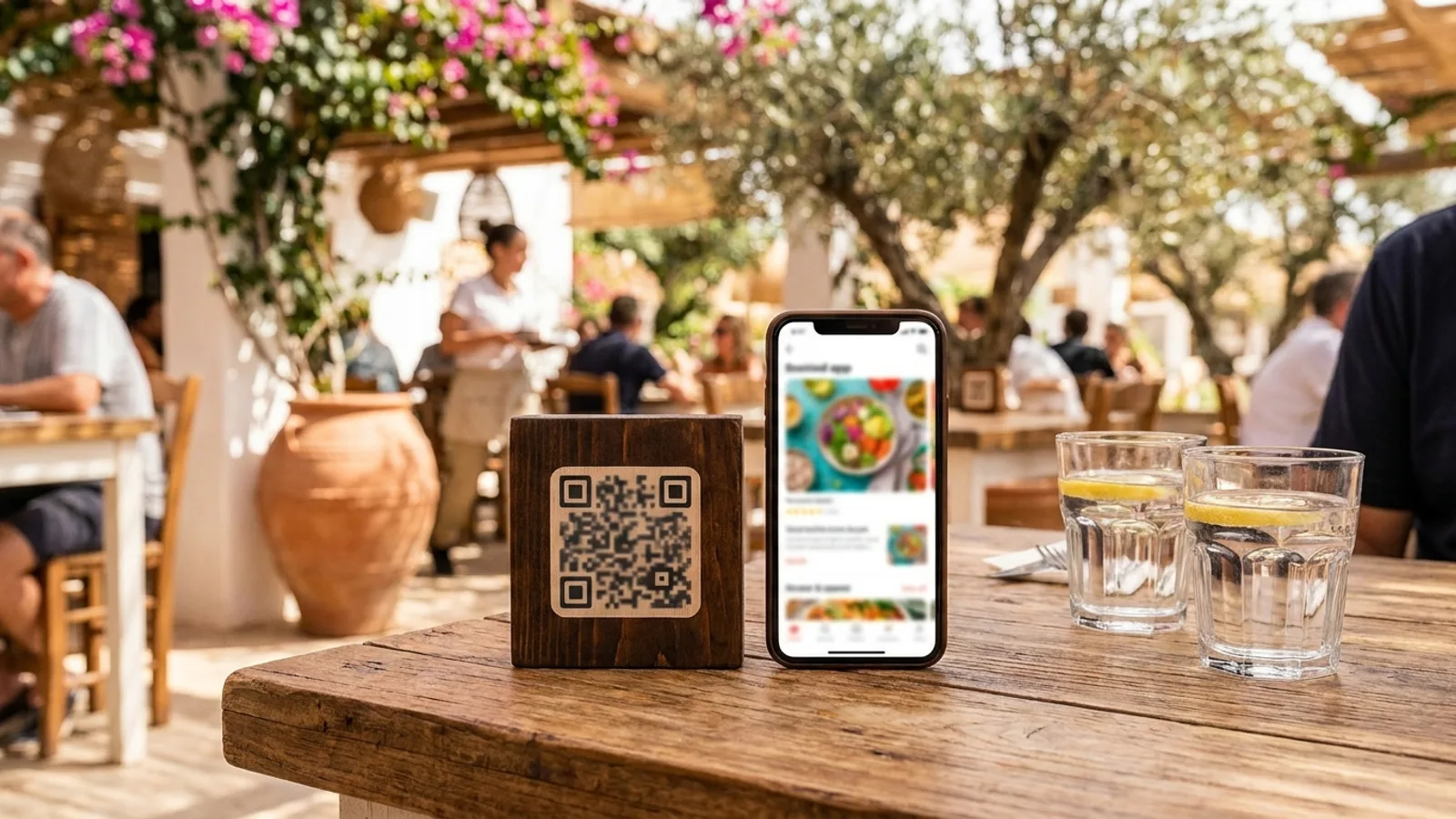
For the action link on the profile, think about what you want the customer to do: book, order, make an appointment. If you run a restaurant, that button can point to your booking page. That is exactly the kind of page we generate automatically with the Pépite Pass digital menu, which also creates the physical QR code and the shareable storefront; I have detailed how it works in this guide to the digital menu and the restaurant QR code.
🎥 3. Video verification: the new step that blocks everyone
Here is the change nobody sees coming, and that costs unprepared business owners weeks. To verify your listing (at creation, or after an address change, or following a suspension), Google no longer settles for the code by post.
More and more often, it asks for a live video verification. And if you fail it, your listing can stay invisible or suspended for quite a while.
The principle: from the Google Maps or Google Business Profile app on your phone, you record one continuous video, with no cuts and no editing, which has to prove three things to Google:
- That you are physically on site: film the shopfront, the sign, the street number, the surroundings. Google wants to see that the place exists at the declared address.
- That you can reach the back areas: go in, show the kitchen, the stockroom, the till, the back office. A passer-by cannot film that; you can.
- That you run the business: show the professional equipment, a document in the business name, your till software. The proof that you really are the person in charge.
The ground-level tip that changes everything: plan your route before you start recording. The video has to be shot in the moment and in a single take, so run through the path once with the camera off: pavement and sign, then the entrance, then the inside, then the back-of-house work area, then something that proves you manage the place.
Forty seconds to a minute, flowing, is enough. Never cut, do not film a photo of the sign, film the real scene. A clear, logical video passes first time; a hesitant one gets rejected and you go round again.
🔁 4. The rhythm of activity: 3 moves a week, no more
Once the listing is complete and verified, the real work begins: upkeep. And the good news is that it comes down to three weekly moves. It is not a question of volume, it is a question of regularity. Google reads consistency as a sign of life, and irregularity as a sign of slowdown.
Move 1: one Google post a week. Posts (with a photo and a short text) appear directly on your profile. Something new, a dish of the day, an offer, an event, it does not matter: what counts is that Google sees a recent publication. A reliable post every Monday beats a burst of five and then three months of silence.
👉 Regularity beats volume, every time.
Move 2: one or two photos a week. Authentic, taken on a phone, not polished. A dish, the shopfront in the sun, the team, a corner of the room. Photos reassure the hesitating customer and signal fresh activity to Google. Let your customers add theirs too: they count.
Move 3: keep the review flow going. This is the heaviest of the three signals, and by far the hardest to sustain. We come to it right after, because it deserves its own section.
For now, remember this: replying to reviews (to all of them, the good and the bad) is also part of the upkeep. A listing whose owner replies is read by Google and by customers as an active one. I have detailed the method in this guide on how to reply to Google reviews without spending your evenings on it.
Want to boost your local visibility? Try Pépite Pass for free
⭐ 5. The real sticking point: the flow of recent reviews
If you take only one thing from this article, let it be this: the hardest element to maintain is neither the photos nor the posts, it is the flow of recent reviews. It is the signal that proves to Google your place is alive, and it is also the one that goes out fastest if you do nothing.
Many business owners still think the review total is enough. Having 300 reviews piled up over five years is impressive, but if the latest are from last year, Google reads that as a place that has slowed down, or even closed.
Conversely, a business with 80 reviews whose last ten are less than a month old sends a far stronger signal of life. Freshness works on two levels: ranking (Google favours listings that receive them continuously) and trust (nobody trusts a most-recent review that is eight months old).
The problem is that asking for reviews by hand is untenable over time. At first, you remember. You kindly ask a happy customer.
Then the rush hits, you forget, and after three weeks you are not asking anyone anymore. The flow stops, and your listing quietly slips back down without you understanding why. It is the most common scenario I see.
The only way to hold a steady flow is to set up a mechanism that asks in your place, on every visit, without you thinking about it. That is exactly the role of our digital prize wheel: the customer scans a QR code in the shop, spins the wheel in their browser (no app to download), and the invitation to leave a Google review fits into that playful moment. To claim their prize, they have to come back to the shop: a scan becomes a visit, then a loyal customer.
The game side turns the "I dare not ask" into a fun moment, and above all, it runs on its own, week after week, without you having to think about it.
To be clear: the wheel collects no email and no phone number, that is not its job. It does two things, and only two: it feeds your Google reviews and it brings your point of sale to life. It is precisely this flow of fresh reviews that feeds the freshness signal Google is waiting for in 2026.
If you want to dig into the review-collection mechanics in detail, I have written a full guide on how to get more Google reviews in 2026.
🔥 6. The mistakes that send a complete listing back down
I see a few of them come up so often that I can list them with my eyes closed. If your listing is lovely but no longer brings anyone in, the cause is very probably on this list.
Mistake 1: thinking "it is done". The listing filled in once and then abandoned. It is the mother mistake, the one all the others flow from. In 2026, a listing is never finished: it is lived. Until you have a weekly rhythm, you are on borrowed time.
Mistake 2: letting the review flow die out. You started well, you have 60 reviews, and then nothing for two months. To Google and to your prospects, a place that no longer receives reviews is a place that is fading. It is the point I ask you to tackle first, because it is the heaviest.
Mistake 3: not replying to reviews. Least of all to the negative ones. A listing where the owner replies, calmly, to every piece of feedback, is read as active and serious, by Google and by the customers who read before coming. Ignoring reviews means letting your latest unhappy customer speak for you.
Mistake 4: wrong opening hours. The customer who makes the trip and finds the door shut because of hours that were never updated does not come back, and often says so in a review. Think about public holidays, long weekends, time off. Google and your customers both penalise unreliable hours.
Mistake 5: a primary category that is too broad. We covered it: it is silent but it drags you down. You fight on the wrong ground and miss the searches that were within reach. A bubble tea listing declared as a "restaurant" disappears from "bubble tea near me" searches. I have actually detailed a full case for this trade in this article on how a bubble tea shop turns its Instagram traffic into Google reviews.
🏪 7. The Google Business Profile by trade
The principles are the same for everyone, but how you apply them varies with what you sell. Here is how I adapt it for the businesses we work with.
- Restaurant and coffee shop: photos of dishes first (that is what triggers the visit), a booking or ordering link properly wired to the listing, and a review flow that never weakens because local competition is fierce.
- Beauty salon, nail bar, hairdresser: the ultra-specific category makes the difference, before/after photos reassure enormously, and recent reviews weigh even more heavily than elsewhere because the client always checks the latest work. I have written a dedicated guide for beauty salons and nail bars that want more client reviews.
- Retail shop: flawless opening hours (public holidays included), attributes fully filled in (contactless payment, wheelchair access, in-store collection), and regular posts about new stock or new arrivals.
In every case, the foundation is identical: a complete listing, properly verified (video included), then maintained every week with a post, photos and above all a review flow that never stops.
📌 8. If I had to sum it up in one sentence
In 2026, optimising your Google Business Profile is no longer a one-off act, it is weekly upkeep. 100% completeness gets you into the race, video verification keeps you in it, but it is the flow of recent reviews that really decides your place in the local pack. The dormant listing, even a perfect one, slips back down; the living one climbs. ✨
And since the hardest move to sustain is precisely this review flow, the real strategic decision is not "what do I fill in?" but "how do I make sure a fresh review arrives every week without me thinking about it?". That is exactly the problem our prize wheel solves: a mechanism that asks in your place, on every visit, and that brings the customer back to claim their prize.
If you would like us to look at your case concretely, your trade, your town, the state of your listing, write to me on WhatsApp at +33 6 03 90 27 83. I will not sell you a miracle solution, I will tell you what I see working at the businesses we support, and you can also see a demo to get a feel for it. The dormant listing no longer brings in anything: the only question is deciding which day of the week you look after keeping it alive.