
In a yoga or pilates studio, you are not selling an object you can stock and shift later. You are selling time and space, in fixed quantity, in a precise slot. A spot in the 7pm class that goes empty cannot be recovered at 8pm: it is lost, for good.
It is exactly the same logic as a plane seat or a hotel room, and that is what makes a no-show far more costly than people think.
My name is Léo, I run Pépite Pass. We operate Apple Wallet and Google Wallet loyalty cards, with free push notifications, for local businesses all over France. Among them, more and more yoga studios, reformer pilates studios and small group-class venues.
The problem they describe to me is always the same: "my schedule is full on paper, but on Tuesday evening there are three empty mats and no one to take them".
This article is not a guide to choosing your booking software or fitting out your studio. It is a more precise and more profitable subject: how to make sure the people who book actually show up, how to fill your quiet classes, and how to keep your students hooked between two sessions. Three problems, three concrete levers.
💸 1. Why an empty spot costs more than you think
Let us do the maths coldly, because that is where the pain becomes visible. Picture a studio with a capacity of 12 spots per class, an average rate of around 18 euros a session, and a schedule of 5 classes a day. If you run with a no-show rate of 15 to 20 percent (the classic order of magnitude for group classes booked in advance), that means 2 spots on average deserted per class.
- 2 empty spots per class x 5 classes a day = 10 spots lost per day.
- 10 x 18 euros = 180 euros of revenue evaporating every day, without you having the slightest chance of recovering it.
- Over a month of opening (24 days), that is more than 4,000 euros of burned capacity. For a small studio, that is often the difference between a profitable year and a year that struggles.
And these figures are optimistic, because they only count the spot. They do not count the fact that a student who does not show up is a student slowly dropping off, who will eventually stop renewing their membership. A no-show is not just a lost session, it is often the first signal of a departure.
A studio's capacity is what we call perishable stock: at 7.01pm, the 7pm class no longer exists, and the spot no one took has no resale value. You cannot sell it off the next day. That is why in this trade, every percent of no-show recovered drops almost entirely into your margin.
🧠 2. A no-show is not bad faith, it is forgetfulness
Before talking solutions, you need to understand who your no-shows are. When I dig into it with studio owners, we almost always land on the same finding: the vast majority of students who do not show up are not people who could not care less. They are people who booked on a Tuesday for a Thursday, had a busy week, and simply forgot their booking.
This nuance changes everything in how you tackle the problem. If your no-shows were people acting in bad faith, you would need a strict cancellation policy and penalties.
👉 But because they are mostly absent-minded, the right tool is not punishment: it is the reminder at the right moment.
A well-placed reminder turns forgetfulness into attendance, or at the very least into a cancellation early enough to resell the spot.
The double reminder that works best:
| When | Goal | Effect |
|---|---|---|
| 24 hours ahead | Confirm and give a clean way out | The student who can no longer come frees their spot in time |
| 2 hours before | Memory jog for the person caught up in their day | Catches the absent-minded ones who simply forgot |
The 24-hour reminder is the most strategic, because it plays on the economic timing: it triggers cancellations while there is still time to resell the spot. The 2-hour reminder, for its part, physically brings people back into the room. The two complement each other.
What matters is not doing more: beyond two reminders, you become noise, and noise gets ignored.
The ideal channel for these reminders is the lock-screen push notification. Not an email that ends up in the promotions folder, not a text message charged on every send.
A Wallet notification shows up directly, for free, right where the student already looks at their phone twenty times a day. I have detailed how to use these notifications well here: the Wallet push notifications that bring your customers back at no cost.
📅 3. Filling the Tuesday 2pm class that empties out
Every studio has its cursed slots. Tuesday early afternoon, Thursday late morning, Friday evening when everyone heads off for the weekend. These classes never fill as well as Tuesday 7pm or Saturday 10am.
And yet your teacher is paid the same, your rent runs the same. A class with 4 people out of 12 is capacity going to sleep. 😴
To wake up these slots, the mechanic I see work:
- Identify the quiet slots in your stats. Before acting, you need to know precisely which classes and which days are under-filled. A good tracking tool gives you attendance curves and shows you, in black and white, where your gaps are.
- Push a targeted notification the day before or the same morning. A message like "5 mats left in tomorrow's 2pm pilates, come enjoy a quiet room" sent to your dormant students. Because push is free, you can animate these slots as many times as needed without watching the counter.
- Reserve the quiet hours for your entry offers. Discovery class, trial session, themed workshop: place them in the slots you want to build into habits rather than in your already-full hours. You turn a gap into a shop window.
- Put your best teachers on the slots you want to build. A weak class with your most-loved teacher becomes a reason to move a schedule around. A weak class with a lukewarm teacher stays weak.
The goal is not to fill a slot once, it is to make it a fixture. A student who gets into the habit of Tuesday 2pm pilates for three weeks has set up a routine, and routine is what makes a studio predictable and profitable. The free push is exactly the tool that lets you repeat this little nudge without it costing you a single extra euro.
A question about animating your quiet slots? Write to me
🎟️ 4. The per-session loyalty card, your best attendance ally
We come to the most powerful lever in the long run. In a studio, the no-show and the drop-off are two faces of the same problem: the student who is not hooked to a routine. The cumulative per-session loyalty card attacks this problem at the root, because it turns every visit into visible progress.
The mechanic is simple: "10 sessions attended, the 11th free", or "every 10 sessions, a private class or a workshop", it is up to you to calibrate according to your margins. What matters is the psychological mechanism we call the endowed progress effect: as soon as a human sees a half-filled progress bar, they want to finish it. It has been documented for twenty years, and it works just as well on a coffee as on a pilates session.
In a studio, this effect has a particular virtue: it pushes towards regularity, and regularity is precisely what makes a student improve. The more they come, the more they progress, the more they enjoy coming. So your loyalty mechanic serves your teaching and your fill rate at the same time. It is rare to have a business tool so aligned with the good of your students.
The pitfall is the medium. A paper stamp card gets lost, forgotten, and tells you nothing about the student.
The digital version solves everything: the card lives in the phone's Wallet, the student cannot forget it, and with every session added they receive a small notification that reminds them, along the way, that the studio exists and that they are making progress. ✨ If you want the detail of why a card with no app changes the game, it is here: the loyalty card with no app to download. And to choose between points, stamps and cashback: the loyalty programme mechanics that really work.
Beyond the sessions, the card gives you what a mere booking system does not: a direct presence in the student's pocket between two classes. A word after a great session, a gentle reminder when someone starts to space out their visits, a birthday message. It is this regular presence, not the booking slot, that creates the habit.
⚙️ 5. What your booking software does, and what it does not
Many studios tell me: "I already have scheduling software, it sends reminders". Fine, and that is necessary. But you need to distinguish two functions that have nothing to do with each other.
| The booking software | The card in the Wallet |
|---|---|
| Manages the schedule and the spots | Creates the habit and the relationship |
| Sends a transactional reminder | Sends a living message, on the lock screen |
| Exists during the booking | Exists between two classes, in the student's pocket |
| Sees a transaction | Sees progress and a loyalty history |
The booking software manages the when and the how much. The card manages the why they come back. A transactional reminder ("your class is confirmed") is useful but cold. A notification that says "only 2 sessions left before your free class, shall we hold a spot for you tomorrow?" plays on a completely different register. The two tools do not compete: they complement each other.
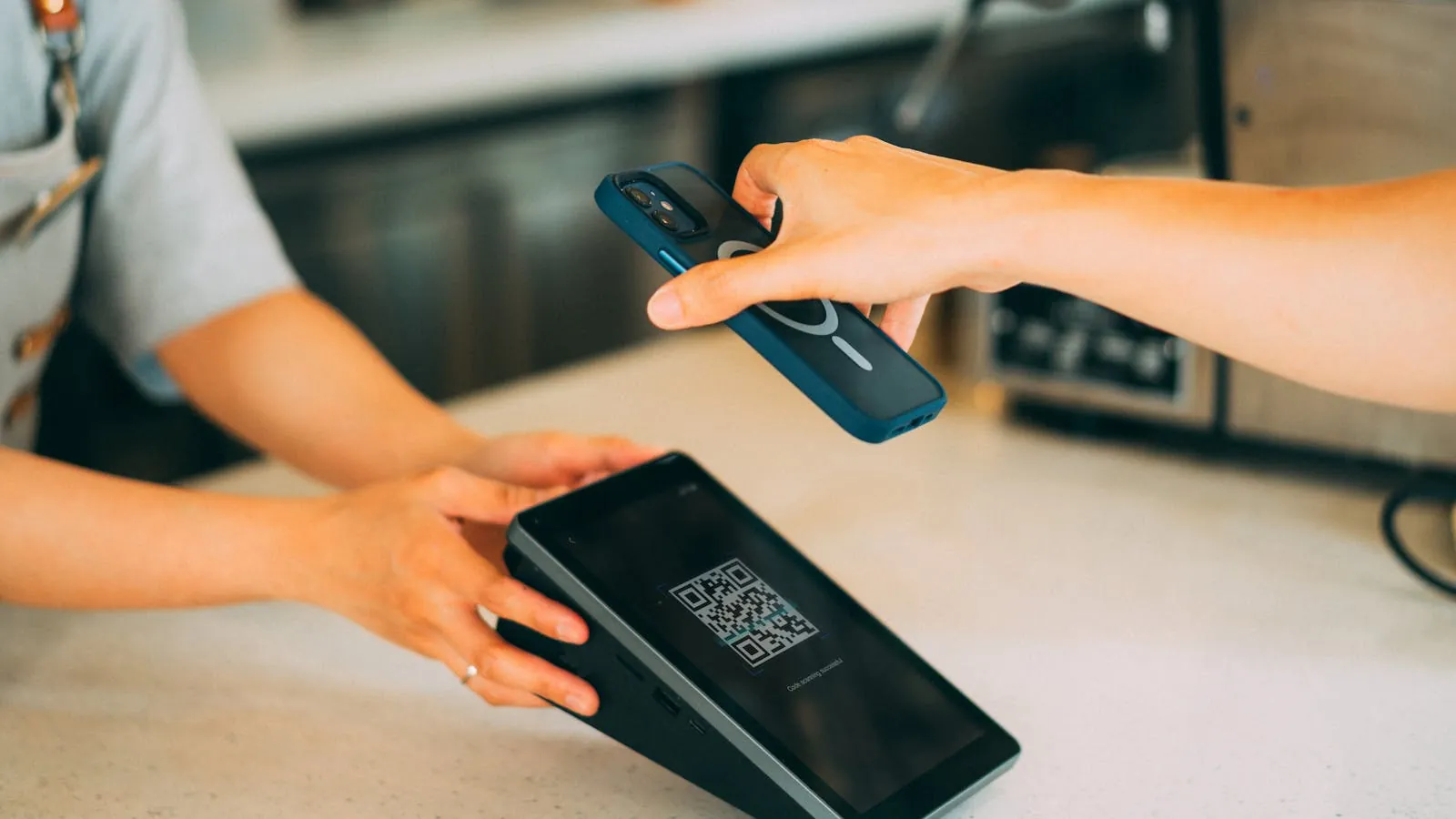
And above all, do not fall into the dedicated-app trap. Asking a student to download an app just to receive reminders is such friction that most will never do it. The Wallet card leans on an app already present on every phone, the one that holds boarding passes and payment cards. The student scans a QR code at reception, adds their card in one tap, and then receives everything on their lock screen. Nothing to install for them, nothing to manage for you.
♻️ 6. Recovering the freed-up spot before it is lost
The no-show you cannot avoid is the student who has a genuine last minute problem. The good news is that this no-show is not necessarily a loss: it only is if the spot stays blocked until the start of class. The whole point is to recover it early enough.
The ideal scenario plays out in three stages:
- The 24-hour reminder does its job. The prevented student receives the reminder, realises they cannot come, and cancels. The spot is handed back.
- The spot goes out to those who want it. You flag the free spot to your waiting list, or you push a notification like "a spot just opened up in the 7pm vinyasa, first come first served". The students who wanted that full class jump on it.
- The class runs full. The spot changed hands instead of staying empty. No one lost out, and you collected a session that would have ended in the bin.
Without an early reminder, this mechanism is impossible: the prevented student keeps their spot out of inertia, does not free it, and no one can take it. The loss is total. 💀 That is why I keep saying the 24-hour reminder is the most profitable of all: it does not just bring people in, it serves to recycle the spots.
🔥 7. The mistakes I see most often
Supporting studios, certain counterproductive reflexes come up enough for me to list them.
Mistake no. 1: relying on email alone. A class reminder in an inbox drowned between ten newsletters and two invoices has very little chance of being seen in time. The reminder must show up where the student looks: their lock screen. That is the whole point of the push notification.
Mistake no. 2: over-notifying. On the flip side, some studios send three reminders, two follow-ups and one promo a week. The result: the student turns off notifications, and you lose the channel for good. Two reminders per class, and sparing, relevant animation messages: restraint protects your right to speak.
Mistake no. 3: treating no-shows as inevitable. "People cancel, that is just how it is". No. An 18 percent no-show rate is not a law of nature, it is a failure of reminders and retention. The studios that take this subject seriously bring it down noticeably, and it shows directly in the fill rate.
Mistake no. 4: forgetting the student between two sessions. If your only contact with a student is the moment they book and the moment they lay down their mat, you do not exist in their life for the rest of the week. And a studio that does not exist in the student's mind ends up dropping out of their routine. Regular, gentle, useful presence is what keeps the habit alive.
🎯 8. If I had to sum up
A yoga or pilates studio lives on a fixed, perishable resource: spots in slots that do not come back. No-shows and half-empty classes are not details, they are margin leaks that add up every day. And they are, thankfully, among the easiest problems to fix.
Three levers, in this order: a double reminder at the right moment (24 hours and 2 hours ahead) to bring people in and recover spots in time, targeted animation of your quiet slots thanks to free push, and a per-session loyalty card that turns regularity into a visible habit. All of it without forcing the slightest app on your students, and without paying for every reminder like a text message.
If you want to dig into how other local businesses use these same levers, take a look at what we see work in beauty and nail salons and at how to turn your Instagram into loyal customers in a bubble tea shop. And to see concretely what the card looks like on the student's side, it is all here: the Pépite Pass digital loyalty card.
If you run a studio and want us to look at your case together, write to me on WhatsApp at 06 03 90 27 83. I will not sell you a miracle recipe, I will tell you what I see work in the studios we support. It is free, no commitment, and it will probably save you a few months of empty mats.