The optician faces a problem the bakery will never know: time. Between one pair of glasses and the next, an average of 18 to 24 months goes by. Two years during which your customer lives their life, tucks your business card away in a drawer, forgets the name of your shop, and ends up, the day their eyesight starts to tire, at the first optician who happened to send them an offer at the right moment.
It is almost never a question of quality. It is a question of memory.
My name is Léo, and I run Pépite Pass. We operate Apple Wallet and Google Wallet loyalty cards, follow-up tools and digital menus for local businesses all over France.
Opticians are a case apart in everything I see go by: it is the trade with the longest purchase cycle of all our business owners. And that is precisely what makes loyalty counter-intuitive in this line of work.
The question every optician asks, out loud or not: "why build loyalty with someone I won't see again for two years?"
My answer fits in one sentence, and it is the whole point of this article: precisely because the cycle is long, the challenge is not to make them come back more often, it is to be the one who gets back in touch at the right moment rather than vanishing for two years.
⏳ 1. The optician's real problem: the two-year gap
Let's do the cold maths. A customer buys a pair from you. You do a great job: a proper eye test, advice on the frame, a flawless fitting, and they leave happy. And that is when the clock starts.
Over the 18 to 24 months that follow, how many times does that customer think of your shop on their own? Once? Twice? If they have a problem with their lenses, perhaps. Otherwise, never.
Over that very same stretch, here is what your customer has seen go by:
- dozens of TV spots and online ads from national chains with a marketing budget counted in the millions;
- "second pair for 1 euro" posters in every shopping centre they walk through;
- offers from their health insurer steering them towards partner care networks;
- a mate who told them about a cheaper online optician.
And you, over those two years? Radio silence. 💀
The day they decide to renew, you are not top of the list, you are just one optician among many, and you start back level with competitors who have an advertising budget you will never have. It is a battle lost before it begins if you fight it on that ground.
The picture is the same as the one I describe for the restaurant trade in this article on the real cost of a lost customer: a customer who does not come back is not zero euros lost, it is their entire value over several years walking off to your neighbour.
Except that in optics, the basket of a single pair (often several hundred euros) makes every lost customer far more painful than a lost coffee.
🧠 2. Why you lose the customer: it is not quality, it is forgetting
I want to stress this, because it is the most common misdiagnosis. When an optician tells me "my customers don't come back", they often think they did something wrong: price too high, too limited a choice of frames, a welcome that was not warm enough. In the vast majority of cases, it is none of that.
The customer was happy. They would probably have come back to you if they had had your name in mind at the right moment. But two years went by, their brain did its spring cleaning, and the day their eyesight tires, they type "optician" into Google Maps as if discovering the neighbourhood for the first time.
👉 You did not lose on quality. You lost on presence.
It is exactly the same psychological mechanism that makes a coffee shop customer forget their favourite address after three weeks away, or a beauty salon watch its clients drift apart for no reason. I talk about it for beauty treatments in this article on building loyalty in a salon: the difference is that a salon has a cycle of a few weeks to make up lost ground, whereas you, the optician, have two years.
Your margin for error is tiny. Hence the importance of setting up the follow-up channel from the very first sale.
📱 3. The digital card as memory: the date of the last pair
This is where the digital loyalty card changes everything in optics, and where it looks nothing like a classic loyalty card. Forget the stamp principle of "10 purchases = 1 free": it makes no sense when you buy every two years. In optics, the card is not there to count, it serves as memory and channel.
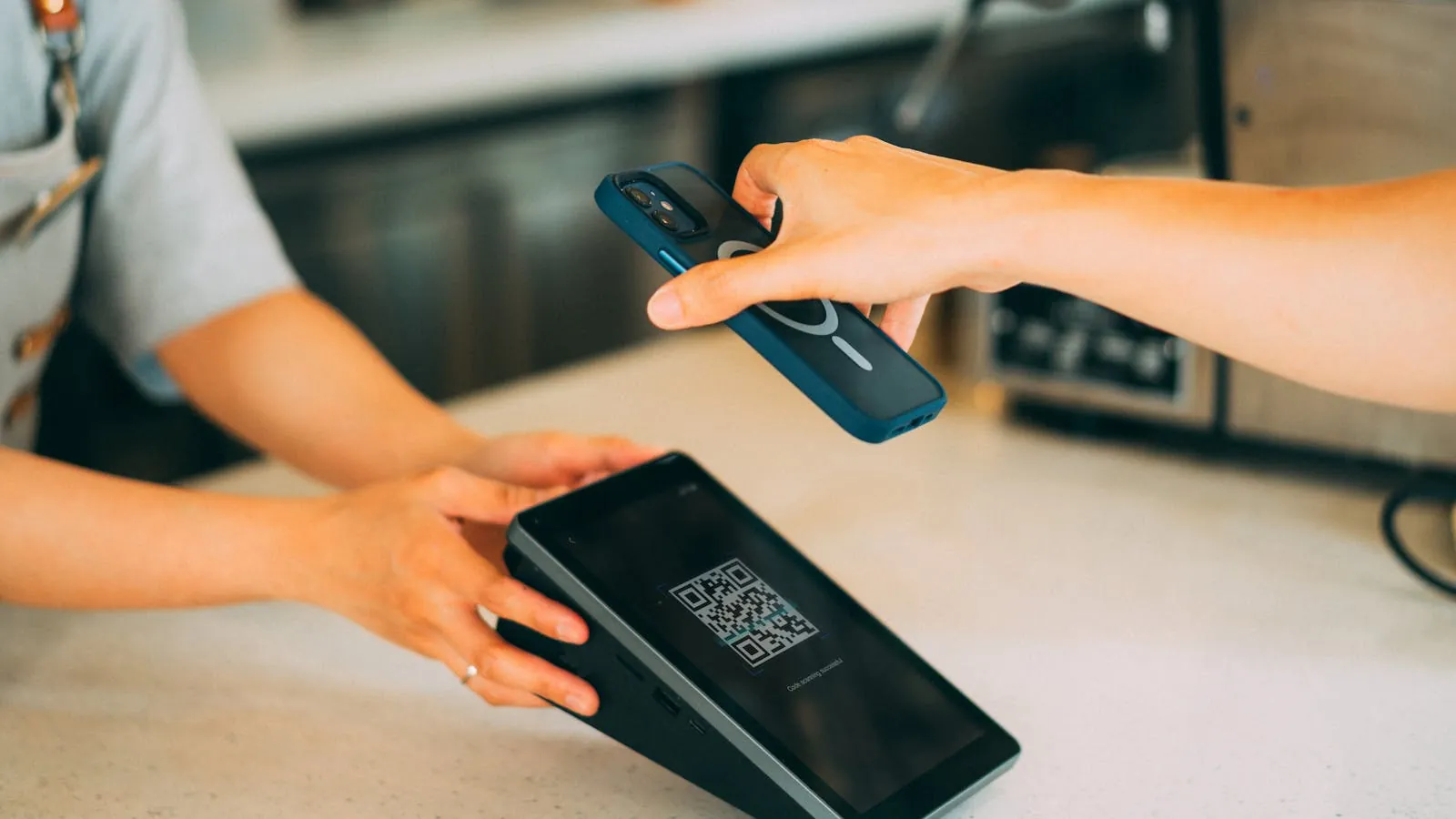
Concretely, here is what happens. At the end of the sale, you offer to add your shop card to the customer's phone. They scan a QR code sitting by the till, or they click a link you send them by text, and the card installs itself into their Apple Wallet or Google Wallet in one gesture. No app to download: the card tucks into the phone's wallet, exactly like a boarding pass or a train ticket.
If the "no app" idea sounds too good to be true, see why your customers have nothing to install in this article on the loyalty card without an app.
From then on, this card becomes your external memory on that customer:
- the date of their last pair, which automatically triggers your follow-up logic;
- the type of lenses and the nature of the equipment, to personalise the message when the time comes;
- the prescription expiry and the health insurance renewal, two key dates the customer themselves forgets;
- a history on the console side (your statistics, your best customers, your return curves) that you could never rebuild from memory over two years.
The customer, for their part, keeps your logo and your name in their phone for the entire lifespan of their glasses. You are no longer a business card forgotten in a drawer: you are a living card ✨ in their Wallet, within reach of a notification.
🎯 4. Scheduled follow-ups: taking back the initiative at renewal time
This is the heart of the matter. Having the date of the last pair is worth nothing if you do nothing with it. The real value is the follow-up triggered at the right moment, automatically, without you having to keep a diary of 800 customers in your head.
The timing is more subtle than you might think. The temptation would be to follow up at exactly 24 months, telling yourself "it's time". Too late.
A wearer does not decide to renew from one day to the next, the idea ripens over weeks: a frame they have grown tired of, vision that flags in the evening, a prescription reaching its expiry. If you want to be there the moment the idea takes root, you have to remind them of you beforethey type "optician" into Google. Here is the cadence I recommend:
| Moment | Message | Objective |
|---|---|---|
| Leaving the shop | Card added to the Wallet + a thank-you note | Set up the channel while the customer is happy |
| ~12 months | Invitation to a free eye check | Reappear without selling, check the equipment |
| ~16-18 months | A "your glasses are almost two years old" reminder | Be top of mind when the renewal idea takes root |
| Health insurance renewal (January) | Info on benefits topping back up | Turn a dormant entitlement into a visit |
| Birthday | A small perk on accessories or sunglasses | Keep the bond alive, seem attentive |
The Wallet push is the perfect tool for this, and it is even the decisive argument in optics: these lock-screen notifications are free and unlimited. Where a text would cost you 5 to 8 cents a send (multiply that by 800 customers and it stings), the push costs you nothing beyond your subscription. So you can follow up with your whole base at renewal time at no extra cost.
I have laid out why it works so well in this article on Wallet push notifications: the trade changes, but the principle is identical, you reappear in the customer's pocket at the precise moment it counts.
👁️ 5. The mid-term eye check: the pretext that isn't one
If there is one follow-up not to miss, it is the 12-month one. The mid-term eye check is the smart optician's secret weapon, because it resolves the paradox of the long cycle: it creates a legitimate reason to see each other between two purchases.
A message along the lines of "it's been a year, we'd like to offer you an eye check, no commitment" is not seen as an ad. It is a service. And it triggers a virtuous cascade:
- the customer comes back into the shop: you regain a real, physical contact, you put a face and a shop name back in their mind;
- you check the state of the equipment: a correction that has shifted, a tired frame, and the renewal moves forward naturally;
- you become "their" optician again, the one who takes care of their eyes, not just the one who sold them a pair a year ago;
- when the real purchase decision comes, six to twelve months later, you no longer have a single competitor in the race.
This mid-term check, without a follow-up channel, you never offer it: you have no way of letting the customer know. With the digital card, it is a push that goes out on its own on the right date. The customer sees it on their lock screen, they book an appointment if they want. Discreet, useful, never aggressive.
A question about the 12- and 18-month follow-ups? Write to me
🤝 6. Following up without pestering: the exact line
This is the number one fear I hear: "I don't want to spam my customers, it would give a bad impression". I completely agree, and that is exactly why you need a method. The line between a follow-up and pestering is simple to draw:
- A follow-up is legitimatewhen it lands at the right moment and does a service: a free check, a reminder of a prescription expiry, some info on health insurance topping back up. The customer thinks "oh, they're thinking of me".
- It is pesteringwhen it is repeated, bunched together, and only serves you: three "come and buy" messages in two weeks makes people want to run.
My concrete rules, the ones I advise the business owners I work with: no more than one follow-up per quarter on average for a given customer, never two purely commercial follow-ups in a row, and always content that brings something even if the customer doesn't buy.
The format matters too: the Wallet push has a huge advantage over the text, it is silent and non-intrusive. It shows on the lock screen, the customer reads it if they feel like it, it does not ring out like an ad forcing itself on them. The perception is completely different from a classic promotional text.
And above all: during the first 12 to 18 months, the goal is neverto sell. It is to nurture the bond. If the customer feels you want their wellbeing rather than their wallet, the day they renew, they won't even compare. They come back.
💬 7. What to send during the two years of silence
The great void between two purchases is precisely what kills the relationship. The trick is to fill it with messages that don't talk about buying. Here are the kinds of content that work well in optics, without giving the impression of pushing a sale:
- The free eye check around 12 months: the most powerful, already detailed above.
- A care tip: how to clean your lenses without scratching them, when to change the nose pads, how to store your glasses. Useful, never commercial, and it positions you as an attentive expert.
- The January health insurance note: "your optical benefits top back up at the start of the year, keep them in mind before they're lost". You turn a dormant entitlement into a visit, and the customer thanks you for the heads-up.
- The arrival of prescription sunglasses in spring: a genuine seasonal occasion that isn't a renewal of a pair of everyday glasses, so an additional purchase without cannibalising the main cycle.
- The birthday note with a small perk on accessories: cases, cords, cleaning products. Symbolic, but it keeps the warmth of the relationship alive.
The goal of this editorial line sums up in one sentence: make the customer think "this optician is thinking of me" rather than "this optician wants to sell me something". After two years of this discreet presence, on the day of renewal, you are not in competition. You are the obvious choice.
💸 8. What it costs, and why it pays off in optics
Let's be concrete, because that is often where things get stuck. The trial of the Pépite Pass digital loyalty card is free, no card required. After that, it is the equivalent of a coffee a day, no commitment, cancellable in two clicks, with no set-up fee. The push notifications stay free and unlimited.
In optics, this calculation is almost a caricature of how far it tips the right way. The basket of a single pair runs into the hundreds of euros. So you only need to win back a single customer a year who would otherwise have gone to the competition for the annual subscription to be amply repaid. One. On a base of several hundred wearers you follow up automatically at the right moment, you recover far more than one a year.
Compare that with the alternative: spending on ads to acquire new customers against the national chains (ground where you lose because of the budgets), or sending paid texts to your whole base at renewal time (5 to 8 cents a send, it climbs fast). The digital card plus the free push is the channel with the lowest marginal cost for bringing back people you have already won over once.
The rule I repeat to every business owner: before putting a single euro into acquisition, first make sure you stop losing the ones you already have. In optics, with a two-year cycle, that is even truer than elsewhere.
If you want to see exactly what the tool looks like, everything is on the digital loyalty card page, and you can also request a demo so we can show you the follow-up console and how the card looks in the Wallet.
✅ 9. If I had to sum it up for an optician
Your trade has a feature you can't change: the customer buys every two years. You won't get a glasses wearer coming back every week, and that is not the aim. The aim is to be the only optician still present in their mind and in their phone the day their eyesight tires.
It rests on three things, in this order: a digital card that acts as memory and installs itself in the customer's Wallet from the very first sale (the date of the last pair, the contact channel), a scheduled and well-measured follow-up that makes you reappear at the right moment (12 months for the check, 18 months to prepare the renewal), and a line of messages that does a service rather than sells, so you never tip into pestering. All three sit in the same tool and cost less than a single pair won back.
If you run an optical shop and you'd like us to talk concretely about your customer base and your follow-up rhythm, write to me on WhatsApp at 06 03 90 27 83. I won't sell you a miracle promise: I'll tell you what I see working among the business owners I support, and how to adapt it to the long cycle of optics. It's free, it's no commitment, and it will spare you watching, once again, customers you had won over walk away.